Azerbaijani father confronts school staff removing daughter over hijab
Note: AI technology was used to generate this article’s audio.
- The parent directly addressed the country's president in the video
- The incident stems from Cabinet of Ministers dress code regulations enacted on September 21
- The restrictions have intensified a national debate over religious freedom, education rights, and secularism in the majority-Muslim nation
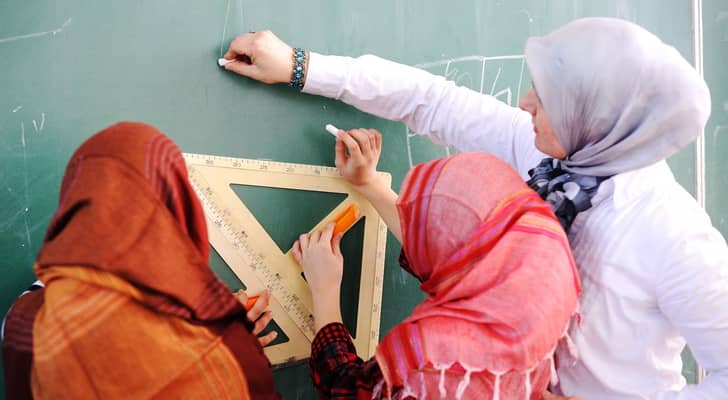
Video footage shared on social media shows a parent confronting staff at a school in Azerbaijan, after his daughter was removed from her classroom for wearing a hijab.
In the video, the student's father appeals directly to the country's president, arguing that neither the Azerbaijani Constitution nor official government policy bans religious headscarves in public schools.
“Did the President say that the hijab is forbidden? No, he didn't say that! The President never said such a thing. Official state TV clearly showed that there is no ban on the hijab. The National Assembly didn't pass such a decision, and it is not in the Constitution that the President swore upon. Whoever set these rules, let them come and meet with us directly," The father told the school staff.
The incident highlights mounting tensions across the country following the implementation of strict new school uniform guidelines by the Cabinet of Ministers.
Protests and class boycotts have spread across Azerbaijan following new Cabinet of Ministers dress code regulations enacted on September 21.
While the policy does not explicitly ban the Islamic headscarf, its restrictions against attire deemed incompatible with secular education and standardized uniforms are being used to bar hijab-wearing students and teachers from school premises.
The restrictions have drawn widespread public criticism, with social media videos showing students turned away at school gates and forced to hold lessons outside.
Demonstrators and boycotting students are demanding an immediate reversal of the measures, sparking a broader debate over religious freedom, education rights, and state secularism in the majority-Muslim nation.