Austria bans hijab for school girls, up to €800 fines
Note: AI technology was used to generate this article’s audio.
- Islamic Community in Austria vows to challenge the ban in the Constitutional Court.
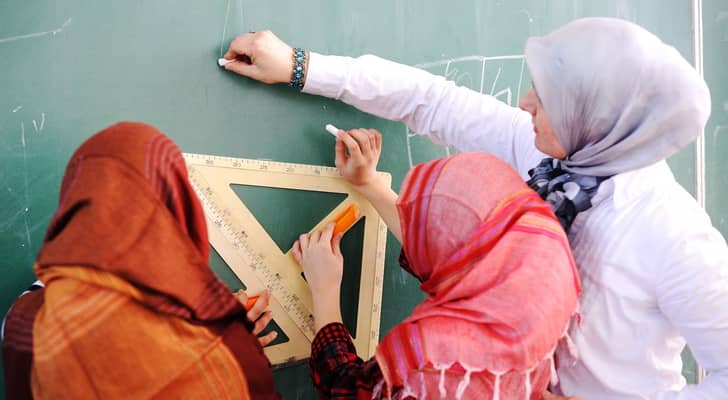
Austria has officially begun enforcing a new law banning hijab in public and private schools for girls under the age of 14 as the academic year got under way on Monday, sparking political divisions and imminent legal challenges over religious freedoms.
The restriction targets head coverings traditionally worn by Muslims, including the hijab. The Austrian government alleged that the policy aims at "protecting" girls and promoting 'gender equality'.
The legislation was proposed by Austria's ruling coalition—comprising the conservative Austrian People's Party (ÖVP), the Social Democrats (SPÖ), and the liberal NEOS party—and passed parliament in December with support from the far-right Freedom Party (FPÖ).
The school year commenced Monday in Vienna, Lower Austria, and Burgenland, with schools across the remaining six federal states scheduled to reopen next week.
Muslim community challenge policy
The law has drawn criticism from Muslim representatives, who warn the measure could fuel anti-Muslim sentiment and violate constitutionally guaranteed freedoms.
Austria's leading Muslim organization, the Islamic Community in Austria (IGGÖ), strongly opposed the legislation, arguing that it imposes unjustified restrictions on religious freedom and singles out a specific religious practice.
The group pledged to support affected families and take legal challenges before Austria's Constitutional Court.
Under the enforcement protocol, teachers are responsible for addressing violations by holding initial discussions with the student and her legal guardians.
Continued non-compliance can lead to progressive administrative fines ranging between €150 and €800.
Some educators and political figures voiced concern over placing enforcement duties on school staff.
Sigi Maurer of the Green Party accused Education Minister Christoph Wiederkehr of "creating new conflicts and dumping them on teachers," arguing that educators should not act as police alongside their teaching duties.
Constitutional uncertainty
The legislation follows prior legal disputes surrounding religious symbols in Austrian classrooms.
In 2020, Austria's Constitutional Court struck down an earlier headscarf ban applied to children under 10, ruling that it discriminated against Muslims and conflicted with the state's duty of religious neutrality.
IGGÖ plans to challenge the new legislation before the same court, which dismissed earlier filings in July on technical grounds because the law had not yet taken effect.
Education Minister Christoph Wiederkehr of NEOS acknowledged that the government cannot guarantee the law will withstand constitutional scrutiny.
"You can never be completely certain," Wiederkehr told public broadcaster ORF on Monday. "We in the government carried out very intensive consultations and we in the education ministry tried very hard to write a law that complies with the constitution."
The ban had already drawn public pushback prior to enforcement, including a demonstration in Vienna where an 11-year-old student carried a sign reading: "My hijab, my choice."