Saudi Arabia restarts East-West oil pipeline after drone attacks: Reuters
Note: AI technology was used to generate this article’s audio.
Saudi Arabia has restarted operations on its critical East-West oil pipeline and could resume crude exports from the Red Sea port of Yanbu later on Tuesday, three sources briefed on the matter told Reuters.
The pipeline was pumping at a low rate, two of the sources said.
State energy firm Saudi Aramco did not comment on the matter.
Drone attacks forced Saudi Arabia to shut the East-West Pipeline on September 13, halting crude loadings at Yanbu.
The strikes, launched from Iraqi territory and attributed by Saudi officials to drones originating in Iraq’s Maysan province, hit facilities in the Riyadh and Medina regions on or around September 10–11, causing injuries and damage.
Saudi Arabia’s Ministry of Foreign Affairs condemned “the attack on the East-West Pipeline in the Riyadh and Madinah regions by several drones coming from Iraq, which resulted in injuries and some damage that is currently being addressed.”
The Ministry of Energy said the line was stopped “as a precaution.”
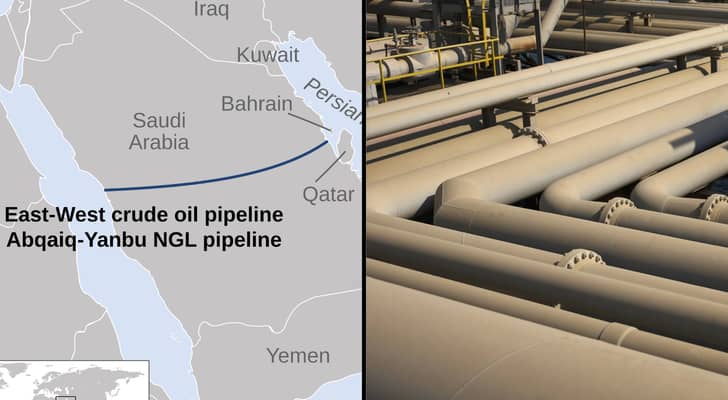
The 1,200-kilometer (about 745-mile) pipeline, also known as Petroline, runs from eastern oil fields near the Persian Gulf to Yanbu on the Red Sea.
It has a capacity of up to about 7 million barrels per day and became a vital export route amid disruptions to tanker traffic through the Strait of Hormuz linked to the ongoing Iran conflict.
Before the shutdown it had been moving roughly 4–5 million barrels per day, equivalent to about 4–5% of global oil supply.
During the outage, Saudi Arabia shifted more loadings to Gulf terminals and used ship-to-ship transfers near Oman to offset lost Red Sea volumes.
Some European customers saw cargoes cancelled or delayed, prompting refiners to seek alternative supplies.
US Energy Secretary Chris Wright had said on September 15 that crude should be flowing through the pipeline “within days,” telling CNBC: “It’s still a detailed assessment, but I think it will be measured in days.”
He noted Saudi Arabia was also moving more oil via Hormuz with US military assistance.
Earlier assessments varied on repair timelines.
Some industry sources told Reuters full repairs could take five to six weeks, while others indicated a partial restart was possible sooner because the system consists of parallel lines.
Aramco worked to bypass damaged sections to restore partial capacity.
The restart marks a step toward normalizing Red Sea exports after nearly 10 days offline.
Market participants will watch how quickly volumes ramp up from the current low pumping rates and whether Yanbu loadings resume as expected later Tuesday.