Indian education minister resigns following youth protests
Note: AI technology was used to generate this article’s audio.
- India's education minister resigned following weeks of protests over examination paper leaks.
- Demonstrations were spearheaded by the Cockroach Janta Party (CJP), a youth-led protest movement.
- Activist Sonam Wangchuk ended his 26-day hunger strike after being hospitalized.
- Prime Minister Narendra Modi pledged tougher laws to combat exam leaks and prosecute those responsible.
India's Education Minister Dharmendra Pradhan resigned from his post on Saturday, yielding to weeks of mounting pressure and nationwide protests over alleged examination paper leaks and administrative irregularities.
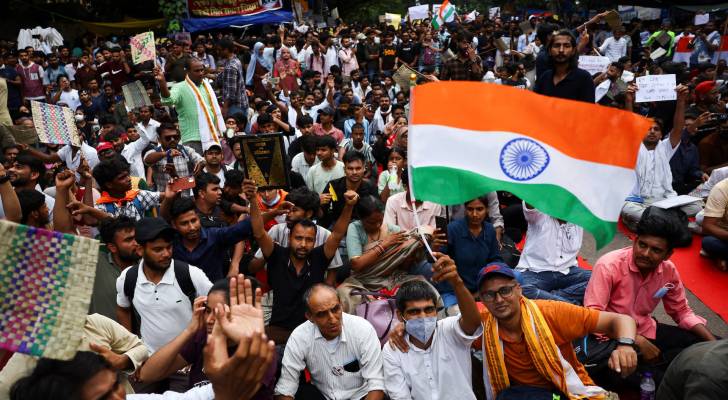
The resignation marks a significant triumph for the student-led movement that has mobilized thousands of young people across the country, creating one of the most substantial public challenges to Prime Minister Narendra Modi's administration in recent years.
Satirical movement
The demonstrations were spearheaded by the Cockroach Janta Party (CJP), an initiative that began as a satirical online campaign before evolving into a widespread civil movement.
Protesters reclaimed the term "cockroach" as a symbol of endurance and defiance after a senior judge publicly used the phrase to describe unemployed youth.
Thousands of students and supporters established protest camps in New Delhi, demanding full accountability for paper leaks that disrupted competitive examinations nationwide.
The movement gained additional momentum when social activist Sonam Wangchuk launched a fast in solidarity. Wangchuk concluded his 26-day hunger strike on Friday after authorities forcibly moved him to a hospital.
Police clash with marchers near Parliament
Tensions escalated on Monday when police deployed tear gas and baton charges to stop marchers from reaching Parliament, drawing widespread criticism from public figures and civil society groups.
In response to the growing backlash, Modi promised a stringent new law to combat paper leaks, establish fast-track trials, and impose severe penalties on organized networks responsible for examination fraud.