Iranian Parliament Speaker and chief negotiator Mohammad Bagher Ghalibaf.

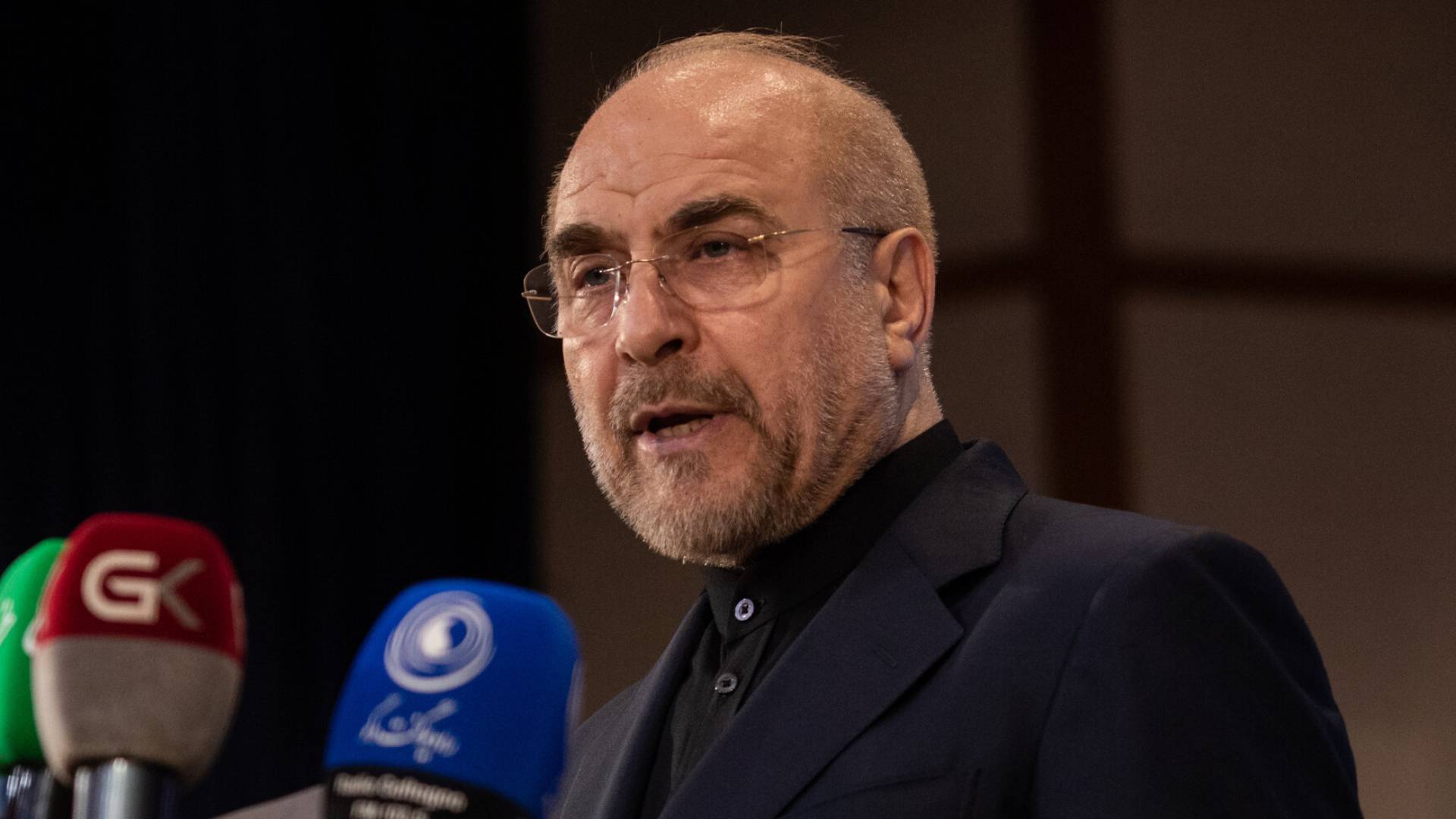
Ghalibaf: Tehran will use force, diplomacy to protect Beirut
Note: AI technology was used to generate this article’s audio.
Iran's Parliament Speaker and Chief Negotiator says talks aim to halt the regional war, not normalize ties with Washington, warning that Tehran will 'fight and negotiate at the right time'.
Iranian Parliament Speaker and chief negotiator Mohammad Bagher Ghalibaf issued a sharp, multi-pronged foreign policy address today, robustly defending the integration of military force and diplomacy while directly accusing US President Donald Trump of derailing a war-ending accord with contradictory demands.
Ghalibaf’s hardline statements signal that Tehran is recalibrating its strategy, shifting away from passive compromise toward a doctrine of calculated, symmetric retaliation to preserve its regional leverage.
Force as a tool for diplomacy
In an audio message and subsequent statements, Ghalibaf rejected the notion that engaging in diplomatic channels requires Iran to halt its military readiness.
"Military action does not hinder diplomacy," Ghalibaf asserted, outlining a pragmatic approach to the ongoing multi-front conflict.
"We are not supposed to choose between war or negotiation; rather, we must fight at the right time and negotiate at the right time."
The Speaker emphasized that Iran’s recent high-profile projectile maneuvers and battlefield posturing have directly strengthened its diplomatic hand.
"If it were not for victory on the battlefield and progress on the diplomatic track, our hands would be tied in supporting Lebanon and confronting the siege," he stated, linking frontline successes to Iran's ability to resist external pressure.
Slamming Trump’s 'contradictory' edits
Ghalibaf leveled direct criticism at Washington, accusing President Trump of acting in bad faith regarding the draft US-Iran Memorandum of Understanding (MoU) aimed at ending the war and lifting the naval blockade.
According to Ghalibaf, recent amendments pushed by the White House directly violated previously agreed-upon principles.
"Trump's statements regarding the memorandum of understanding were contradictory to the agreed terms," the Speaker said, noting that the latest developments prove "Washington seeks neither a ceasefire nor dialogue."
The diplomatic breakdown stems from Trump’s recent demands for immediate, front-loaded concessions on Iran's highly enriched uranium stockpile and its operational sovereignty over the Strait of Hormuz before sanctions relief is granted.
Ghalibaf clarified that Tehran’s goal in these negotiations is strictly limited to halting hostilities and protecting its economy, stating unequivocally that "the goal of the negotiations is to end the war, not to normalize relations with Washington."
Naval blockade and Beirut
Addressing the collapsing regional truce, Ghalibaf explicitly blamed US actions and 'Israeli' aggression for the renewed flare-up.
"The violation of the ceasefire and the U.S. naval blockade are the root causes of recent tensions," he stated, pointing to continuous American maritime enforcement and 'Israeli' airstrikes on Lebanon.
The Speaker concluded with a firm warning regarding the security of Lebanon, detailing a dual-track strategy of deterrence to protect Hezbollah’s primary stronghold in the capital.
"We prevent an attack on Beirut sometimes through the threat of a response and halting negotiations, and at other times through direct attack," Ghalibaf warned, signaling that Tehran is fully prepared to use its armed forces to dismantle what it considers a "paper ceasefire" if Western provocations persist.