

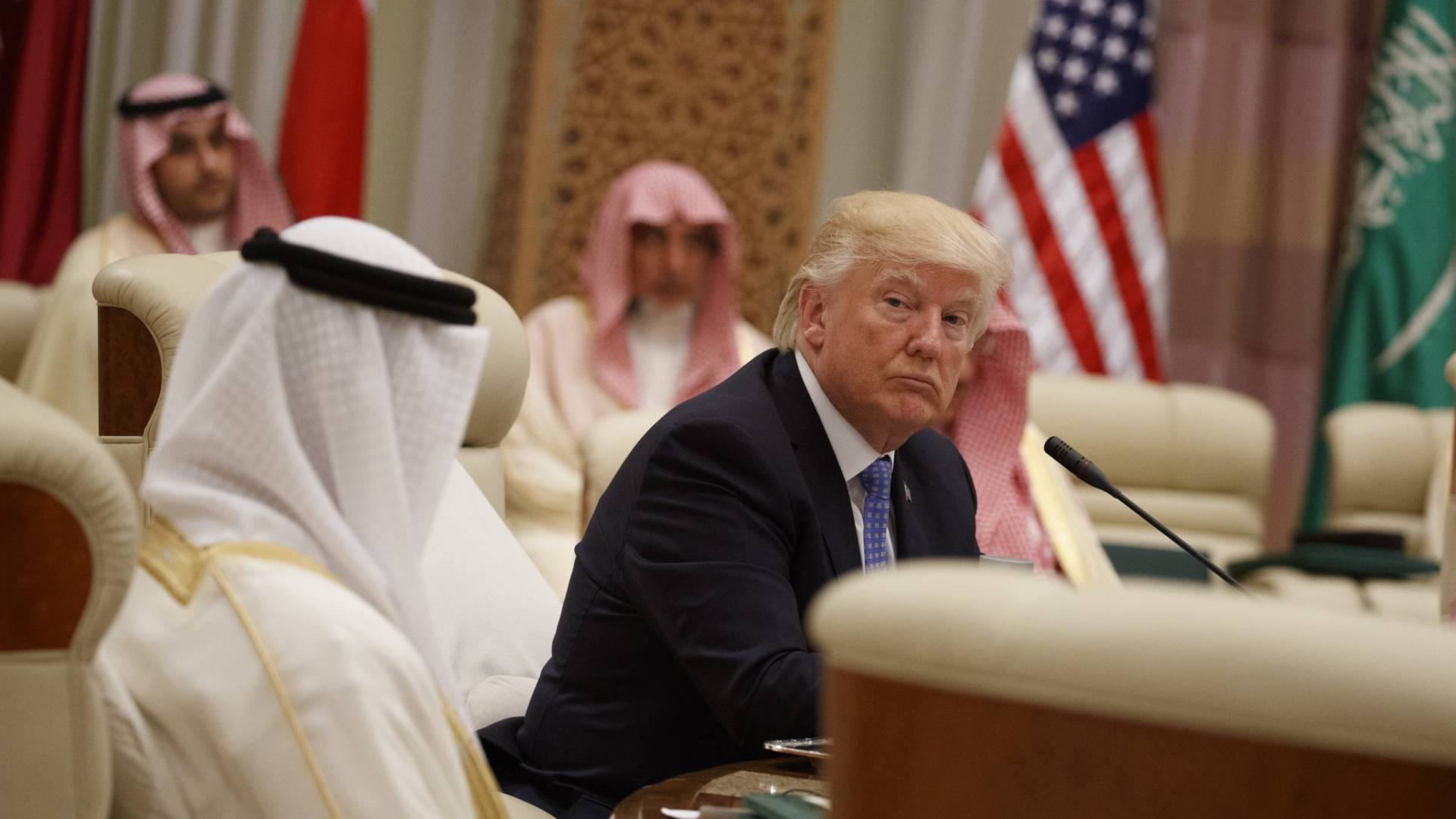
Day 81 | Trump says attack on Iran put on hold after Gulf states’ intervention
US President Donald Trump said the leaders of Qatar, Saudi Arabia, and the UAE asked him to “hold off” on a planned attack on Iran scheduled for Tuesday to allow space for “serious negotiations.” His comments came after Iran announced it had submitted its response to the latest US proposal through Pakistani mediation.
Meanwhile, the death toll from Israeli attacks on Lebanon since the start of the war has surpassed 3,000, according to health officials. As the attacks continue, the Israeli navy has begun intercepting and seizing vessels from an aid flotilla attempting to break the blockade on the Gaza Strip.
In a separate development, Iraq said it has launched an investigation into a drone attack that Saudi Arabia claims was launched from Iraqi territory.
Day 82 of the US-‘Israeli’ war on Iran
For further updates - visit the link below.
Read more: Day 82 | Trump says attack on Iran possible in ‘two or three days’ if no deal is reached
One ‘Israeli’ strike kills 10 in Lebanon, including three women and three children
An ‘Israeli’ strike on south Lebanon Tuesday killed at least 10 people including three women and three children, the health ministry said, despite a ceasefire in the ‘Israel’-Hezbollah war.
"An Israeli airstrike on the town of Deir Qanun al-Nahr in the Tyre district resulted in an initial toll of 10 martyrs, including three children and three women, in addition to three wounded, including a child", the ministry said in a statement, calling it a "massacre".
US resident released from Iranian prison, returns home: rights group
An Iranian citizen who holds permanent residency in the United States has been released from prison in Iran and has returned to the US, a rights group said Tuesday.
"Shahab Dalili, an Iranian citizen and US permanent resident who had been imprisoned in Evin Prison, was released after serving 10 years in prison. Following his release, he returned to the United States," the Human Rights Activists News Agency (HRANA) said, in a statement.
It said the man, who was sentenced for allegedly "cooperating with a hostile government", travelled from Iran to the Armenian capital Yerevan before returning to Washington "where he is now safe and reunited with his family", without specifying the date of his return.
‘Israeli’ officer killed in southern Lebanon: military
An ‘Israeli’ officer was killed in southern Lebanon, the ‘Israeli’ military said in a statement on Tuesday.
He is identified as Maj. (res.) Itamar Sapir, 27 years old, a deputy company commander in the 551st Brigade’s 7008th Battalion.
Sapir was killed on Tuesday morning in the village of Qouzah, north of Ayta ash-Shab, when a Hezbollah fighter opened fire from inside a building.
Other soldiers were wounded in the incident, Hebrew media says.
He is the eighth ‘Israeli’ soldier to be killed in southern Lebanon since the start of the ceasefire in April, and the 21th since the start of the Hezbollah-‘Israel’ hostilities in early March.
US, Iran trade threats but Trump says Tehran wants peace deal
President Donald Trump warned Tuesday that the United States may strike Iran again, a day after he said he had held off a major assault in hope of a deal to end the war -- but Tehran's army threatened to open "new fronts" if he went ahead.
Trump told reporters at the White House that he had been just "an hour away" from relaunching Washington's attacks on Iran before postponing the order, after weeks of a fragile ceasefire and talks to end the war that began on February 28.
"You know how it is to negotiate with a country where you're beating them badly. They come to the table, they're begging to make a deal," he said.
"I hope we don't have to do the war, but we may have to give them another big hit. I'm not sure yet."
But Iran's army spokesman Mohammad Akraminia earlier warned the Islamic republic would "open new fronts against" the United States if it restarted its attacks.
He added that Iran's military had used the ceasefire as an opportunity "to strengthen its combat capabilities".
Trump offered a deadline of several days for resuming strikes if a deal was not agreed.
"I'm saying two or three days, maybe Friday, Saturday, Sunday, something, maybe early next week, a limited period of time," he said.
Trump's new deadline came after he said on Monday that Gulf leaders had asked him to hold off on an attack at the 11th hour, which he did because "serious negotiations are taking place".
But if a deal was not agreed, he said he instructed the US military to be "prepared to go forward with a full, large-scale assault of Iran, on a moment's notice."
Trump had already indefinitely extended the truce and made clear he wants to exit a war that has proven to be a political liability, with Iran's control of the Strait of Hormuz rattling the global economy and hurting Americans at the pump.
Iran's Deputy Foreign Minister Kazem Gharibabadi wrote on X that Trump's comments meant the US leader was "calling a 'threat' a 'chance for peace'!"
Drone attack
Since the ceasefire took hold on April 8, Tehran and Washington have held a single round of talks, which failed to culminate in a deal.
Iran has repeatedly rebuffed Trump's offers on a deal and its control over the vital Hormuz strait has sent global oil prices spiraling.
Iranian foreign ministry spokesman Esmaeil Baqaei confirmed exchanges with the United States through mediator Pakistan and said Tehran made clear its "concerns".
The cleric-run state, whose supreme leader was killed in strikes on the first day of the war but has proven resilient, is demanding the release of Iranian assets frozen abroad and the lifting of long-standing sanctions.
After the Iranian threat of attacks on new fronts, the United Arab Emirates said a drone attack on its Barakah nuclear power plant last week originated from Iraqi territory, where Iran backs groups accused of launching attacks on Gulf nations in the war.
"As part of the ongoing investigation into the blatant attack on the Barakah Nuclear Power Plant on May 17, 2026, technical tracking and monitoring confirmed that the three drones... all originated from Iraqi territory," the Emirati defence ministry said.
A top Emirati official had already suggested Iran or one of its regional proxies was to blame.
Iran has been ramping up military pressure in the region.
The Revolutionary Guards, the ideological arm of Iran's military, threatened on Monday to put the internet fibre optic cables passing through the waterway under a system of permits.
Its Revolutionary Guards also said Monday that they struck groups linked to the United States and ‘Israel’ within the Iranian province of Kurdistan, near the border with Iraq, which it said were attempting to smuggle American weapons into Iran.
Qatari foreign ministry spokesman Majed al-Ansari told reporters that Doha, one of Iran's main targets in the war, believed "more time" was needed for the ongoing Pakistani-mediated efforts to push for Iran-US talks.
“Excessive” conditions
At the same time, Iran's foreign ministry said it has responded to the latest US proposal which Iranian media had described as "excessive" and offering "no tangible concessions".
On Sunday, Iran's Fars news agency said Washington had presented a five-point list, which included a demand for Iran to keep only one nuclear site in operation and transfer its stockpile of highly enriched uranium to the United States.
The US had refused to release "even 25 percent" of Iran's assets frozen abroad or pay any reparations for war damage, Fars added.
The report said the US had also made clear it would only cease hostilities when Tehran engages in formal peace negotiations.
Iran however has said it insists on its own demands, including the release of the frozen assets, the lifting of long-standing sanctions on the country and war reparations.
But later, the Tasnim news agency, citing an unnamed source close to the Iranian negotiating team, said the United States made one new step forward in the latest text by agreeing to waive oil sanctions while negotiations were underway.
Iran’s supreme leader says country rose to “level of great and influential power”
Iran's Supreme Leader, Ayatollah Mojtaba Khamenei, said Tuesday that Iran rose to the level of great and influential power, following the war with ‘Israel’ and the US.
The term “Sacred Defense” is a term historically used by Iran to describe its defense during the 1980–1988 Iran-Iraq War.
However, following the major US-‘Israeli’ military escalations and airstrikes against Iran, the Iranian government and state media have framed the country's recent military response as the "Third Sacred Defense."
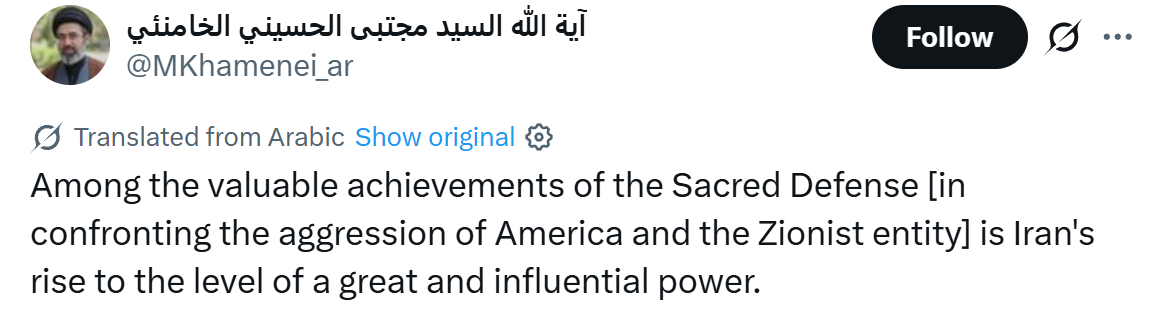
إن من بين الإنجازات القيمة للدفاع المقدس [في مواجهة عدوان أمريكا والكيان الصهيوني] صعود إيران إلى مستوى قوة كبرى ومؤثرة.
— آية الله السيد مجتبى الحسيني الخامنئي (@MKhamenei_ar) May 19, 2026
Trump says was “an hour” away from striking Iran
US President Donald Trump said Tuesday he was “an hour” away from carrying out strikes on Iran amid the stalled peace talks, after yesterday’s announcement of delaying the scheduled strikes at the request of Gulf leaders.
“I was an hour away,” says Trump when asked how close he was to carrying out an attack on the Islamic Republic.
“We may have to give them another big hit. I am not sure yet,” Trump adds in statements to reporters.
“You will know very soon.”
UAE says drones targeting nuclear plant came from Iraq
The United Arab Emirates said on Tuesday that the drones that targeted its nuclear plant last week came from Iraq -- from where Iranian-backed groups have launched several attacks since the Middle East war began.
"As part of the ongoing investigation into the blatant attack on the Barakah Nuclear Power Plant on May 17, 2026, technical tracking and monitoring confirmed that the three drones... all originated from Iraqi territory," the Emirati defence ministry said.
UAE intercepted 6 drones last 48 hours: ministry of defense
The UAE Ministry of Defence said Tuesday that its forces intercepted six drones in the past 48 hours.
The drones caused no casualties or damage, which targeted key facilities and civilian areas, according to the statement.
All drones originated from Iraqi territory, including the ones that targeted the Barakah nuclear power plant on May 17, the MoD added in its statement.
Iran stages mass weddings for couples ready for war “sacrifice”
Iranian authorities organized mass wedding ceremonies in Tehran for couples who had registered for a state-sponsored program under which they pledged their willingness to sacrifice their lives in the war their country is fighting against ‘Israel’ and the United States.
Media reports said the celebrations, held late Monday, included hundreds of couples and took place in several major squares across the capital, including 100 couples gathered at Imam Hussein Square in central Tehran.
The ceremonies were broadcast on state television in an apparent effort to boost public morale during wartime, particularly as US President Donald Trump has threatened to resume attacks on Iran amid a fragile ceasefire that took effect on April 8.
Iranian media reported that participants had joined what is known as the “self-sacrifice initiative,” under which they pledged to give their lives during the war by forming human chains outside power stations.
Authorities said millions of people, including prominent figures such as Parliament Speaker Mohammad Bagher Ghalibaf and President Masoud Pezeshkian, had also joined the initiative.
The couples arrived at Imam Hussein Square in military jeeps equipped with machine guns, where their marriage vows were officiated on a stage during a ceremony led by a cleric.
The stage was decorated with balloons and a giant portrait of Supreme Leader Mojtaba Khamenei, who has not appeared publicly since assuming office following the death of his father, former Supreme Leader Ali Khamenei, on the first day of the US-‘Israeli’ attack on the Islamic Republic on February 28, which triggered the outbreak of war in the Middle East.
In footage aired by the Mehr News Agency, a young woman wearing a white wedding dress said while standing beside her groom: “The country is certainly at war, but young people also have the right to get married.”
A young man standing beside his bride in a dark suit said he was pleased the occasion coincided with the anniversary of Imam Ali’s marriage to Fatimah, the daughter of Prophet Muhammad.
“We have received their blessings. Moreover, we came to offer our best wishes to people in the streets,” he said.
Mehr reported that 110 couples took part in the Imam Hussein Square ceremony alone. Images showed crowds of well-wishers carrying flowers and watching the event.
Since the outbreak of the war, Iranian authorities have regularly organized large pro-government gatherings on an almost daily basis in an effort to demonstrate popular mobilization amid the conflict.
Iran warns it will “open new fronts” against US
Iran’s army warns it will “open new fronts” against the United States if it resumes attacks, after US President Donald Trump said he had held off launching a new offensive in hopes of striking a deal.
“If the enemy is foolish enough to fall into the Zionist trap again and launches new aggression against our beloved Iran, we will open new fronts against it, with new equipment and new methods,” says army spokesman Mohammad Akraminia, according to Iran’s ISNA news agency.
Iran peace proposal demanding reparations, troop withdrawal
- Iran's newest proposal demands an end to hostilities on all fronts, the withdrawal of US forces near Iran, war reparations, the lifting of sanctions, and an end to the US marine blockade.
- Trump says there is a "very good chance" of a nuclear deal.
- Conflicting reports on concessions: Iranian sources claim Washington is offering sanctions lifting, though US officials denied concessions.
Iran’s latest peace proposal to the United States conditions an end to regional hostilities on the exit of US forces from areas near Iran and financial reparations for damage caused by the US-'Israeli' war, state media reported on Tuesday.
In the Iranian government's first public comments on the proposal, Deputy Foreign Minister Kazem Gharibabadi stated that Tehran is also demanding the total lifting of economic sanctions, the release of all frozen funds, and an immediate end to the US marine blockade on the country, according to the state-run IRNA news agency.
The baseline terms presented in the Iranian reports appear largely unchanged from a previous offer, which US President Donald Trump publicly rejected last week, labeling it "garbage."
Trump halts attacks amid diplomatic opening
Despite his previous dismissal, President Trump announced on Monday that he has paused a planned resumption of military attacks on Iran after receiving the new text from Tehran.
Trump stated that there is now a "very good chance" of reaching a comprehensive deal to limit Iran's nuclear program.
It remains undetermined whether active preparations had already been finalized for strikes that would mark a renewal of the war, which Trump initially started in late February.
Trump is under immense pressure to reach an accord that would reopen the strategic Strait of Hormuz.
While the US President has previously expressed hope that an end to the conflict was close, he has similarly threatened to unleash heavy strikes on Iran if Tehran fails to secure a deal.
Mixed signals
Negotiations between the two nations have been at a standstill for a month, and neither side has officially disclosed any public concessions.
However, a senior Iranian official suggested on Monday that Washington may be softening its stance on select demands.
According to the Iranian source, the US has agreed to release a quarter of Iran's frozen assets held in foreign banks, a sum totaling tens of billions of dollars.
Iran, however, continues to demand the release of all its assets.
Furthermore, the source claimed Washington has shown increased flexibility by agreeing to let Iran continue limited, peaceful nuclear activity under the direct supervision of the International Atomic Energy Agency (IAEA).
The United States has not confirmed any such agreements.
Speaking on the condition of anonymity, a U.S. official explicitly denied a report by Iran's Tasnim news agency claiming that Washington had agreed to waive Iranian oil sanctions while negotiations remain ongoing.
'Israel' orders urgent evacuations across southern Lebanon
- 'Israeli' army issued urgent evacuation orders for 12 specific towns and villages in southern Lebanon.
- Hezbollah previously launched multiple drones targeting an 'Israeli' military communications vehicle and troop gatherings.
The 'Israeli' military Arabic-language spokesperson, Avichay Adraee, issued an urgent and immediate warning directed at civilians residing in a long list of specific Lebanese towns and villages.
The 'Israeli' military ordered residents to immediately vacate their homes in the following targeted areas:
- Toura
- Al-Nabatieh Al-Tahta
- Houbbous
- Al-Bazouriyeh
- Tayr Debba
- Kafr Huna
- Ain Qana
- Labaya
- Jibshit
- Al-Shahabiya (Tayr Zibine)
- Burj Al-Shamali (Tyre)
- Houmein Al-Fouqa
The expansive list of municipalities signals a significant broadening of the active combat zones across southern and south-central Lebanon.
Hezbollah targets military hardware and troops
Earlier today, prior the evacuation warnings, Hezbollah announced that it had successfully carried out two separate offensive aerial operations utilizing explosive dive-bombing drones.
According to official statements from the group, the first drone attack directly targeted and struck an 'Israeli' military communications vehicle operating in the public square of the Lebanese border town of Al-Taybeh.
Shortly thereafter, the group launched a second aerial assault using a wave of dive-bombing drones.
This secondary strike targeted a concentrated gathering of 'Israeli' soldiers and military vehicles deployed just west of the border village of Arab Al-Aramshe.
Fars Governorate shifts all school examinations remotely; over security concerns
- School examinations across all educational levels in Iran's Fars Province will be conducted remotely.
- The shift was coordinated with the provincial Security Council.
Academic examinations for all educational levels across Fars Province have been officially moved to a non-attendance, remote format.
The directive was announced by Jalil Hasani, the Acting Deputy for Political, Security, and Social Affairs of the Fars Governorate.
According to Hasani, the decision was finalized based on deliberations and direct coordination with the members of the provincial Security Council.
Addressing family anxieties
The administrative shift applies universally to students across various academic stages throughout the province.
Officials noted that the transition to a virtual testing environment was implemented specifically in response to the deep concerns and growing anxieties expressed by the families of the students.
Under the new security and safety guidelines, students will not be required to appear physically at testing centers, and all scheduled examinations will be managed through remote channels.
Tehran Stock Exchange reopens after 80-day suspension
- Tehran Stock Exchange resumed trading at 9:00 AM today after an 80-day operational closure.
- While 28% of listed stocks traded in positive territory.
- Total sell queue mounted to 10.3 trillion tomans against 1,575 billion tomans in buy orders.
- More than 40 tickers representing companies damaged during the war remain temporarily suspended.
The Iranian stock market resumed operations today, marking the first trading session of the solar year 2026.
Trading commenced at 9:00 AM on the main floor of the Tehran Stock Exchange following an extended 80-day closure.
The market's return saw highly varied performance across sectors, with a notable portion of heavy-industry tickers remaining frozen as trading resumed for banking and automotive shares.
Trading imbalances
Upon reopening, a significant supply-and-demand imbalance emerged on the trading floor.
The total value of active buy orders stood at 1,575 billion tomans, while the aggregate sell queue surged to 10.3 trillion tomans.
Despite the heavy selling pressure, 28% of all listed stock tickers managed to trade within positive territory.
Conversely, major corporate tickers including National Iranian Copper Industries (NICICO / National Felli), Bandar Abbas Oil Refining Company (Shabandar), and the Social Security Investment Company (Shasta) led the downward trend at the top of the negative territory list.
Sector rollouts
The resumption featured the return of major automotive and banking equities to active trading.
Additionally, several leveraged investment funds were permitted to reopen, though authorities instituted a strict sales cap limiting transactions to 100,000 units per order.
However, the market reactivation remains incomplete. More than 40 corporate tickers belonging to businesses severely affected during the war era -concentrated mostly within the chemical and basic metals industrial groups- were excluded from the session and remain temporarily suspended from trading.
Explosions rattle Haifa, Nahariya
Loud explosions were heard across Haifa and Nahariya this morning due to interceptor missiles launched against suspicious aerial targets over the Galilee, occurring without the activation of warning sirens, according to 'Israeli' media.
Iran prepares new military tactics if war reignites: NYT
Iran could shift to more aggressive military tactics if hostilities resume, according to an analysis published by The New York Times.
The report says Iranian officials are believed to be assessing alternative battlefield strategies in preparation for any renewed confrontation.
Among the possible scenarios outlined in the analysis is an attempt by Iran to extend its control over the Bab el-Mandeb Strait, one of the world’s most critical maritime chokepoints.
Such a move could significantly disrupt global shipping routes and raise tensions across the wider region.
Hezbollah drones restrict 80 percent of ‘Israeli’ operations in Lebanon: Hebrew media
The broadcaster said ‘Israeli’ military assessments indicate that, in addition to casualties among troops, explosive drones have become one of the most serious operational threats confronting forces in southern Lebanon.
It added that many military missions are no longer being carried out during daylight hours due to fears of drone attacks.
The report noted that the growing use of drones has emerged as a major concern for the military leadership, with Prime Minister Benjamin Netanyahu previously describing the threat as a central challenge.
According to the broadcaster, the military is facing shortages in the equipment needed to counter the expanding drone threat.
It said anti-drone systems are being distributed to only a limited number of soldiers in each company due to insufficient supplies, raising concerns over the army’s ability to respond effectively.
Citing sources in 'Israeli' Military Intelligence Directorate, the report said Hezbollah has moved away from a highly organized command structure toward decentralized guerrilla-style operations.
The sources said Hezbollah fighters are now operating in smaller cells, carrying out rapid attacks and moving between villages across southern Lebanon to exploit operational gaps.
The report added that some of this shift is linked to the targeting of senior commanders from Hezbollah’s Radwan Force.
Hezbollah announced on Monday that it had launched 11 drone and rocket attacks targeting ‘Israeli’ troops and military vehicles in southern Lebanon and northern ‘Israel’.
VIDEO: Tehran hosts mass wedding amid decorated military vehicles and missiles
Iran fortifies missile network beneath mountains: NYT
Iran has used the ceasefire period to reactivate dozens of missile facilities previously targeted in airstrikes, according to The New York Times, citing a US military official.
The report says Tehran moved quickly to restore operational capacity at several strategic missile sites following recent attacks.
According to the official, Iran has also revised its military tactics in preparation for any renewed confrontation.
The adjustments reportedly include changes to deployment strategies, launch procedures and defensive positioning aimed at increasing survivability during future escalations.
The report adds that Iran has transferred large numbers of ballistic missiles into caves and fortified military complexes carved into granite mountains.


