US military seizes another oil tanker linked to Iran
Note: AI technology was used to generate this article’s audio.
- The US Department of Defense announced the seizure of the oil tanker Majestic X in the Indian Ocean.
- The move follows Iran's capture of two international cargo ships in the Strait of Hormuz on Wednesday.
- Tensions remain high as both nations continue naval interceptions despite a fragile, recently extended ceasefire.
The United States military seized a Guyana-flagged oil tanker associated with smuggling Iranian crude oil on Thursday, marking a significant escalation in the maritime standoff between Washington and Tehran.
The US Defense Department said that the vessel, identified as the Majestic X, was interdicted in the Indian Ocean. "We will continue global maritime enforcement to disrupt illicit networks and interdict vessels providing material support to Iran, wherever they operate," the Pentagon stated in a released briefing.
Seizure in the Indian Ocean
Footage released by the Defense Department showed US troops on the deck of the Majestic X.
Ship-tracking data placed the vessel between Sri Lanka and Indonesia, a location similar to where the tanker Tifani was previously seized by American forces. The Majestic X was reportedly bound for Zhoushan, China.
The tanker, formerly named the Phonix, was sanctioned by the US Treasury in 2024 for its role in transporting Iranian oil in violation of international sanctions.
Treasury officials have previously noted that Iran utilizes a "sprawling network" of ship management firms and jurisdictions, often employing tactics such as false documentation and name changes to bypass trade restrictions.
Read more: US military says it boarded sanctioned tanker MT Tiffany in international waters
Tit-for-tat maritime escalations
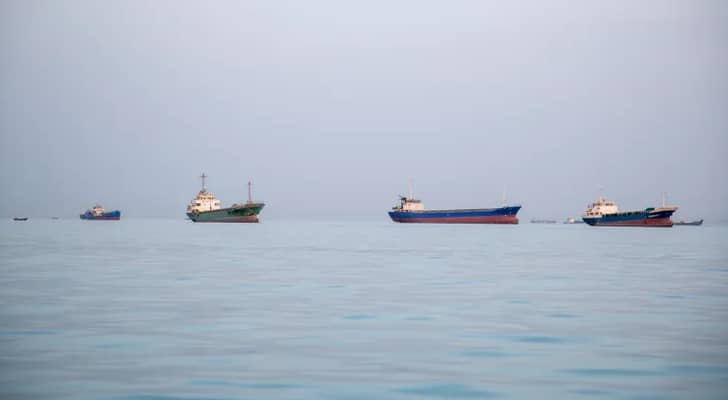
The US operation came just 24 hours after Iran’s Revolutionary Guard Corps (IRGC) attacked three cargo ships in the Strait of Hormuz, capturing two of them.
The seized vessels were identified as the Panama-flagged MSC Francesca and the Greek-owned, Liberia-flagged Epaminondas.
While Panama and other international bodies condemned the seizures as illegal attacks on maritime security, the White House maintained that Iran’s actions did not technically violate the current truce.
White House Press Secretary Karoline Leavitt noted that the ships were "not US or 'Israeli' vessels" but rather "two international vessels."
Ceasefire under strain
The latest seizures have placed an immense strain on the 10-day ceasefire extended by President Donald Trump on Tuesday. While the truce has paused direct airstrikes and missile attacks on land, the "naval war" in the region’s waterways continues unabated.
Iran’s ability to restrict traffic through the Strait of Hormuz remains a major strategic advantage for Tehran. Iranian officials, including Parliament Speaker Mohammad Bagher Ghalibaf, have warned that a complete ceasefire "only makes sense" if the US naval blockade of Iranian ports is lifted, calling the continued US interceptions a "flagrant breach" of the agreement.
Since the outbreak of hostilities between Iran, 'Israel', and the United States on February 28, over 30 ships have come under attack in the waters of the Persian Gulf and the Gulf of Oman, causing global oil prices to surge.