'Israel' delays controversial E1 settlement bids past election
Note: AI technology was used to generate this article’s audio.
- The bidding deadline was delayed past the October 27 election to stop Prime Minister Netanyahu from using it as campaign propaganda.
- Despite court approval for the project, Maale Adumim's mayor called the delay political and promised a legal appeal.
‘Israeli’ Attorney General Gali Baharav-Miara announced on Sunday a one-month postponement for construction bids regarding the controversial E1 settlement plan in the occupied West Bank, pushing the submission deadline past the upcoming October 27 general election.
Her office stated that the delay is intended to reduce concerns that the tender for more than 1,200 housing units could be weaponized for campaign propaganda as Prime Minister Benjamin Netanyahu faces a tight electoral contest to remain in power.
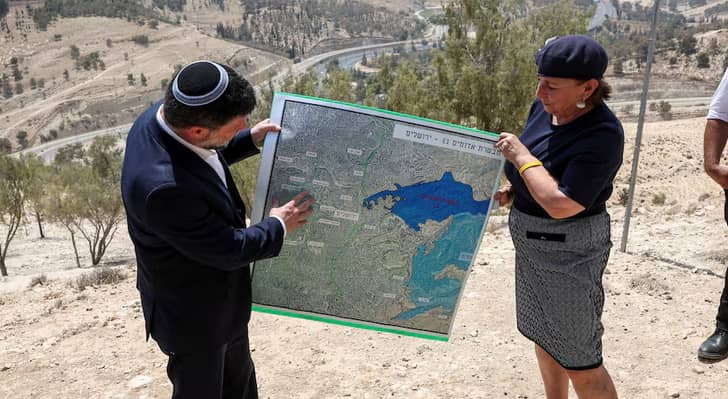
The E1 project, which connects Jerusalem with the large ‘Israeli’ settlement of Maale Adumim, has drawn widespread international condemnation because it would effectively sever ‘Israeli’-annexed East Jerusalem from the rest of the West Bank.
Six European nations, including the United Kingdom and France, formally called on ‘Israel’ to halt the project in August, aligning with decades of opposition from successive US administrations.
If fully implemented, the project carries severe consequences for the Palestinian population across several fronts:
- Severing the West Bank: Constructing an ‘Israeli’ urban settlement bloc in the E1 corridor creates a continuous line of ‘Israeli’ infrastructure from Jerusalem eastward. This physically divides the northern West Bank from the south, forcing Palestinians onto longer, restricted bypass routes or through ‘Israeli’ military checkpoints.
- Isolating East Jerusalem: Encircling East Jerusalem with settlement infrastructure isolates Palestinian neighborhoods in the city from their surrounding West Bank hinterland, restricting movement, commerce, and access to healthcare and education.
- Displacement of Bedouin Communities: The project directly threatens thousands of Palestinian Bedouins living in local communities (such as Khan al-Ahmar), who face eviction, home demolitions, and forced relocation.
- Threatening a Future State: By fragmenting the land into disconnected enclaves and surrounding East Jerusalem, the development makes a geographically contiguous Palestinian state virtually impossible to realize on the ground.
Despite the international backlash, an ‘Israeli’ court recently rejected a petition from human rights groups that argued the project would lead to the eviction of hundreds of Palestinian residents, ruling that adequate legal safeguards are already in place.
In response to the attorney general's decision, Guy Yifrach, the mayor of Maale Adumim, declared that the municipality will file a legal petition against the postponement, calling the delay a political decision after waiting more than 30 years for the development to proceed.