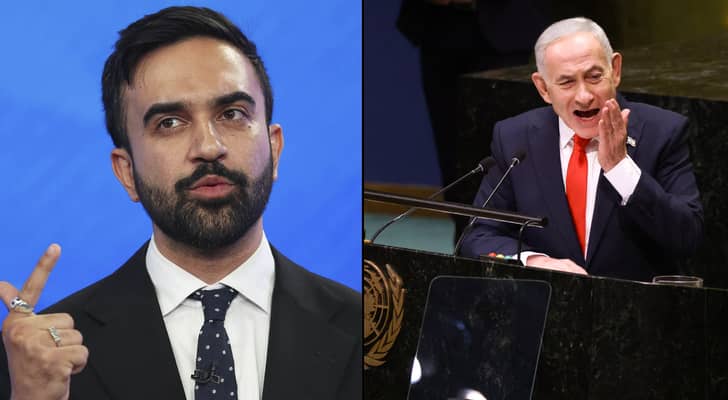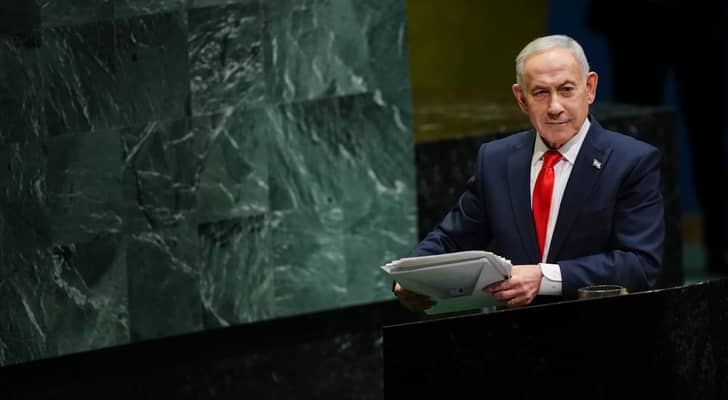
Amid 73,000 reported deaths, Netanyahu denies genocide at the UN
Note: AI technology was used to generate this article’s audio.
- The Gaza war has produced a documented death toll exceeding 73,000, alongside more than 170,000 reported injuries, according to figures provided by Palestinian health authorities and cited in international reporting.
- UN satellite assessments have documented damage to a vast majority of structures in Gaza, while international courts and UN bodies have documented allegations and findings involving starvation, attacks on civilians and forced displacement.
As ‘Israeli’ Prime Minister Benjamin Netanyahu rejected allegations of genocide during his address to the United Nations General Assembly, the scale of destruction documented across the Gaza Strip provides the backdrop to an increasingly consequential international legal debate.
More than 73,000 Palestinians have been reported killed and more than 170,000 injured since the war began, according to Palestinian health authorities. Thousands more are believed to remain missing beneath the rubble.

The figures represent more than a cumulative death toll. They reflect the destruction of homes, hospitals, schools and essential infrastructure across a densely populated territory.
A civilian death toll on an unprecedented scale
Women and children account for a substantial share of those killed, according to Palestinian health authorities and UN reporting.
The number of wounded has exceeded 170,000, with thousands suffering life-changing injuries. Palestinian health officials have also reported thousands of amputations, including among children.
The true toll remains difficult to establish because large areas of Gaza have been repeatedly cut off from medical services, while bodies remain trapped beneath destroyed buildings.
Journalists, medical workers face deadly conditions
The war has also taken a heavy toll on groups protected under international humanitarian law.
Hundreds of journalists and media workers have been killed in Gaza, according to journalist-monitoring organizations. Health workers have also been killed in large numbers, while repeated attacks and damage have severely reduced the territory's medical capacity.

The UN has separately reported the deaths of hundreds of humanitarian workers since the start of the war.
The destruction of hospitals has compounded the crisis. UN satellite analysis has documented extensive damage to civilian structures, while Gaza's health system has struggled to provide treatment amid shortages of medicines, fuel and medical equipment.
Gaza's physical landscape transformed
UNOSAT satellite analysis provides a measurable picture of the destruction.
An assessment published in August 2025 found that approximately 78% of structures in Gaza had been affected, including more than 102,000 structures classified as destroyed and more than 17,000 severely damaged. The assessment estimated that more than 282,000 housing units had been damaged.
An earlier UNOSAT assessment published in October 2025 put the proportion of affected structures at approximately 81%, with more than 123,000 structures classified as destroyed.
The figures illustrate the scale of what researchers and urban experts have described as widespread urban destruction. They also help explain the repeated displacement of Gaza's population as residents have been forced to move between areas during military operations.
Starvation becomes part of the legal debate
The humanitarian crisis has also become central to international legal proceedings.

In November 2024, the International Criminal Court issued an arrest warrant for Netanyahu. The court said there were reasonable grounds to believe he bore criminal responsibility for the alleged war crime of starvation as a method of warfare, as well as crimes against humanity including murder, persecution and other inhumane acts.
The ICC also said there were reasonable grounds to believe that Netanyahu and then-Defense Minister Yoav Gallant intentionally deprived Gaza's civilian population of food, water, medicine, medical supplies, fuel and electricity during the period examined by the court.
The arrest warrant represents allegations at the criminal-proceedings stage, not a conviction.
Genocide case remains before the ICJ
South Africa's genocide case against ‘Israel’ remains before the International Court of Justice.
In January 2024, the ICJ ordered ‘Israel’ to take binding provisional measures under the Genocide Convention, including measures aimed at preventing acts falling within the convention. The court found that at least some of the rights claimed by South Africa were plausible and that there was a real and imminent risk of irreparable prejudice to those rights.
The provisional-measures rulings were not a final determination that genocide had occurred. The underlying case remains pending.
That distinction is significant as the legal process continues.
The West Bank: a parallel escalation
The Gaza war has unfolded alongside a sharp escalation in the occupied West Bank and East Jerusalem.
More than 1,000 Palestinians have been killed there during the broader period, according to Palestinian and UN reporting, while thousands have been detained amid intensified military raids and settler violence.
The ICC's Palestine investigation also covers the West Bank, including East Jerusalem. In issuing Netanyahu's arrest warrant, the court said its jurisdiction extended to Gaza and the West Bank, including East Jerusalem.
What the record shows
The available evidence documents several overlapping dimensions of the war: a mass civilian death toll, extensive injuries, the collapse of health services, widespread destruction of civilian structures and repeated displacement.
International courts have separately taken action over alleged violations of international law, while the final legal determination on the genocide allegations remains pending before the ICJ.
Against that backdrop, Netanyahu's rejection of genocide allegations at the UN represents a direct challenge to findings and allegations advanced by international institutions, Palestinian authorities and rights organizations.
The legal proceedings, humanitarian assessments and satellite imagery will continue to shape the international record of the war long after the fighting ends.