South Pars gas facility

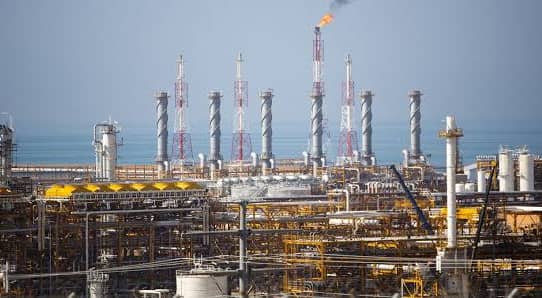
Iran says South Pars gas field back to half capacity after March attack
Note: AI technology was used to generate this article’s audio.
- Iran's Deputy Oil Minister Ahmad Zeraatkar says 50% of South Pars gas field capacity damaged in March's ‘Israeli’ air strike has now been restored.
- Full operational capacity is expected by the end of September, with remaining repairs completed before winter.
Iran's Deputy Oil Minister Ahmad Zeraatkar said Wednesday that half of the production capacity knocked out at the South Pars gas field has now been restored, nearly six months after an ‘Israeli’ air strike forced the facility offline in March.
The semi-official Fars news agency quoted Zeraatkar as saying the field is on track to reach full operational capacity by the end of September, with all remaining repair work to be finished before winter sets in.
The figure marks a steady climb from where officials put the recovery just a month earlier. In late August, Zeraatkar said roughly 40 percent of the damaged capacity had returned to production, meaning the latest update reflects a 10-point jump over roughly four weeks.
South Pars, shared with Qatar (where it's known as the North Field), is the world's largest natural gas field and the backbone of Iran's domestic energy supply, at times accounting for more than 70 percent of the country's gas needs.
The March strike hit onshore processing facilities along the Bushehr coast rather than the offshore platforms themselves, which Iranian officials have said largely escaped damage; the bottleneck has instead been the capacity of onshore refineries to receive and process the gas once it's brought up.
That distinction is part of why restoration has proceeded in stages, platform by platform and refinery by refinery, rather than all at once.
Iranian officials have offered a string of incremental updates since the spring: three offshore platforms resuming production by late May, reconstruction of the Phase 14 refinery described as continuing at full speed, and debris-clearing work at other damaged sites reported as ongoing. Zeraatkar's comment that "the planned schedule for restoring capacity has been met" fits that pattern of officials characterizing the rebuild as on-track and ahead of the country's own targets.
Read more: Iran says US refused visas to its media team for Pezeshkian’s UNGA visit