Texas removes Islamic Algebra contributions, reframes 'Israel'
Note: AI technology was used to generate this article’s audio.
- Mandatory lessons on Muslim advances in algebra and astronomy were removed in favor of topics on early military conflicts and slavery.
- New standards explicitly mandate teaching that Israel was established in 1948 by the US as the ancestral home of the Jewish people.
- Curriculum now frames 9/11 under the "rise of radical Islam," linking it directly to terrorism, al-Qaeda, and subsequent US wars.
The Texas State Board of Education (SBOE) has approved sweeping revisions to its social studies curriculum standards, sparking widespread concern over how Islamic history, global conflicts, and foreign policy will be taught to millions of public high school students.
The revised curriculum, set to be phased into classrooms starting in the 2030–31 school year, removes long-standing requirements regarding Muslim scientific and mathematical achievements while placing greater focus on conflict, political Islam, and post-9/11 security operations.
Under the approved changes, high school standards no longer mandate teaching Muslim contributions to foundational fields like algebra and astronomy.
Critics highlight that removing these contributions obscures foundational pillars of modern science and mathematics.
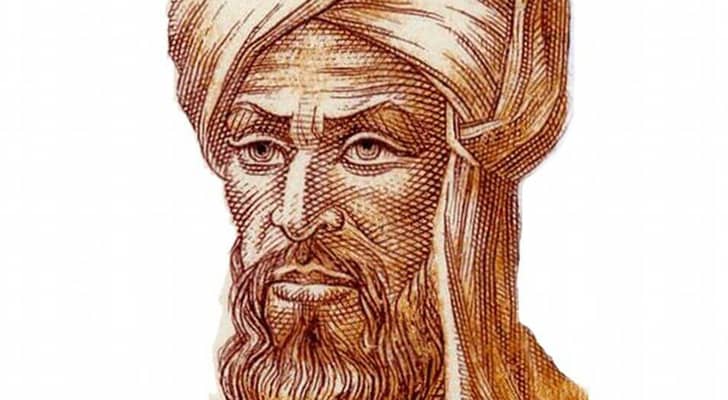
For instance, the very word "algebra" traces its linguistic roots directly to al-jabr, an Arabic term featured in the title of the groundbreaking 9th-century treatise Al-Kitab al-Mukhtasar fi Hisab al- Jabr wal-Muqabala ("The Compendious Book on Calculation by Completion and Balancing"), authored by the Persian-Muslim mathematician Muhammad ibn Musa al-Khwarizmi.
Translating literally to "restoration" or "completion," al-jabr referred to the fundamental mathematical technique of transposing a negative quantity across an equation to make it positive, a legacy Latinized as algebra during the Middle Ages that remains central to global STEM education today.
Despite these foundational legacies, revised units on the early history of Islam focus instead on military campaigns, slavery, and historical conflicts.
Furthermore, world history standards frame the September 11 attacks under the broad topic of the "rise of radical Islam," linking the event directly to terrorism.
The curriculum also incorporates domestic and foreign policy post-9/11, covering the US-led wars in Iraq and Afghanistan, key political figures such as George W. Bush, Colin Powell, and Condoleezza Rice, and the decline of civil liberties under the PATRIOT Act.
While proponents argue the standards establish a structured, fact-based approach to history and civic literacy, Muslim civil rights groups and advocacy organizations criticize the edits for promoting selective historical narratives and framing Islam predominantly through a lens of violence and extremism.
Proposed Curriculum Revisions on World War II and ‘Israel’

The provided image showcases the official administrative document titled "Text of Proposed New 19 TAC" detailing specific proposed amendments to subsection (24), which covers World War II and Global Crisis curriculum requirements. The draft text highlights several additions and strikethroughs modifying how the Holocaust and the establishment of Israel are framed:
The original standard, marked with double strikethroughs (explain the causes and consequences of the Holocaust, including Nazi genocide of the Jews and the creation of the modern state of Israel]), is systematically removed.
The revised text breaks down the Holocaust into distinct sub-requirements: defining it as state-sponsored persecution by the Nazi regime (C), identifying antisemitism as its primary cause (D), and recognizing its consequences, including demographic shifts and the coining of the term "genocide" (E).
Paragraph (F) adds a newly underlined mandate requiring students to "explain how Israel, the ancestral home of the Jewish people, was established in 1948 by the United States".
These institutional shifts in public education reflect a broader historical pattern across the United States, where state institutions, school curricula, and official narratives have repeatedly sought to strip away or sanitize uncomfortable historical truths.
From the systematic erasure of Indigenous American histories, where centuries of forced displacement, boarding school assimilation, and land theft were reconfigured into romanticized tales of Westward expansion, to current efforts removing Arab, Muslim, and non-Western contributions from textbooks, the rewriting of history serves as an enduring mechanism of state control. Selective memory in public education not only marginalizes minority populations but intentionally restricts future generations from understanding the full complexity of global and domestic history.