

Day 202 | Trump says he’s at major crossroads with Iran
Despite an April ceasefire established with Hezbollah, 'Israeli' military strikes targeted multiple towns across southern Lebanon.
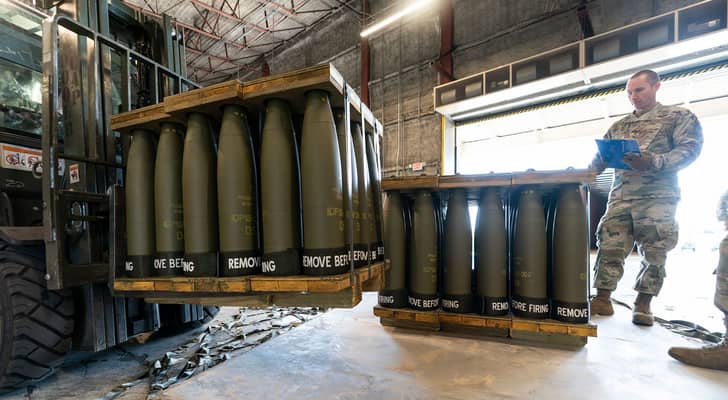
On the diplomatic front, a senior Democratic lawmaker in the United States announced plans to place a formal hold on a proposed $2.8 billion bomb sale to 'Israel'.
Concurrently, 'Israel' and Morocco reached an agreement to fully upgrade their diplomatic relations, which includes opening formal embassies and appointing mutual ambassadors.
In regional security developments, Saudi Arabia announced that its forces intercepted a drone launched by the Houthi movement toward the holy city of Makkah.
The Yemeni group denied launching any such attack, characterizing reports of the strike as false.
Following the Saudi statement, several Arab and Islamic countries issued official statements condemning the reported attack on the holy site.
VIDEO - ‘Israel’ carries out controlled explosions in southern Lebanon
‘Israeli’ forces carry out controlled explosions and strikes in the village of al-Mansouri, in the south of Lebanon, seen from the nearby village of Hanniyeh.
Lebanese President Joseph Aoun in an interview said he wants to reach a security agreement with ‘Israel’ once it withdraws from the south, and is determined to disarm Hezbollah without resorting to confrontation.
Iran shot down at least two MQ-1 drones recently: US media
Iranian forces have brought down at least two American MQ-1 unmanned aircraft in recent days, according to US officials cited by CBS News.
The officials did not specify the exact locations or which MQ-1 variant was involved.
The US military has fielded two main types: the older Predator, retired by the Air Force in 2018 after extensive use in Iraq and Afghanistan, and the larger Gray Eagle, still operated by the Army, including special operations forces.
Both are designed for intelligence, surveillance, and reconnaissance but can also carry Hellfire missiles.
In the Strait of Hormuz, these drones provide persistent surveillance of the vital waterway, track Iranian military activity, and monitor threats to American forces and commercial shipping.
If the lost aircraft were older Predators, the combined cost would be roughly $8 million; Gray Eagles cost tens of millions each depending on the variant.
The losses come amid a broader toll on American unmanned systems since the conflict with Iran began following US-‘Israeli’ strikes on February 28.
A Congressional Budget Office report this week indicated at least 24 MQ-9 Reapers have been lost, valued at roughly $720 million, along with an MQ-4C Triton worth about $150 million.
Iranian state media and the Islamic Revolutionary Guard Corps have claimed multiple MQ-1 shoot-downs over the Strait of Hormuz in the same period.
IRGC statements described the drones as “intruding” aircraft destroyed by advanced air defense systems operating within Iran’s integrated network, with claims of up to four MQ-1s brought down in recent days east and west of the strategic waterway.
Tehran has also reported downing additional MQ-9 Reapers near Qeshm Island, asserting one was the 53rd of that type destroyed during the conflict.
Iranian officials frame these actions as responses to violations of Iranian airspace and territorial waters amid the ongoing hostilities.
Trump says has “big decision” coming up on Iran
US President Donald Trump said he is approaching a critical decision over whether to resume large-scale military operations against Iran, according to an interview with Axios published Thursday.
Trump said he is weighing whether renewed attacks could bring the nearly seven-month-old war
to an end.
"I have a big decision coming up. Do I want to go in and annihilate them [Iran's leadership] or do I not?” Trump said.
“It's a big decision. Anything could happen with me,” he added.
His comments come ahead of a planned meeting with leaders from the six Gulf Cooperation Council countries on the sidelines of the United Nations General Assembly in New York next week.
Trump seeks Gulf input
Trump told Axios that he wants to hear directly from regional allies before determining the next steps in the conflict.
"I want to find out where they are and how they are doing. We have been very protective of them," Trump said.
The meeting is expected to include leaders or foreign ministers from Saudi Arabia, the United Arab Emirates, Qatar, Bahrain, Kuwait and Oman.
Axios reported that discussions are expected to include US plans for the postwar regional order.
Trump has previously indicated that he hopes the conflict is nearing an end and said Wednesday that Iran wants to reach a deal with Washington.
Iran has not publicly confirmed that direct negotiations with the United States have resumed, while Iranian officials have said any diplomatic process would depend on conditions set by Tehran.
US maintains military presence
Despite Trump's comments about potentially ending the war, US officials have said American forces will maintain their current level of deployment in the Middle East through the end of the year, keeping them prepared for a possible return to full-scale combat.
The conflict has also widened to Yemen, while disruption around the Strait of Hormuz continues to affect regional energy shipments.
Only three commercial vessels reportedly transited the waterway on Wednesday, compared with 12 the previous day.
Trump says he has “big decision” coming up on Iran
US President Donald Trump said Thursday that he has a “big decision” coming up on Iran, in statements reported by Axios.
"I have a big decision coming up. Do I want to go in and annihilate them [Iran’s leadership] or do I not?” Trump said.
“It's a big decision. Anything could happen with me,” he added.
Iran urges caution over Mecca drone claim, calls it "false flag"
Iran has urged caution over Saudi Arabia’s claim that a Houthi drone was intercepted near Mecca, saying the incident should not be used to accuse a specific party without evidence.
Iranian Foreign Ministry spokesperson Esmaeil Baqaei said any attack on Islamic holy sites, including Mecca, Medina and Al-Aqsa Mosque, as well as any threat to visitors and residents, is condemned.
His remarks came after Saudi Arabia said its air defenses intercepted and destroyed a drone south of Mecca before it entered the holy city’s restricted airspace. Saudi authorities said the drone was launched by the Houthis.
Iran rejects attribution
Baqaei said that simply claiming a drone was intercepted while heading toward Mecca "cannot constitute grounds for accusing a specific party," noting that Yemen's Houthi-led government had explicitly denied targeting the holy city.
The Houthis have rejected Saudi Arabia’s account, describing the allegation as false and denying that they target Islamic holy sites.
ان أي اعتداء على الأماكن المقدسة الإسلامية، ولا سيما مكة المكرمة والمدينة المنورة والمسجد الأقصى، وكذلك تهديد الزائرين والمجاورين لها، هو أمر مدان.
— Esmaeil Baqaei (@IRIMFA_SPOX) September 17, 2026
وفي الوقت نفسه، فإن مجرد ادعاء اعتراض طائرة مسيرة في طريقها إلى مكة المكرمة لا يمكن أن يشكل أساسا لاتهام طرف بعينه، ولا سيما…
Warns against "false flag" claims
Baqaei also called for the security of Islamic holy sites not to be politicized or used to fuel regional tensions.
He warned that the region had witnessed what he described as numerous "false flag" operations in recent months, which he said were intended to divert public attention from what Iran describes as crimes by 'Israel' and the United States and to create divisions among Muslim countries.
"Vigilance and caution are necessary," Baqaei said.
One killed, two Injured after drone interception in Saudi Arabia's Taif
- This is the first reported death by a Houthi strike this month.
A drone interception in Saudi Arabia's southwestern governorate of Taif has left one person dead and two others injured, according to Saudi state television.
The person killed was identified as a Yemeni resident, the report said.
The two injured were identified as a Saudi national and a Pakistani national.
The incident marks the first death announced in the kingdom this month amid intensified attacks on Saudi Arabia by Yemen's Iran-backed Houthi movement.
UN probe finds grounds to suspect US war crimes in Iran
- UN--commissioned human rights experts found "reasonable grounds" to believe the US committed war crimes in two Iran airstrikes on Feb. 28.
Human rights experts commissioned by the United Nations' top human rights body have concluded there are "reasonable grounds" to believe the United States committed war crimes during two airstrikes in Iran earlier this year, according to a statement from the international fact-finding mission on Iran on Thursday.
Two strikes under scrutiny
The mission's findings center on a pair of airstrikes carried out on Feb. 28, at the outset of the US.-’Israeli’ war against Iran.
Together, the strikes are reported to have killed at least 178 civilians, including women and children.
The first strike reportedly involved Tomahawk missiles fired at the Shajareh Tayyebeh school in the southern city of Minab, a site the fact-finding mission described as "clearly identifiable."
A US munition is believed to have struck the school, though there has been no final, authoritative accounting of what happened there. Iranian state media have put the death toll at 168 people, most of them children.
The second strike hit a sports complex and residential area in the southern city of Lamerd, also on Feb. 28. According to the mission, precision-guided missiles dispersed tungsten pellets over the area, which it likewise characterized as "clearly identifiable."
The Mission's conclusion
The fact-finding team said the evidence gives reasonable grounds to believe the United States committed the war crime of launching indiscriminate attacks that resulted in civilian deaths, injuries, or damage to civilian property.
Read more: UK, US, Dutch agencies warn of Iranian spyware campaign
Iran’s acting defense minister says women are vital to defense industry
- Iran's Acting Defense Minister, Sardar Ibn al-Reza, told a gathering of women in the defense industry that the sector's story cannot be told without their contribution.
Iran's Acting Minister of Defense and Armed Forces Logistics, Sardar Ibn al-Reza, told a gathering of women working in the country's defense sector Thursday that their role has become inseparable from the industry's achievements, according to Iranian media.
Addressing the meeting, Ibn al-Reza said that no complete account of the country's defense industry could be given without acknowledging the contribution of women, describing their presence as a defining part of the sector's identity rather than a peripheral one.
He went on to place that contribution in a broader social context, noting that women make up half of Iran's population and represent one of the most influential pillars of society. Their role in the country's overall development, he said, is something "not hidden from anyone."
The minister singled out the scientific and technical dimension of that role, saying women in the defense industry stand at the forefront of scientific research, technological development, and the shaping of the sector's future direction.
He expressed pride in the capabilities women have demonstrated within the industry, stating plainly that its future "is unimaginable without their presence and serious participation."
Ibn al-Reza closed his remarks by framing the point as a matter of national principle, saying that Iran does not build its future through the efforts of men alone, the women of the country stand alongside them in that undertaking.
The comments come amid a broader push within Iran's defense establishment in recent years to expand the recruitment and visibility of women across its institutions, part of a wider narrative promoted by Iranian officials linking female participation in science, technology, and defense to the country's post-revolutionary development goals.
Read more: Pezeshkian says US sanctions aim at Iran’s internal collapse
Iran orders Swedish diplomat to leave within 48 hours
Iran’s Foreign Ministry said it has informed Sweden’s ambassador that one Swedish diplomat must leave Iran within 48 hours, in response to Stockholm barring an Iranian diplomat from continuing his duties at the Iranian Embassy in Sweden. Tehran condemned the Swedish decision.
Turkey suspends flights by Iran’s largest airline
- The Tehran–Ankara route is one of Iran's most heavily trafficked international air links, so losing it is a major blow to Mahan Air and Iran's already strained aviation sector.
- ISNA reports the halt applies to flights in both directions with no resumption date given; other airlines continue flying the route.
Turkish authorities have directed Mahan Air, Iran's largest carrier, to suspend all flights to Turkey, a person familiar with the matter told the Associated Press Thursday, marking one of the most consequential disruptions yet to Tehran's already battered aviation industry.
The Iran-Turkey corridor is among the busiest and most heavily used air routes connecting Iran to the outside world, serving as a critical link for passengers, cargo, and business travel between the two countries.
Losing it represents a serious setback for Mahan Air and for an Iranian aviation sector that has spent years operating under the weight of international sanctions, aging fleets, and limited access to spare parts and new aircraft.
According to Iran's ISNA news agency, the suspension affects flights between Tehran and Ankara in both directions and is set to take effect this week, with no timeline given for when service might resume.
ISNA noted that other carriers continue to operate on the route, meaning the immediate impact will fall most heavily on Mahan Air itself rather than on all Iran-Turkey air travel.
The Sanctions Behind the Move
The suspension follows a sweeping round of US Treasury sanctions announced on Sep. 8 under "Operation Economic Outcast," an ongoing campaign targeting Iran's aviation network.
The Treasury's Office of Foreign Assets Control designated 27 Iranian airlines along with nine third-country intermediaries accused of helping those carriers evade earlier restrictions, obtain aircraft and parts, and move cargo internationally.
Treasury Secretary Scott Bessent framed the sanctions as a warning to any company that continues doing business with the designated airlines, stating that firms servicing them risk being cut off from the global financial system entirely.
Read more: Pezeshkian says US sanctions aim at Iran’s internal collapse
Only 3 vessels transited Strait of Hormuz on Wednesday, Reuters says
- The count excludes vessels that may have crossed with their AIS transponders switched off.
Preliminary ship-tracking data released Thursday shows commodity vessel transits through the Strait of Hormuz collapsed to just three ships on Wednesday, Reuters reported..
That figure marks a sharp drop from the 12 vessels that passed through the waterway a day earlier, and is well below the 10-day average of roughly 17 transits per day.
The Strait of Hormuz is one of the world's most critical chokepoints for commodity shipping, making any sudden decline in traffic through it a closely watched signal.
Notably, the reported numbers may understate actual transit activity.
The figures exclude any vessels that may have passed through the strait with their Automatic Identification System (AIS) transponders switched off, a tactic sometimes used to avoid detection.
Read more: Vessel hit by unidentified projectile in Strait of Hormuz, UKMTO says
Trump to convene Gulf leaders at UN General Assembly: Axios
- Trump will meet GCC leaders Tuesday at the UN to discuss a postwar Iran strategy.
- The Trump administration plans to finalize its regional framework after midterms following war impacts.
- Invitations may expand to other Arab/Muslim leaders, while no Trump-Netanyahu meeting is scheduled.
US President Donald Trump is expected to host a meeting with leaders from Gulf nations next Tuesday on the sidelines of the UN General Assembly in New York to map out next steps in the war with Iran, three sources with direct knowledge told Axios.
The White House declined to comment on the upcoming session.
The meeting is set to focus on US concepts for a postwar strategy as Trump and his senior team develop a "day-after" plan that officials expect to finalize after the midterm elections.
The US State Department dispatched initial invitations on Wednesday.
Sources indicated the high-level meeting could expand beyond the core Gulf states to include additional Arab and Muslim leaders.
Diplomatic Push
The news of the diplomatic gathering follows statements made by Trump on Wednesday, where he remarked that "hopefully we are towards the end of the war."
Trump again asserted that Iran is seeking to negotiate an end to hostilities, stating that the US heard the stance from Iran directly.
The planned discussions come after Gulf countries hosting US military bases experienced major Iranian missile and drone attacks during the war, alongside severe economic losses stemming from disruptions to oil and natural gas exports.
Participants
Sources confirmed to Axios that Trump plans to meet with leaders or foreign ministers from all six countries comprising the Gulf Cooperation Council: Saudi Arabia, the United Arab Emirates, Qatar, Bahrain, Kuwait, and Oman.
Concurrently, 'Israeli' Prime Minister Benjamin Netanyahu has expressed interest in meeting with Trump while in New York, though an 'Israeli' source confirmed that no meeting between the two leaders has been scheduled.
The setup mirrors actions taken during last year's UN General Assembly, where Trump met with leaders from eight Arab and Muslim countries to outline a draft peace plan for Gaza before presenting it publicly a week later, leading to a war-ending agreement shortly thereafter.
Leaked photos show destruction at US military bases from Iranian strikes: CBS
- Newly released images reveal widespread damage to buildings, aircraft, and vehicles at US bases in the Middle East following Iranian strikes.
- A DoD report documented up to $3.7 billion in lost gear—including nearly 60 aircraft—across eight regional nations.
- Deployed service members disputed War Secretary Pete Hegseth's claims, asserting the strikes were not isolated incidents.
Newly revealed photographs obtained exclusively by CBS News demonstrate extensive destruction to buildings, aircraft, and vehicles at multiple US military positions across the Middle East resulting from Iranian missile and drone attacks.
Active-duty service members provided the images under condition of anonymity due to strict media restrictions within the military.
"This is major damage to our bases that hasn't been communicated to the American public," one deployed service member told CBS News. "We're standing there with our eyes closed getting punched in the face."
At Prince Sultan Air Force Base in Saudi Arabia, one photograph depicts a direct hit on a four-engine Boeing E-3 Sentry aircraft.
The strike severed the plane's tail from its charred fuselage, which supported a rotating radar system essential for collecting midair intelligence.
Additional imagery from the Saudi base shows hollowed-out buildings and barracks standing adjacent to intact concrete "T-wall" structures.

Undated photo of aftermath following Iranian strike, Prince Sultan AFB, Saudi Arabia
While T-walls were historically deployed as fortifications against grenade and mortar attacks, they proved ineffective against modern aerial assaults.
$3.7B equipment losses
Photos of similar destruction were taken at Camp Buehring in Kuwait, a major staging area for US Army ground troops, armored vehicles, and aircraft located in the desert northwest of Kuwait City.

Undated photo of building damaged by Iranian strike, Camp Arifjan, Kuwait
The imagery emerged alongside a new mandatory report to Congress released by the Department of War's inspector general.
The watchdog disclosed equipment losses valued at up to $3.7 billion -including nearly 60 aircraft- and noted that US Central Command documented Iranian strikes on US bases in Kuwait, Bahrain, Qatar, the United Arab Emirates, Saudi Arabia, Iraq, and Oman.

Undated photo of car destroyed during U.S. conflict with Iran, Camp Buehring, Kuwait.

Undated photo of trailers destroyed by Iranian strike, Camp Buehring, Kuwait.

Aftermath of Iranian strike on Camp Buehring, Kuwait, undated photo.
The Pentagon did not respond to requests for comment regarding the photographs or report.
Service members rejected language previously used by War Secretary Pete Hegseth, who referred to incoming threats as "squirters" getting through defenses following the March 1 attack on Kuwait's Port of Shuaiba that killed six US service members.
"These are not 'squirters' getting through," the deployed service member told CBS News. "We're not defending these bases. We're just watching them get destroyed."
Trump claims US in 'final stages' of Iran conflict
US President Donald Trump claimed that the conflict with Tehran is entering its "final stages", as he alleges that Iran "desperately wants to reach an agreement," making the remarks ahead of a campaign appearance in North Carolina alongside Republican Senate candidate Michael Whatley.
Previous day
For coverage of the previous day, visit the link below.
Read more: Day 201 | US expects Saudi East-West pipeline to resume flows within days


