Nepal floods death toll reach 750 as 3,000+ remain missing
Note: AI technology was used to generate this article’s audio.
- Over 100 hydropower workers trapped after glacial flood.
- Barrier lake threatens Nepal-Tibet rescue operations.
- Nepal faces billions in reconstruction costs after floods.
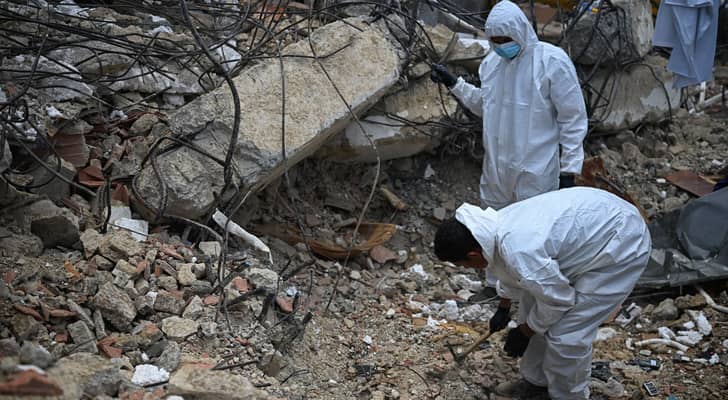
Rescuers scoured deep mud and rising river waters as the number of missing people surpassed 3,000 following a tsunami-like flood that devastated the Himalayan border region between Nepal and Tibet.
Emergency workers have recovered 750 bodies across both countries.
In Nepal, officials reported an updated death toll of 734, with 2,498 people—including hundreds of foreign nationals—still unaccounted for.
Across the border in Tibet, Chinese state broadcaster CCTV reported 16 deaths and 546 missing persons, including 261 foreign nationals.
100 workers trapped in hydropower tunnels
Desperate rescue operations focused on multiple hydropower projects along affected river channels, where icy debris swept down and left over 100 workers trapped inside subterranean tunnels.
At the Trishuli 3A hydroelectric site, the Nepali Army inserted a pipe late Saturday to pump oxygen directly to trapped personnel.
However, overnight rainfall and rising river levels hampered operations, forcing disaster authorities to caution rescue teams.
Specialized teams from India and China have arrived on site to assist with complex tunnel extractions.
In the Nepali town of Bidur, family members gathered at a military base serving as a key rescue hub, searching lists of rescued survivors.
"I have come here looking for my son," said Kalka Sharda, whose son worked at a local hydropower plant. "I can't find his name, and the authorities are not saying anything."
Amid the uncertainty, an Australian family expressed relief after learning their 24-year-old daughter, Cara Severino, had been found safe after initially being reported missing. Dozens of other Australian citizens remain unaccounted for.
New barrier lake threatens rescue zones
Search and recovery efforts faced additional complications near the Gyirong border port following a landslide 2.8 kilometers (1.74 miles) from a drained barrier lake.
The landslide triggered the formation of a new barrier lake, prompting authorities to evacuate emergency personnel to safer ground while experts evaluate the risk of secondary flooding.
The disaster originated on Wednesday when a glacier on the southern slope of Lirung Peak fractured, triggering a massive ice-rock avalanche and a downstream flash flood, according to data from the US Geological Survey and Chinese experts.
Nepal's Foreign Minister Shisir Khanal warned that the disaster highlights the escalating threat of climate change in the Himalayas and noted that reconstruction costs would reach billions of dollars.
International donors have begun mobilizing aid. The United States and Canada each pledged $3.6 million in humanitarian relief, the United Kingdom offered $6.8 million, and the European Union promised $2.3 million.
Additional contributions were announced by the United Nations, the International Federation of Red Cross and Red Crescent Societies (IFRC), and the government of Malaysia.