Death toll reaches 633 in Nepal floods, nearly 3,000 missing
Note: AI technology was used to generate this article’s audio.
- Nepal disaster death toll reaches 633.
- Nearly 3,000 missing after Himalayan glacial collapse.
- Nepal rescues trapped hydropower workers after flash floods.
- Glacial collapse triggers deadly floods across Nepal, China.
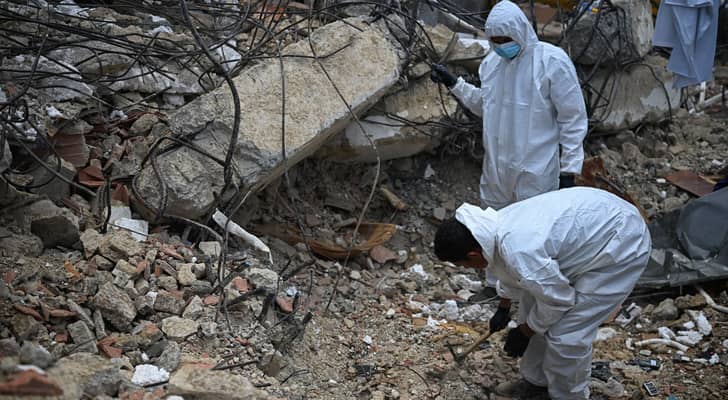
Rescue teams intensified emergency operations on Saturday across the Himalayan border region between Nepal and China, searching for nearly 3,000 missing people after catastrophic flash floods and mudslides killed at least 633 people and caused widespread destruction.
The Disaster Management Authority in Nepal confirmed 626 deaths, while Chinese officials reported seven fatalities in Tibet.
Seven additional bodies were recovered downstream in neighboring India, though authorities have not yet formally confirmed their identities as flood victims.
The disaster struck on Wednesday along the Trishuli and Bhote Koshi river corridors—a region heavily frequented by international trekkers, mountaineers, and pilgrims traveling toward Mount Kailash in Tibet.
"The flash floods swept away all the houses near the river. Nothing is left," said Boodhi Ram Dangol, a survivor on the Nepalese side of the border.
Trapped hydropower workers
In Nepal, the official count of missing persons surged to 2,426 on Saturday. Among those unaccounted for are 933 employees working across various hydroelectric dam construction sites along the river basin, as well as 517 foreign tourists and pilgrims.
Across the border in China's Tibet Autonomous Region, 554 individuals remain missing, including 260 foreign nationals.
In central Nepal, the Nepalese Army deployed helicopters and elite rescue teams to the damaged Trishuli 3A Hydroelectric Power Plant, where workers were trapped inside a drainage and access tunnel.
Army spokesperson Raja Ram Basnet stated that military personnel successfully evacuated roughly 350 workers and residents from the complex, while continuous efforts remain underway to extract more than 100 individuals still stranded inside.
Glacial collapse
According to the US Geological Survey (USGS), the catastrophic flood was triggered by a high-altitude glacial collapse—a massive ice and rock avalanche that fell into the valley floor, pulverizing into a high-speed torrent of water, mud, and heavy sediment.
Surviving workers at hydroelectric projects in the Trishuli Valley described an avalanche of water moving at terrifying speed down narrow mountain gorges.
"All the officials and engineers who were working on the opposite side of the bank were swept away instantaneously," recounted Buddha Tamang, a project worker who survived by taking shelter deep inside a concrete tunnel during the initial impact.
Secondary hazards
On the Tibetan side of the border, search-and-rescue teams faced severe obstacles due to torrential rainfall, destroyed road networks, landslide blockages, and the imminent threat of overflowing reservoir lakes created by mudslides.
Chinese state media outlet Xinhua reported that out of 2,141 emergency personnel deployed to the region, only around 500 had managed to reach the core disaster site near the Gyirong border crossing at an elevation of 1,830 meters.
Broadcaster CCTV aired footage of rescue personnel navigating swollen river channels using heavy-duty drones, inflatable boats, and heavy machinery to clear debris and re-establish emergency communication nodes.
Experts emphasize that seasonal monsoon flooding and landslide risks across South Asia continue to intensify in frequency and severity due to climate change and rising Himalayan temperatures.