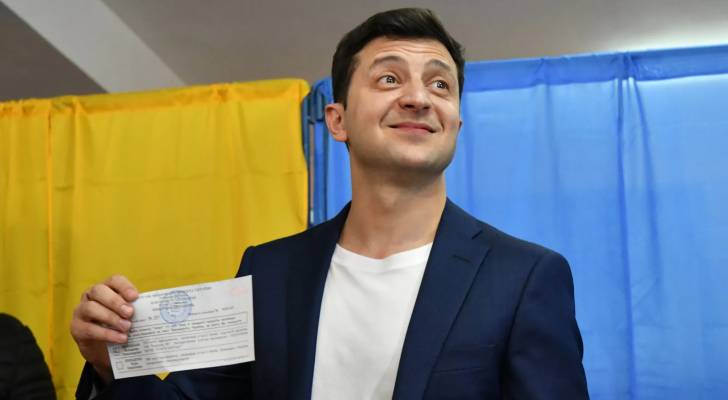
Ukrainian President Volodymyr Zelensky.

Zelensky rejects rival's election call, alleges it'd 'split' Ukraine
Note: AI technology was used to generate this article’s audio.
- Fedorov’s election call challenges Zelensky amid war.
- Zelensky cites legal, security hurdles to wartime vote.
- Ukraine faces critical shortages of Patriot interceptors.
- Zelensky urges more Western air-defense support.
Ukrainian President Volodymyr Zelensky firmly rejected calls to organize elections while the nation fights off Russia's invasion, warning in remarks made public Sunday that holding a vote during wartime would trigger a catastrophic political split.
The Ukrainian leader's statements during a press briefing with reporters followed a high-profile proposal by his former defense minister, Mykhailo Fedorov, to establish a mechanism for democratic elections despite the ongoing conflict.
"I believe that in a war like this, elections as such are a huge risk. Elections right now are a tsunami for the country that will split Ukraine," Zelensky said. "If we want to destroy the country, then we can move in the direction of elections during these times of war."
Political fallout
The dispute stems from a summer political crisis in Kyiv triggered when Zelensky dismissed Fedorov, a popular cabinet member known for advancing Ukraine's drone warfare strategy.
Fedorov's firing led to public protests demanding his reinstatement and sparked friction among military leadership that ultimately forced Zelensky to replace his top commander-in-chief.
Days prior to Zelensky's press briefing, Fedorov published a video calling for a path toward elections, representing the most direct challenge to Zelensky's leadership since the start of the full-scale Russian invasion.
Zelensky directly criticized Fedorov's push during the briefing, suggesting his former minister was making a grave mistake.
"I believe he is going himself — or is being pushed — toward wrong things," Zelensky remarked.
Fedorov's team confirmed he plans to visit the United States, further fueling speculation regarding his potential political ambitions. Experts continue to point to major obstacles facing any wartime ballot, including security risks, voting access for front-line soldiers, displaced refugees, and populations in occupied areas.
Declining air defense supply
The domestic political debate coincides with an escalation in Russian ballistic missile strikes, exposing acute shortages in Ukraine's air defense supply.
Zelensky revealed a steep decline in deliveries of critical U.S. Patriot interceptor missiles, stating that Ukraine received 675 interceptors in 2023, 364 in 2025, and is on track to receive just 264 in 2026, even as Russian missile production reaches roughly 100 ballistic missiles per month.
The United States faces its own supply constraints due to ongoing regional military operations in Iran, limiting immediate releases to Kyiv.
Verified data from the United Nations confirms civilian casualties have reached their highest levels since the opening months of the war.