Morocco thwarts new Ceuta border breach attempt, arrests 111
Note: AI technology was used to generate this article’s audio.
- Police foil planned mass border breach.
- Tear gas used as security forces disperse crowds.
- Spain deploys 1,600 personnel to reinforce Ceuta.
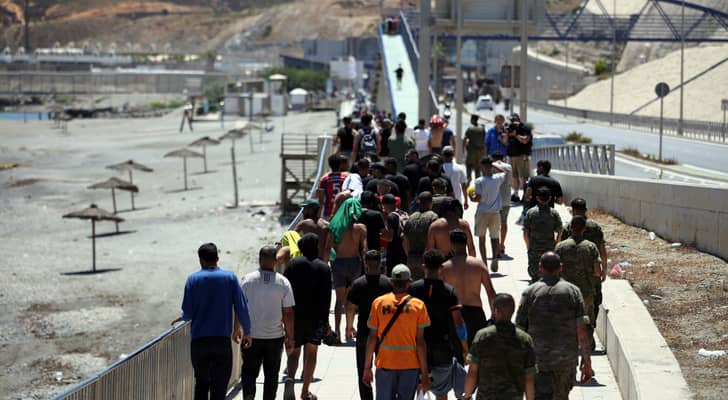
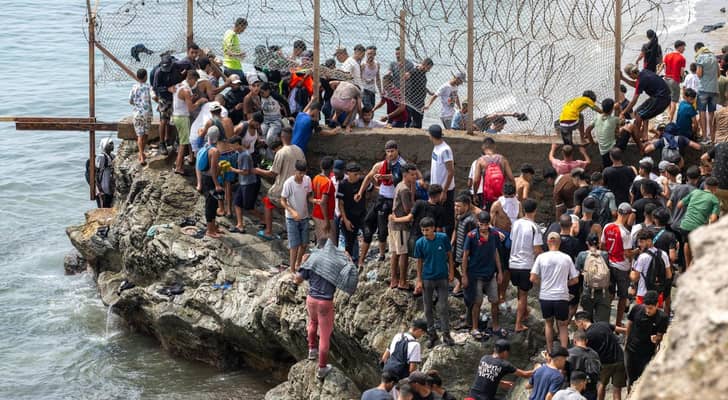
Moroccan security forces arrested 111 people near the northern border city of Fnideq early Saturday, thwarting a planned mass crossing into Spain's North African enclave of Ceuta.
The targeted operation follows an online campaign across social media platforms calling for a coordinated border breach on Saturday, August 15.
According to Moroccan Interior Ministry sources cited by The Guardian and Dawn, the detainees included 109 migrants from sub-Saharan Africa alongside two Moroccan citizens.
In the rugged terrain surrounding Fnideq, Moroccan police in riot gear fired tear gas to disperse groups of around 300 migrants gathered on hills approximately three kilometers from the perimeter fence. During the operations, Moroccan authorities ordered journalists from Spanish state broadcaster TVE and news agency EFE to vacate the border area immediately without giving a formal explanation.
High alert persists
The heightened readiness on both sides of the border comes just two weeks after a unprecedented border surge on July 30, during which more than 72,000 migrants crossed into Ceuta, resulting in severe political strain within the European Union and the deaths of at least 96 people at sea and along the breakwaters.
In response to the ongoing threat of secondary waves, Madrid reinforced Ceuta with 500 additional police officers—bringing total law enforcement forces above 1,600—and constructed a dedicated maritime barrier along the coast.
Armed Spanish soldiers were deployed to protect supermarkets and critical infrastructure throughout the city.
Spanish Interior Minister Fernando Grande-Marlaska emphasized that border forces will remain indefinitely.
He reaffirmed that irregular arrivals will not be granted legal status or transit rights to mainland Europe, and will instead face deportation back to Morocco.
Simultaneously, Moroccan authorities intercepted travelers on transit routes in major hub cities including Casablanca, Fez, and Kenitra to prevent groups from traveling north.
Despite transit checkpoints, witnesses reported that migrants continue to navigate hidden mountain paths on foot to reach the coastal perimeter.