Strait of Hormuz shipping traffic drops to six as US-Iran peace deal hopes fade
Note: AI technology was used to generate this article’s audio.
- Only six vessels transited the Strait of Hormuz on Monday, well below its pre-war daily average of 130–140 ships.
- Traffic through the Bab al-Mandeb remained broadly stable, with 25 vessels passing on Monday.
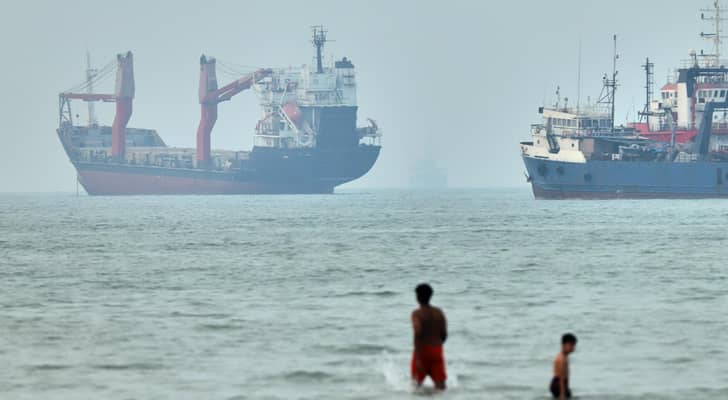
Shipping traffic through the Strait of Hormuz fell sharply to six vessels on Monday, compared with a 10-day average of about 11, as hopes for a peace deal between the US and Iran continued to fade, Reuters reported.
Citing data from ship-tracking company Kpler, Reuters said four commodity vessels entered the waterway, including two empty oil product tankers. Two vessels exited the strait, including a small tanker carrying liquefied petroleum gas and another transporting residual fuels.
Before the war, roughly 130–140 ships typically passed through the Strait of Hormuz each day, highlighting the scale of the current disruption.
Traffic through the Bab al-Mandeb Strait, which links the Gulf of Aden with the Red Sea, remained largely unchanged.
Kpler data showed 25 vessels passed through the waterway on Monday, compared with a 10-day average of nearly 24 ships.
The contrasting traffic levels underscore the severe impact on shipping through the Strait of Hormuz, a major global energy corridor, as uncertainty surrounding US-Iran relations continues to weigh on maritime activity.