Houthis considering fees on shipping through Bab el-Mandeb strait: report
Note: AI technology was used to generate this article’s audio.
Yemen’s Houthis are considering imposing fees on commercial ships sailing through the southern Red Sea, according to sources cited by Reuters, a move that could further disrupt a vital global trade route already strained by conflict.
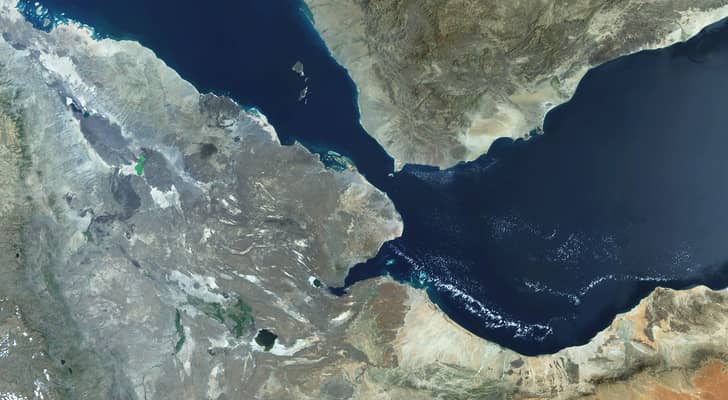
The Iran-aligned group is examining charges on most traffic through the narrow Bab el-Mandeb gateway linking the Red Sea and the Gulf of Aden, sources with knowledge of the matter said.
No timeframe has been set for any implementation.
The proposal comes a week after the Houthis declared a naval blockade on Saudi Arabia on July 20, expanding their role in the broader Iran-related conflict and targeting tankers carrying energy and other supplies.
Houthi officials discussed the fee idea with Iranian counterparts in Tehran earlier this month while attending the funeral of late Supreme Leader Ayatollah Ali Khamenei, according to two regional officials briefed by Tehran.
Iranian advisers later accompanied returning Houthi officials to help establish a potential regulatory authority for the charges.
The aims, sources said, include normalizing fees on international waterways and increasing pressure on the United States.
Chinese ships would be exempted, an arrangement the Houthis support.
China, the world’s largest buyer of Saudi oil, has already held direct talks with the group to secure safe passage for its tankers.
“The Houthis will try to gain access over the Red Sea and they will try to charge ships if they do,” said Afrah al-Zouba, foreign minister-designate of Yemen’s internationally recognized government.
Such a step would face strong opposition from Gulf and European countries, though two Western diplomats noted that overstretched international naval forces currently lack sufficient capacity to protect merchant shipping and there is little political appetite for change.
The group was previously alleged to have collected fees from some shipping agencies for safe passage during the height of its 2024 maritime campaign, according to a 2024 UN Panel of Experts report that could not independently verify the claims.
Those fees were estimated at up to $180 million a month.
Red Sea traffic has not fully recovered since Houthi attacks began in late 2023 in solidarity with Palestinians in Gaza; attacks largely paused after the Gaza ceasefire last October.
At least one Saudi tanker was attacked in the past week near the southern Saudi port of Jizan, with the Houthis claiming responsibility.
Closure of the Bab el-Mandeb would deprive Saudi Arabia of a critical alternative to the Strait of Hormuz and heighten fears of energy shortages.
Sailing the direct Bab el-Mandeb route to Asia averages about 16 days, versus roughly 50 days via longer detours through the Suez Canal and around southern Africa.
War-risk insurance premiums for southern Red Sea voyages have already surged in recent days amid the blockade and attacks, rising from around 0.3% of a ship’s value to over 1% in some cases, and higher for vessels linked to Saudi ports.
The potential fees would add another layer of cost for operators and consumers reliant on this corridor for oil, containers, and other cargo between Europe, Asia, and Africa.