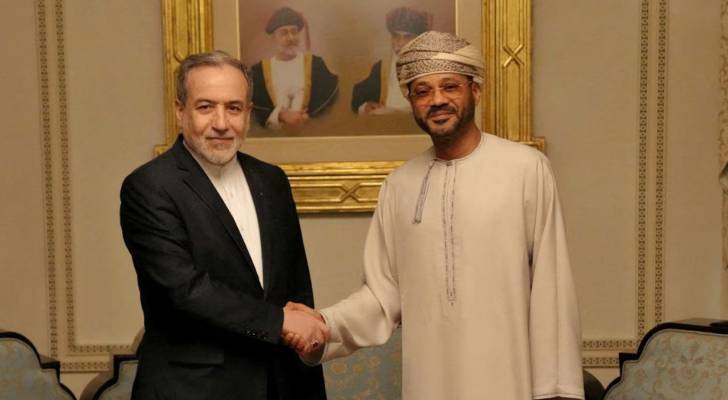
Iran confirms Oman talks over Hormuz exclude US
Note: AI technology was used to generate this article’s audio.
- Iran said its talks with Oman on the Strait of Hormuz are bilateral and do not involve the United States.
- Iranian and Omani deputy foreign ministers discussed mechanisms for safe shipping through the strait.
- Iran said it continues to control transit through the waterway and reported turning back six vessels that deviated from its designated route.
- Tehran said fighting has paused since Saturday while criticizing recent US actions.
Iran's Foreign Ministry confirmed on Monday that recent discussions with Oman regarding the administration and security of the strategic Strait of Hormuz do not involve the United States.
Speaking at a weekly press briefing, ministry spokesperson Esmaeil Baghaei stated that the negotiations are strictly a bilateral matter between Tehran and Muscat, confirming that the strategic maritime passage "remains closed."
Bilateral negotiations only
Deputy foreign ministers from Iran and Oman held two days of discussions on Friday and Saturday, focusing on "common principles and operational mechanisms" to ensure the safe passage of commercial shipping through the waterway.
Commercial traffic through the Strait of Hormuz -a vital global shipping choke point- has been under Iranian control since the outbreak of war involving 'Israel' and the United States on February 28.
Iran maintains that it will retain ultimate control over the management of the strait, including the collection of service fees, while involving Oman in its capacity as a fellow coastal state.
Iranian Revolutionary Guards have actively enforced transit restrictions in recent days, turning back multiple vessels -including six ships on Monday- that attempted to navigate outside the route designated by the Islamic Republic.
Criticism of US conduct
The Strait of Hormuz has served as a central flashpoint between Iran and the United States, where fighting resumed earlier this month following the breakdown of an earlier ceasefire as both nations sought control over the passage.
The collapse of an Iran-US memorandum of understanding signed in June led to 13 consecutive days of military exchanges between the two sides.
Although active fighting has been on hold since early Saturday, Baghaei expressed deep skepticism regarding future diplomacy with Washington.
"So long as such behaviour by the United States continues, we cannot be hopeful about the emergence of a reasonable process," Baghaei stated, accusing US leadership of behaving "like a mafia gang that adheres to no rules or laws."