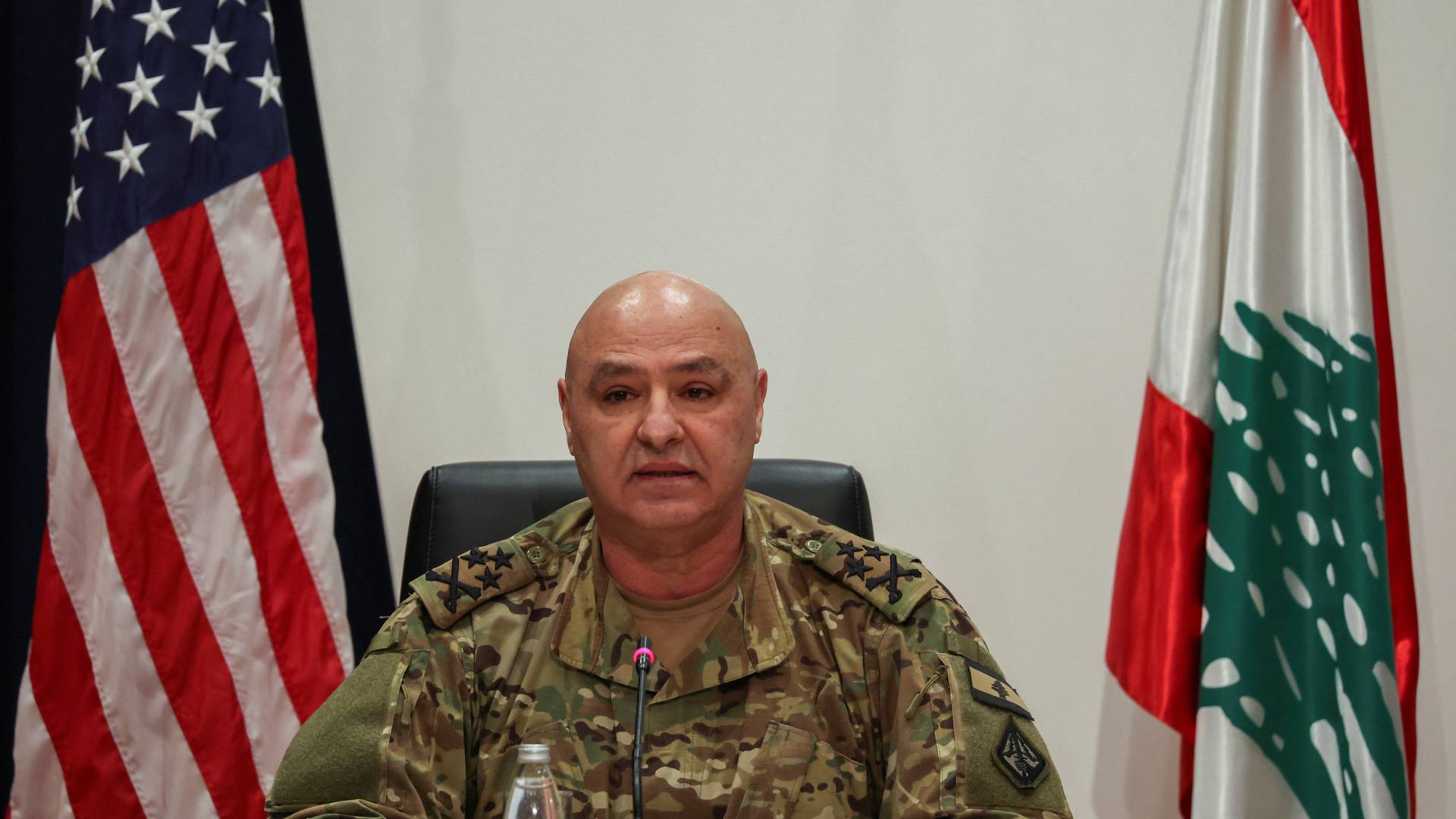
Lebanese President Joseph Aoun.

Aoun vows absolute sovereignty over Lebanon negotiations
Note: AI technology was used to generate this article’s audio.
Lebanese President Joseph Aoun officially condemned ongoing 'Israeli' military strikes on civilians on Tuesday, following an air attack yesterday that killed four people in the southern governorate of Nabatiyeh.
The statement, carried by state media and published by the Lebanese presidency, renewed Beirut's urgent appeals to international stakeholders to enforce a stable cessation of hostilities.
Demanding strict enforcement of ceasefire
President Aoun called upon the international community to exert direct diplomatic pressure on 'Israel' to fully respect the active ceasefire agreement. The cross-border violence comes shortly after the June 26 signing of a US-brokered Trilateral Framework Agreement in Washington, which aimed to establish a roadmap for the phased withdrawal of 'Israeli' forces from southern Lebanon.
The Lebanese head of state emphasized that continued military infractions directly undermine the integrity of the diplomatic arrangement and threaten the safe return of displaced residents to the border region.
Reasserting independent sovereignty
Addressing the broader geopolitical negotiations regarding post-war border mechanisms, President Aoun firmly rejected any third-party or factional encroachment on the state's executive decision-making.
"I will not accept anyone negotiating on behalf of Lebanon," Aoun declared, reasserting the state's monopoly over foreign policy and sovereign territorial control.
The President further noted that Lebanon had successfully extracted a formal recognition from 'Israel' affirming that Tel Aviv holds no territorial or resource ambitions within Lebanese lands, establishing a baseline for the country's independent border integrity moving forward.
International significance
The diplomatic friction between Beirut and Tel Aviv highlights the extreme fragility of the US-brokered security understandings aimed at neutralizing border conflicts in the Middle East.
If international monitors fail to successfully pressure the 'Israeli' military to halt localized cross-border strikes, the resulting escalation risks collapsing the fragile framework agreement, potentially plunging southern Lebanon back into an unmanageable regional war involving multi-national state actors.