Sources to Roya: "Pilot zones" remain key disputes in Lebanon-'Israel' talks
Note: AI technology was used to generate this article’s audio.
- 'Israel' seeks a permanent military presence in parts of southern Lebanon.
- Proposal would transfer some areas to the Lebanese army in phases.
- Lebanon rejects 'Israeli' demand for unilateral military intervention rights.
High-level political sources revealed on Friday that the current diplomatic track between Lebanon and 'Israel' has hit critical bottlenecks. The primary disputes center directly on the geographic boundaries of a proposed northern buffer zone and the operational mechanism behind localized "pilot zones."
According to detailed information provided to Roya News, the negotiations have stalled over how and when territorial control along the border will be transferred, as well as 'Israel's' demand to maintain a long-term military footprint inside sovereign Lebanese territory.
10-kilometer buffer zone
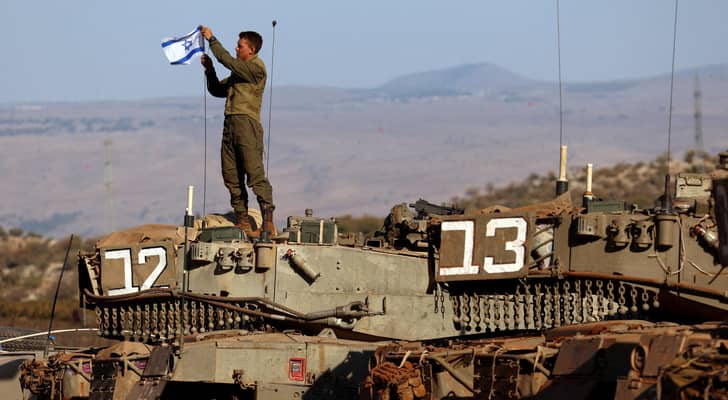
The most significant point of contention remains 'Israel's' absolute insistence on keeping its military forces stationed within a newly proposed northern buffer zone.
Political sources confirmed that 'Israel' wants this buffer zone to carve deep into the frontier, extending approximately 10 kilometers into the heart of southern Lebanon.
Lebanese negotiating teams have completely rejected this parameter.
Beirut views a permanent, deep foreign military presence within its borders as a fundamental and unacceptable violation of its national sovereignty and territorial integrity.
Pilot zones framework
The second major structural obstacle involves the implementation of "pilot zones", specific sectors where 'Israel' intends to gradually hand over security responsibilities to the Lebanese Armed Forces (LAF) according to highly rigid, timed phases.
The strategic goal of these pilot zones is to directly test the capability of the Lebanese army to assert full administrative control and successfully suppress any military presence or activities by Hezbollah.
However, diplomatic reports indicate that 'Israel' is conditioning this transfer on retaining the explicit right to launch immediate, unilateral military interventions the moment any party breaches the agreed-upon de-escalation terms.
This demand has made finalizing a binding treaty exceptionally difficult, as Lebanon refuses to codify a mechanism that allows for foreign military incursions.