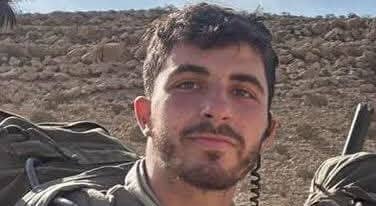
Saber Amitel, 21, died on 20 June after suspected torture in 'Israeli' jail (Haaretz)

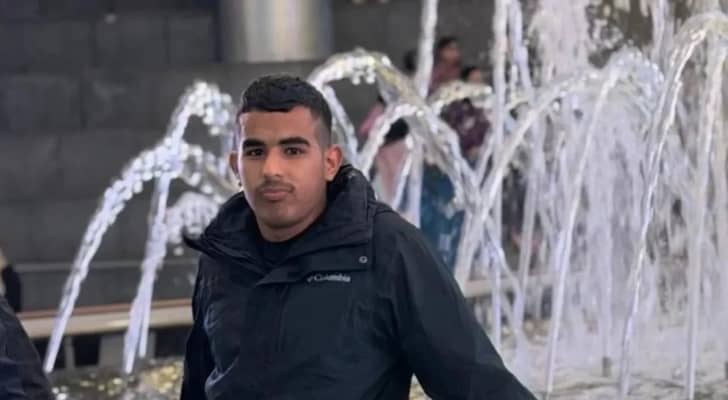
'They returned him dead': Bedouin 'Israeli' dies in detention
Note: AI technology was used to generate this article’s audio.
- Bedouin 'Israeli' detainee Saber Amitel died after weeks in Shin Bet custody.
- Authorities say he attempted suicide; family and lawyers dispute the claim.
- Legal team cites bruising and seeks CCTV footage, records, and an investigation.
- Rights groups report over 100 Palestinian detainee deaths in 'Israeli' custody since October 2023.
Severe allegations of torture and systemic negligence have been leveled against 'Israeli' security forces following the death of a 21-year-old Bedouin 'Israeli' citizen in custody.
Saber Amitel died at Barzilai Medical Center on June 20, weeks after being detained by the Shin Bet internal security agency.
Amitel’s family and legal counsel have vehemently rejected official claims that he attempted suicide, pointing instead to extensive, severe bruising found across his body while he was hospitalized under armed guard.
Sudden disappearance
A resident of the Negev, Amitel had no criminal record and was employed as a locksmith and welder at a metal manufacturing and casting factory.
According to his father, Odeh, Amitel traveled to Beersheba on the day of his arrest and abruptly disappeared. After a frantic two-day search, the family filed a missing persons report with the police, only to be informed that he had been detained.
Amitel was held at Shikma prison in Ashkelon, where he was initially blocked from seeing an attorney.
His legal team and family were only granted visitation rights after reporters from the Haaretz newspaper began inquiring about his status.
"We came to Barzilai Medical Center and saw him all hooked up to machines. He was like a vegetable; his brain wasn't functioning," his father, Odeh, told Haaretz.
"Medical staff told us that this is how he arrived. He was under guard and handcuffed. From a healthy boy who was arrested while walking on his own two feet, he ended up in this condition."
Odeh directly accused authorities of fatal abuse: "They took a healthy kid away from me only to return him dead. There's no law in this country anymore; people are being killed under torture."
Conflicting narratives
The Shin Bet defended its actions, asserting that Amitel "was interrogated in accordance with the law" and claiming that guards discovered he had tried to take his own life in his cell on June 7.
The 'Israel' Prison Service declined to comment on the specific medical or personal details, stating only that the circumstances are under examination by competent authorities.
However, Amitel's attorneys, Esther Bar Zion and Victor Ozen, challenged this narrative. Upon visiting him in the hospital on June 8, they documented severe physical bruising inconsistent with the state's account.
The legal team has since filed an urgent petition with the Beersheba District Court against the 'Israel' Prison Service, the Shin Bet, the police, and Barzilai Medical Center.
The petition demands a formal court-ordered investigation, the immediate release of Shikma prison's CCTV footage, duty logs, and all internal medical files.
Context of mounting detainee fatalities
Because the family has refused to authorize a full autopsy for religious reasons, the National Center of Forensic Medicine is expected to perform only an external examination of Amitel's body.
Amitel’s death comes amid intense international scrutiny regarding the treatment of detainees within 'Israeli' correctional facilities.
Since the outbreak of hostilities in October 2023, human rights organizations have reported that at least 100 Palestinian prisoners have died while in 'Israeli' custody.
Rights advocates widely believe this figure is a conservative estimate, suggesting the actual number of fatalities behind closed doors could be significantly higher.