'Israeli' plan proposes 18 new West Bank settlements
Note: AI technology was used to generate this article’s audio.
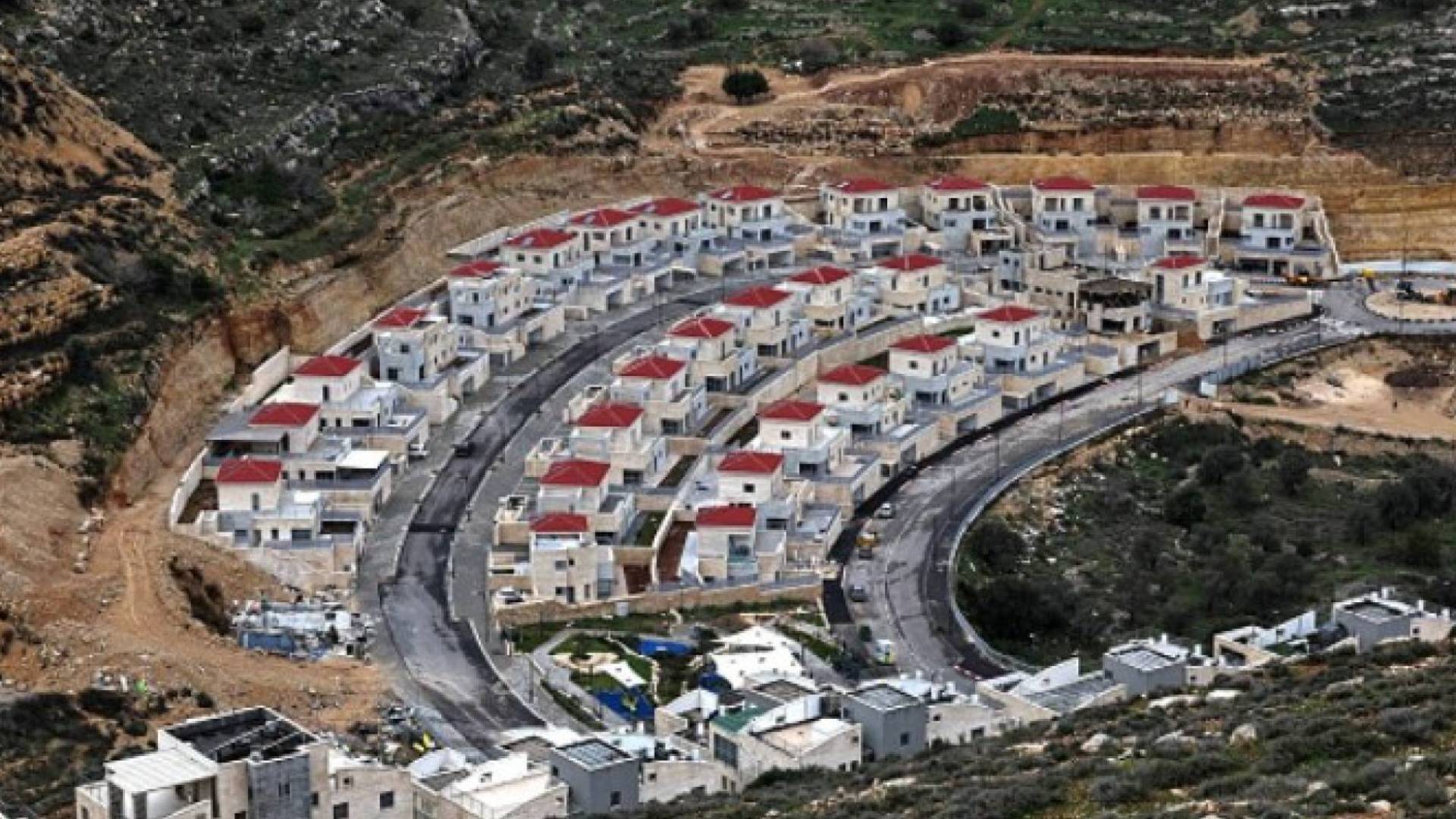
'Israeli' authorities are advancing a major new settlement expansion project designed to establish 18 new settlements across the northern occupied West Bank, according to reports surfaced by 'Israeli' media.
Dubbed the "Connection Plan" (Khitat al-Rabt), the project is being spearheaded by the "Samaria Regional Settlement Council" to dramatically solidify 'Israeli' control over the area.
Rebuilding evacuated settlements
A central pillar of the new initiative includes rebuilding four specific settlements that were previously evacuated by the 'Israeli' military in 2005 under the historical "Disengagement Plan."
The targeted sites slated for reconstruction are Homesh, Sa-Nur, Ganim, and Kadim.
According to the news website Emees, the execution of the "Connection Plan" involves the following operational mechanisms:
- Settlement numbers: The framework dictates the construction of 14 entirely new settlements alongside the restoration of the four previously evacuated sites.
- Official approvals: A portion of the construction projects have already secured binding government approvals, while remaining sites are pending subsequent political and planning decisions.
- Field coordination: The Samaria Council, collaborating with the "Amana" settlement movement and the settlement administration, has formed core family units prepared to relocate to the targeted lands, with the initial phases scheduled to begin this coming summer.
"Million in Samaria"
The "Connection Plan" is part of a broader, highly ambitious initiative running under the banner "Million in Samaria," which aims to settle one million 'Israeli' settlers in the northern West Bank over the coming years.
The long-term project relies heavily on dismantling the core legislative articles of the prior Disengagement Law.
The infrastructure blueprints go beyond standard residential units to build fully integrated urban communities.
The plans include educational and Talmudic institutions, robust infrastructure networks, and public community services.
Notably, the blueprint factors in demographic distribution by dedicating two specific settlements, "Mitzpe Yam" and "Aloni Shomron," for secular settlers, alongside creating communal hubs led by military reservists and graduates of military preparatory academies.
Government backing
The settlement push is being executed through deep internal coordination alongside 'Israel'’s Ministry of Defense, Ministry of Finance, and Ministry of Housing. Yossi Dagan, the head of the Samaria Regional Council, stated that the ultimate objective is to reinforce the settlement footprint and deliver a practical alternative to any concepts of territorial withdrawal.
The high-level political backing was put on display approximately one month ago during a foundation-stone laying ceremony for the "Sa-Nur" settlement.
The event was attended directly by Finance Minister Bezalel Smotrich and Defense Minister Israel Katz, both of whom explicitly declared that returning to these evacuated northern territories is now an official government policy.
Statistical overview
According to the latest tracking data from the anti-settlement 'Israeli' organization Peace Now, the current settler population in the West Bank has surged past half a million, supplemented by more than 250,000 settlers residing across occupied East Jerusalem.
International law
The massive expansion plan stands in total defiance of global legal frameworks.
United Nations institutions have consistently renewed warnings that all 'Israeli' settlement activities within the occupied Palestinian territories are completely illegal under international law, though repeated global demands to halt construction continue to be ignored by 'Israeli' authorities.