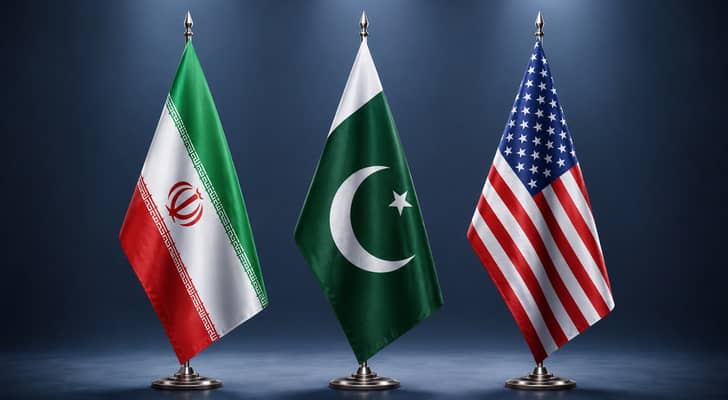
World leaders welcome US-Iran agreement
Note: AI technology was used to generate this article’s audio.
- United States and Iran announce agreement to end war, reopen Strait of Hormuz, and lift US blockade.
- Global leaders welcome deal, urging immediate implementation and caution over next steps.
A major diplomatic breakthrough between the United States and Iran has triggered widespread international reaction after both sides announced on Sunday that they had reached an agreement to end their war, suspend the US blockade on Iran, and reopen the Strait of Hormuz.
The deal, if implemented, would restore one of the world’s most critical energy shipping routes and is expected to ease pressure on global oil markets following weeks of disruption.
Officials said the agreement includes an immediate ceasefire and a framework for further negotiations on security and nuclear-related issues.
The United Nations Secretary-General Antonio Guterres welcomed the agreement, calling it a significant step toward de-escalation.
A spokesperson said the deal represents “a critical step towards the peaceful settlement of the conflict,” highlighting the ceasefire, reopening of the Strait of Hormuz, and renewed diplomatic engagement.
The United Nations United Nations said it views the agreement as a potential foundation for long-term stability if fully implemented.
European leaders issued a joint response through the E4 group, including Britain, France, Germany, and Italy.
They stressed that Iran must never acquire nuclear weapons and expressed readiness to work with the United States, Iran, and international inspectors on verification efforts.
British Prime Minister Keir Starmer said freedom of navigation must be restored in the Strait of Hormuz and reiterated that Iran must not develop nuclear weapons.
French President Emmanuel Macron called the agreement the result of sustained diplomatic efforts and urged immediate and full implementation, particularly regarding the reopening of the strategic waterway.
German Chancellor Friedrich Merz described the deal as a breakthrough that could strengthen global economic stability and improve security in the Middle East.
Australian Prime Minister Anthony Albanese welcomed the agreement, calling it a key step toward de-escalation and regional stability.
Japan’s Prime Minister Sanae Takaichi emphasized the importance of ensuring safe navigation through the Strait of Hormuz, warning that disruptions would have global economic consequences.
New Zealand Foreign Minister Winston Peters described the deal as “pivotal and constructive,” saying diplomacy remains the most effective path to resolving long-standing tensions.
If the agreement holds, reopening the Strait of Hormuz could significantly stabilize global energy flows and reduce oil price volatility.
For now, international reaction remains cautiously optimistic, with leaders urging restraint and sustained diplomatic engagement.