

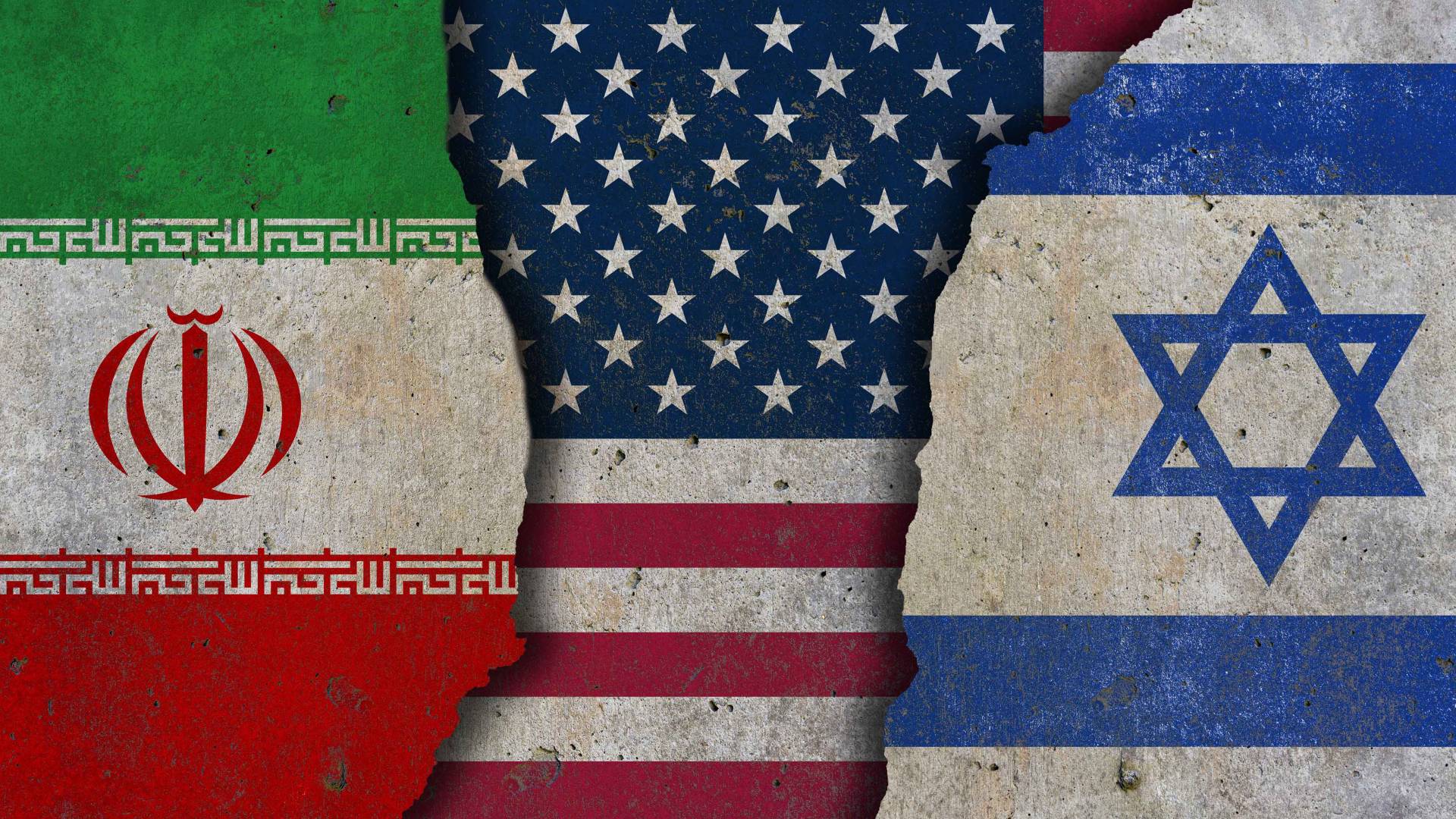
Day 101 | Iran ends military operation against ‘Israel’ as Trump pushes for deal
Iran launched multiple waves of missiles toward northern 'Israel' on Sunday night, marking its first direct bombardment of 'Israeli' territory since a fragile ceasefire took effect in early April.
Iran's state broadcaster IRIB confirmed the attack, warning that strikes would continue if 'Israel' responds militarily or fails to halt its operations in Lebanon.
According to 'Israel's' Channel 12, Tehran fired three waves of missiles, including a salvo of four missiles. Initial reports indicated damage in the northern city of Tiberias. The 'Israeli' military said all incoming missiles were intercepted by air defense systems.
The attack prompted 'Israeli' authorities to temporarily suspend operations at Ben Gurion Airport near Tel Aviv.
The escalation came hours after an 'Israeli' airstrike targeted Beirut's southern suburbs, killing at least two people and injuring 11 others, according to Lebanese reports.
'Israeli' officials vowed a "powerful" response to the missile attack, while Tehran warned of further action if 'Israeli' operations in Lebanon continue.
US President Donald Trump urged Iran to return to negotiations, telling Fox News that the missile strikes were "certainly not going to help" efforts to end the conflict. "Get back to the table and make a deal," Trump said. Trump also expressed dissatisfaction with the 'Israeli' strike on Beirut and told Axios he would urge 'Israel' not to retaliate against Iran.
The latest exchange comes as the conflict reaches its 100th day, with diplomatic efforts to secure a lasting peace appearing increasingly stalled amid renewed military escalation.
Thread ended
This live thread has ended. Follow our online coverage of day 102 of the war.
Read more: Day 102 | Iran and 'Israel' halt strikes against each other but warn of renewed attacks
Sirens sound in Eilat over drone threat
The 'Israeli' Home Front Command has activated incoming rocket and drone alerts in the southern port city of 'Eilat' and its surrounding areas, warning residents to seek immediate shelter due to a suspected hostile drone entering the airspace.
'Israel', Iran almost dragged Trump into all-out war: Axios
A behind-the-scenes report by Axios has laid bare how close the United States came to being re-ensnared in a major combat war over the past 24 hours.
Despite US President Donald Trump’s intense desire to exit Middle East conflicts, a rapid, tit-for-tat escalation between 'Israel' and Iran forced the administration into a frantic, day-long scramble to prevent a full-scale regional implosion.
Now reaching the 100-day mark of the conflict without a definitive ceasefire, the strategic and political fault lines between Trump and 'Israeli' Prime Minister Benjamin Netanyahu are fracturing more than ever.
Sunday's unilateral strike
The spiral toward total war began early Sunday morning when the 'Israeli' military launched a strike against a Hezbollah target in Beirut.
While the 'Israeli' military alerted US Central Command (CENTCOM) ahead of time, they entirely bypassed the White House.
The move deeply angered US President Trump, who had just managed to halt a similar 'Israeli' operation during a tense phone call days earlier, a conversation where Trump reportedly lost his temper and called Netanyahu "fking crazy".
Fulfilling a prior vow to respond if 'Israel' hit the Lebanese capital, Iran immediately retaliated by launching a wave of missiles toward 'Israeli' territory, a threat some factions within the 'Israeli' military had mistakenly dismissed as empty bluster.
"Bibi, you do what you do"
With the threat of an all-out war looming, Trump called Netanyahu on Sunday evening to demand restraint.
Trump argued that a sweeping diplomatic deal with Tehran was just days away, making retaliatory strikes unnecessary.
According to an 'Israeli' source, Trump told Netanyahu that if a deal wasn't reached, he might personally lead the strikes on Iran later.
While US officials described the Sunday night call as "polite" and "calmer" than previous outbursts, Netanyahu aggressively pushed back.
The 'Israeli' Prime Minister argued that failing to respond would signal that Iran had the upper hand and could successfully deter both Washington and 'Israel'.
The call ended in a dangerous gray area.
While US officials believed they had bought more time, Netanyahu interpreted Trump's opposition as a soft warning rather than a firm veto.
As one US official bluntly recalled:
"There is no way Bibi could have interpreted what the president told him as an agreement. He was expressly told the president didn't support it, but he does what he does."
Following an emergency meeting with his security cabinet, Netanyahu greenlit the strikes anyway.
To smooth over the fallout, 'Israeli' officials held a late-night call with Secretary of State Marco Rubio to reach an understanding on the targets.
'Israeli' jets subsequently struck a key component of Iran's largest petrochemical facility, alongside other targets in Tehran.
Trump's final ultimatum
The strike on Tehran triggered a furious counter-response. Iran launched a massive, fresh barrage of missiles, this time directly targeting Tel Aviv.
By Monday morning, two more rounds of direct strikes and counterstrikes had pushed the region to the absolute brink of total war.
While US forces did not participate in the offensive operations, US defense officials confirmed American military assets actively helped the 'Israeli' military intercept incoming Iranian missiles.
As 'Israel' prepared for its largest operation yet -a Monday wave aimed at dozens of highly sensitive targets inside Iran- the backchannels exploded with panic.
Trump told Axios in a phone interview that he received frantic calls from five regional countries pleading with him to stop Netanyahu.
Simultaneously, the White House received a direct message from Tehran stating that the Iranians were willing to stop shooting if 'Israel' did the same.
Armed with this leverage, Trump placed a final, decisive call to Netanyahu, delivering a brutal ultimatum.
"I said, 'Bibi, you better be careful, or you will be on your own very soon,'" Trump told Axios, explicitly warning the prime minister that he risked fighting Iran entirely alone if he proceeded.
Faced with the threat of losing American backing, Netanyahu backed down and ordered senior military commanders to cancel the massive Monday wave.
Diverging reality
Though Trump insists that a "phenomenal" deal to permanently stop Iranian nuclear enrichment is imminent, the view from Tehran remains deeply cynical.
Iran's parliament speaker and chief negotiator, Mohammad-Bagher Ghalibaf, publicly blasted Trump's claims on Monday, stating that the US draft memorandum contradicted previous agreements and concluding, "We have no trust in the other side." Ghalibaf added that Iran's military pressure has successfully redrawn the ground rules in Lebanon.
Ultimately, the chaotic 24-hour flashpoint underscores a widening geopolitical rift between the two allies.
As one US official summarized, the core issue is that the political survival of both leaders is now actively at odds: "Bibi needs the war to continue to stay politically alive in Israel, and Trump needs the war to end to stay politically alive in the US"
US launched interceptors during Iranian attack on 'Israel'
United States forces deployed in the Middle East launched advanced missile interceptors in a direct bid to shoot down Iranian missiles fired toward 'Israel' during the latest regional escalation, a US official confirmed.
However, the Pentagon has yet to verify whether the American counter-measures successfully neutralized their targets, highlighting the chaotic nature of the multi-front aerial engagement.
Battlefield assessment
The revelation marks a shift in the initial narrative surrounding the attack's aftermath.
The US official had previously stated that American forces had not intercepted any Iranian projectiles, directly contradicting claims made by an 'Israeli' military official who insisted that the US had successfully downed a portion of the incoming salvo.
Correcting the record, the official clarified that interceptors were indeed fired, though the results remain up in the air.
Military analysts and intelligence agencies are currently conducting a comprehensive post-incident review to determine the exact efficacy of the joint defense umbrella.
"American officials are still working to assess 'who hit what' in the aftermath of the attack," the US official noted, as both Washington and Tel Aviv look to piece together telemetry data from the engagement.
Midnight coordination
The recent defensive operations have placed an increasingly heavy burden on American military logistics.
The US has already expended vast quantities of its own sophisticated, highly expensive missile interceptors to shield 'Israel' from repeated Iranian drone and missile barrages since the regional war first erupted.
As the incoming missiles breached regional airspace, command centers in Washington and Tel Aviv were locked in emergency, real-time communications to manage the threat.
According to 'Israeli' defense sources, the military coordinated extensively overnight with US Central Command (CENTCOM).
The 'Israeli' military Chief of Staff, Eyal Zamir, spoke directly with CENTCOM Commander Brad Cooper on two separate occasions during the crisis to sync tracking data and authorize defensive responses.
Ghalibaf: Tehran will use force, diplomacy to protect Beirut
Iran's Parliament Speaker and Chief Negotiator says talks aim to halt the regional war, not normalize ties with Washington, warning that Tehran will 'fight and negotiate at the right time'.
Iranian Parliament Speaker and chief negotiator Mohammad Bagher Ghalibaf issued a sharp, multi-pronged foreign policy address today, robustly defending the integration of military force and diplomacy while directly accusing US President Donald Trump of derailing a war-ending accord with contradictory demands.
Ghalibaf’s hardline statements signal that Tehran is recalibrating its strategy, shifting away from passive compromise toward a doctrine of calculated, symmetric retaliation to preserve its regional leverage.
Force as a tool for diplomacy
In an audio message and subsequent statements, Ghalibaf rejected the notion that engaging in diplomatic channels requires Iran to halt its military readiness.
"Military action does not hinder diplomacy," Ghalibaf asserted, outlining a pragmatic approach to the ongoing multi-front conflict.
"We are not supposed to choose between war or negotiation; rather, we must fight at the right time and negotiate at the right time."
The Speaker emphasized that Iran’s recent high-profile projectile maneuvers and battlefield posturing have directly strengthened its diplomatic hand.
"If it were not for victory on the battlefield and progress on the diplomatic track, our hands would be tied in supporting Lebanon and confronting the siege," he stated, linking frontline successes to Iran's ability to resist external pressure.
Slamming Trump’s 'contradictory' edits
Ghalibaf leveled direct criticism at Washington, accusing President Trump of acting in bad faith regarding the draft US-Iran Memorandum of Understanding (MoU) aimed at ending the war and lifting the naval blockade.
According to Ghalibaf, recent amendments pushed by the White House directly violated previously agreed-upon principles.
"Trump's statements regarding the memorandum of understanding were contradictory to the agreed terms," the Speaker said, noting that the latest developments prove "Washington seeks neither a ceasefire nor dialogue."
The diplomatic breakdown stems from Trump’s recent demands for immediate, front-loaded concessions on Iran's highly enriched uranium stockpile and its operational sovereignty over the Strait of Hormuz before sanctions relief is granted.
Ghalibaf clarified that Tehran’s goal in these negotiations is strictly limited to halting hostilities and protecting its economy, stating unequivocally that "the goal of the negotiations is to end the war, not to normalize relations with Washington."
Naval blockade and Beirut
Addressing the collapsing regional truce, Ghalibaf explicitly blamed US actions and 'Israeli' aggression for the renewed flare-up.
"The violation of the ceasefire and the U.S. naval blockade are the root causes of recent tensions," he stated, pointing to continuous American maritime enforcement and 'Israeli' airstrikes on Lebanon.
The Speaker concluded with a firm warning regarding the security of Lebanon, detailing a dual-track strategy of deterrence to protect Hezbollah’s primary stronghold in the capital.
"We prevent an attack on Beirut sometimes through the threat of a response and halting negotiations, and at other times through direct attack," Ghalibaf warned, signaling that Tehran is fully prepared to use its armed forces to dismantle what it considers a "paper ceasefire" if Western provocations persist.
Aoun rules out Netanyahu meeting until war ends
The Lebanese President Joseph Aoun told CNN that Lebanon is currently negotiating a formal non-aggression pact with 'Israel', while explicitly vowing he will not hold any face-to-face meetings with Prime Minister Benjamin Netanyahu until a comprehensive agreement to permanently end the war is secured.
US confirms attacking Omani oil tanker in Gulf of Oman
US military forces have disabled an unladen oil tanker in the Gulf of Oman after the vessel defied an ongoing maritime blockade and attempted to sail directly into an Iranian port, US Central Command (CENTCOM) announced on June 8.
The high-seas interception marks a significant escalation in Washington's enforcement of the naval blockade against Iran, which has been aggressively maintained by US and allied forces in the region since mid-April.
According to a CENTCOM statement released from its operational headquarters in Tampa, the Palau-flagged tanker, identified as the M/T Marivex, was intercepted while transiting international waters in the Gulf of Oman.
When the tanker's crew repeatedly failed to comply with radioed instructions and maneuvers ordered by US naval forces, commanders authorized a kinetic strike to physically halt the vessel.
An F/A-18 Super Hornet fighter jet, deployed from the nearby aircraft carrier USS Abraham Lincoln (CVN 72), fired a single precision-guided munition directly into the Marivex’s engineering and steering spaces. The surgical strike successfully neutralized the tanker's propulsion systems without sinking the vessel.
"The Marivex is no longer sailing to Iran," CENTCOM confirmed in its official release, indicating that the ship has been safely immobilized.
Blockade by numbers
The interception highlights the intense, multi-month naval operation aimed at entirely cutting off Iran's maritime trade corridors.
Defense officials released updated operational figures detailing the scale of the enforcement campaign since the blockade was first initiated on April 13:
- 42 vessels Allowed Passage (Verified Humanitarian Aid)
- 134 Vessels Redirected (Complied with US Orders)
- 7 vessels Disabled (Non-Compliant/Forcibly Halted)
US defense officials reiterated that while legitimate humanitarian shipments are thoroughly vetted and permitted to pass through the corridor, any commercial vessels attempting to violate the blockade to service Iranian ports will face immediate interception and potentially destructive force if they refuse to turn back.
Iran lifts all flight restrictions as airspace returns to normal
Iran has officially declared its airspace completely safe and reopened to all domestic and international flights, lifting the stringent flight restrictions imposed during recent regional military flare-ups.
The announcement indicates a swift return to stability for commercial aviation corridors intersecting the country.
Military operations concluded
Abouzar Ghorban Shiroodi, the head of Iran's Civil Aviation Organization (CAO), confirmed that the country's airspace has returned to normal status following notices from relevant military and defense authorities marking the formal end of active military engagements.
"Following declarations from relevant authorities announcing the conclusion of military operations, and in light of completed coordination, the country's airspace has reverted to normal status," Shiroodi stated.
He added that all aviation operations are actively resuming in strict accordance with newly issued Notices to Air Missions (NOTAMs).
Flight schedules returning to routine
Aviation authorities emphasized that passenger safety and corridor monitoring remained the highest priorities prior to giving airlines the green light to take off.
According to Shiroodi, all previously enforced temporary flight limits, groundings, and reroutings have been entirely resolved. "With safe conditions now firmly established and necessary clearance secured from coordinating bodies, flight restrictions have been lifted," the aviation chief noted.
International and domestic commercial flight operations are currently transitioning back to their originally scheduled, pre-disruption timetables.
UKMTO reports maritime incident off Oman's Masirah Island
A commercial tanker operating in the Arabian Sea has been forced to completely evacuate its crew after a severe fire erupted on board off the eastern coast of Oman, according to a security alert issued by the United Kingdom Maritime Trade Operations (UKMTO).
The maritime emergency has triggered an immediate joint rescue and investigation operation by regional naval forces.
UKMTO WARNING 064-26
— UKMTO Operations Centre (@UK_MTO) June 8, 2026
Click here to view the full warning https://t.co/GhhqlBPaLD#MaritimeSecurity #MarSec pic.twitter.com/bLPNnh4K7j
Evacuation at sea
The UKMTO confirmed it received a distress report locating the incident approximately 15 nautical miles northeast of Masirah Island, Oman. The shipboard fire spread rapidly enough to compromise the safety of the vessel, forcing the captain to order an immediate evacuation of all personnel.
Omani and Indian authorities have taken control of the situation and are currently coordinating the emergency response, deploying naval assets to secure the abandoned tanker and ensure the safe recovery of the evacuated crew members.
No environmental damage
Despite the severity of the fire on the commercial carrier, responding agencies report that there is currently no evidence of oil leaks or environmental contamination in the surrounding waters.
Maritime investigators are working to determine whether the blaze was sparked by an internal technical failure or an external attack, given that the wider region has faced heightened maritime friction and asymmetric threats over recent months.
The UKMTO has officially advised all merchant vessels transiting the Arabian Sea and the approaches to the Gulf of Oman to proceed with extreme caution, maintain vigilant lookouts, and immediately report any suspicious behavior or unidentified small craft to regional security centers.
Netanyahu: Offensive against Hezbollah 'is not over yet'
'Israeli' Prime Minister Benjamin Netanyahu delivered a hardline, sweeping security address today, declaring that 'Israel’s' multi-front military mission is far from complete and issuing an uncompromising nuclear ultimatum to the regime in Tehran.
Netanyahu’s remarks signal a total rejection of recent diplomatic backchannels and ceasefires on paper, drawing a firm line against both Iran and its primary Lebanese proxy, Hezbollah.
Hezbollah unfinished
Directly addressing the ongoing cross-border warfare, the Prime Minister made it clear that 'Israel' will not de-escalate its northern operations despite intense regional friction.
"Our mission against Hezbollah is not over yet," Netanyahu stated. He revealed that the military establishment acted with absolute decisiveness over the past year to neutralize a catastrophic imminent threat, asserting that Hezbollah "had a structured plan to invade the Galilee."
Netanyahu emphasized that 'Israel’s' preemptive and continuous crushing blows completely dismantled the elite infrastructure meant to execute that cross-border incursion.
Foiling Iran’s plot
Shifting his focus to the regional architect of the conflict, Netanyahu framed the ongoing war as a direct existential battle against Tehran’s nuclear ambitions.
"One year ago, we began a historic counter-offensive against Iran’s desire to destroy us with a nuclear bomb," the Prime Minister said.
He accused Iran and Hezbollah of attempting to forcefully impose a "new equation" of deterrence on 'Israel', a paradigm he vowed the country would never accept.
Leveling a direct, personal promise to the international community and the 'Israeli' public, Netanyahu declared: "I pledge that Iran will never possess nuclear weapons."
Warning against future 'mistakes'
Netanyahu claimed that 'Israel's' severe retaliatory strikes over the weekend have successfully forced the Islamic Republic into a defensive posture.
"The Iranian regime backed down from attacking us after our response to them," he asserted.
However, the Prime Minister warned that 'Israel's' current restraint is highly conditional, mirroring recent statements made by his Defense Minister regarding immediate, symmetric escalation.
"If the Iranian regime returns and makes the same mistake again," Netanyahu concluded, "we will respond with overwhelming force."
‘Israel’ vows strikes on Beirut if north attacked, rejects linking Iran to Lebanon
'Israeli' Defense Minister Israel Katz has issued a severe warning to both Iran and Hezbollah, codifying a doctrine of total operational symmetry while promising a crushing military response to any further regional escalation.
Following high-stakes security assessments, Katz made it clear that 'Israel' will completely disregard external diplomatic pressures and warnings issued by Tehran regarding the current rules of engagement.
'Dahieh doctrine' codified
In a series of explicit declarations, the Defense Minister tied the fate of Lebanon's capital directly to the security of 'Israeli' border communities. "Any attack on the northern towns will be met with an attack on the Dahieh," Katz warned, establishing a policy of immediate, mirrored retaliation.
Expanding on this tactical equivalence, he added that "the same rule applies to the Dahieh neighborhood in Beirut as applies to the northern towns."
The mandate ensures that the 'Israeli' military will continue their wide-scale aerial and ground operations against Hezbollah infrastructure throughout Lebanon without geographic restriction.
Defying Tehran
Katz also directly addressed the Iranian leadership, which has recently slammed the regional status quo and threatened to alter its military posture.
"We categorically reject Iran's threats," Katz stated. "Any Iranian attempt to link Lebanon to Iran and attack 'Israel' will be met with severe force, just as happened yesterday."
The defense minister's remarks signal that 'Israel' views recent Iranian maneuvers as a direct violation of regional understandings and is fully prepared to launch deep, symmetric strikes against both proxy assets in Beirut and primary targets inside Iran if cross-border hostilities persist.
'Israeli' strikes hit southern Lebanon amid escalating cross-border fire
'Israeli' airstrikes have targeted the city of Tyre in southern Lebanon, according a Roya correspondent.
Earlier, a separate strike on Al-Khreib in Saida killed one person and wounded four others, the correspondent added.
'Israeli' military said Hezbollah fired three rockets toward its forces operating in southern Lebanon, marking a continued exchange of fire along the border.
Meanwhile, 'Israel' Hayom quoted a security source saying there are “no restrictions” on 'Israeli' military operations in Beirut’s southern suburbs, known as the Dahieh area, signaling the potential for further escalation.
The situation remains highly volatile as cross-border attacks continue between 'Israel' and Hezbollah.
Sirens sound in north 'Israel' after barrage from Lebanon
The 'Israeli' Home Front Command confirmed that air-raid sirens have been activated in the northern border community of Zar'it after incoming projectile fire from Lebanon was detected crossing into 'Israeli' airspace.
Saudi Arabia denies reports of attack on Prince Sultan Air Base
Saudi Arabia has denied reports circulating about an attack on Prince Sultan Air Base in Al-Kharj, according to the official spokesperson of the Ministry of Defense.
Major General Turki Al-Maliki said the claims of a direct strike on the air base are incorrect.
He explained that the activation of air raid sirens in Al-Kharj early on Tuesday was a precautionary measure after a ballistic missile was launched from Yemen and later disappeared near the border.
Al-Maliki added that investigations are still underway to determine the exact circumstances surrounding the missile launch and its trajectory.
‘Israel’ pauses Iran strikes, keeps Beirut attacks ongoing
'Israel' has frozen its planned military strikes against Iran following a direct intervention and request from US President Donald Trump.
The decision, heavily circulated by 'Israel's' Channel 12, stems from a high-stakes telephone call between Trump and Prime Minister Benjamin Netanyahu.
According to a senior 'Israeli' official, the pause was granted to give the White House critical diplomatic space to pursue an immediate, overarching ceasefire and final peace negotiations with Tehran.
While the halt temporarily defuses a direct, full-scale confrontation with Iran, 'Israeli' defense officials emphasized that the freeze does not apply to their northern front.
Warning to Beirut
The unnamed senior official explicitly clarified that 'Israel's' military restraint is highly conditional on neighboring stability.
"If Hezbollah attacks on Israeli towns continue, 'Israel' will attack the southern suburbs of Beirut," the source stated, signaling that the Lebanese capital's Dahieh district remains an immediate target for retaliatory airstrikes.
Pressure from Washington
Though the timeline of the military freeze could not be independently verified, multi-agency reports confirm that President Trump has grown increasingly adamant about de-escalating the direct 'Israel'-Iran cross-border exchanges.
Taking to social media, Trump publicly urged both nations to immediately stop "shooting," insisting that a comprehensive framework to end the regional war is nearing the final stages.
Netanyahu's compliance with the request highlights intense behind-the-scenes pressure from Washington to secure the strategic corridor before ongoing negotiations are permanently derailed.
Iran suspends all flights nationwide until further notice
Iran’s Airports and Air Navigation Company announced the suspension of all flights across the country following an official Notice to Airmen (NOTAM) issued by the Civil Aviation Organization over the closure of western airspace. The company said all airport operations nationwide have been halted until further notice, according to IRNA.
Passengers were strongly urged not to travel to airports to avoid disruption and confusion, with authorities saying updates on the resumption of flights will be announced through official media outlets and information channels.
The statement also noted that Mashhad International Airport has been designated to facilitate the return of pilgrims, with families advised to contact airport information services for the latest updates on incoming flights.
Iraq reopens airspace after Iran ends operation against ‘Israel’
Iraq reopened its airspace on Monday, the country's civil aviation body said, following Iran's announcement that it was halting its military operation against ‘Israel’.
The Civil Aviation Authority was reopening "Iraqi airspace to flights to and from all airports" and will continue to "monitor and assess the regional situation", it said in a statement.
It had announced a 72-hour closure of its airspace on Sunday evening after Iranian missile strikes on ‘Israel’, the first since a ceasefire in the Middle East war began on April 8.
"Netanyahu and Trump see eye to eye," says 'Israeli' official
A senior 'Israeli' official said Monday that a phone call between Prime Minister Benjamin Netanyahu and the US President, Donald Trump, was "good" and "very positive," despite recent disagreements over military actions in the region.
The comments came after Trump called on both 'Israel' and Iran to "immediately stop shooting" and expressed optimism about efforts to restore a ceasefire.
Earlier Monday, Iran announced it was ending its latest wave of attacks against 'Israel', while warning that military action could resume if 'Israeli' operations in Lebanon continued.
Iran warns ‘Israel’ with strikes if attacks on Lebanon continue
Iran announced Monday it will halt all military operations against ‘Israel’, on the condition that ‘Israeli’ attacks on Lebanon stop.
"We announce the suspension of military operations and affirm that if attacks continue, particularly in southern Lebanon, our response will be even more forceful,” the Iranian central military command said in a statement.
Iran says will stop attacks on ‘Israel’
Iran’s central military command said that it is stopping all attacks on ‘Israel’.
"We announce the suspension of military operations and affirm that if attacks continue, particularly in southern Lebanon, our response will be even more forceful,” the command said, in a statement cited by Iranian media.


