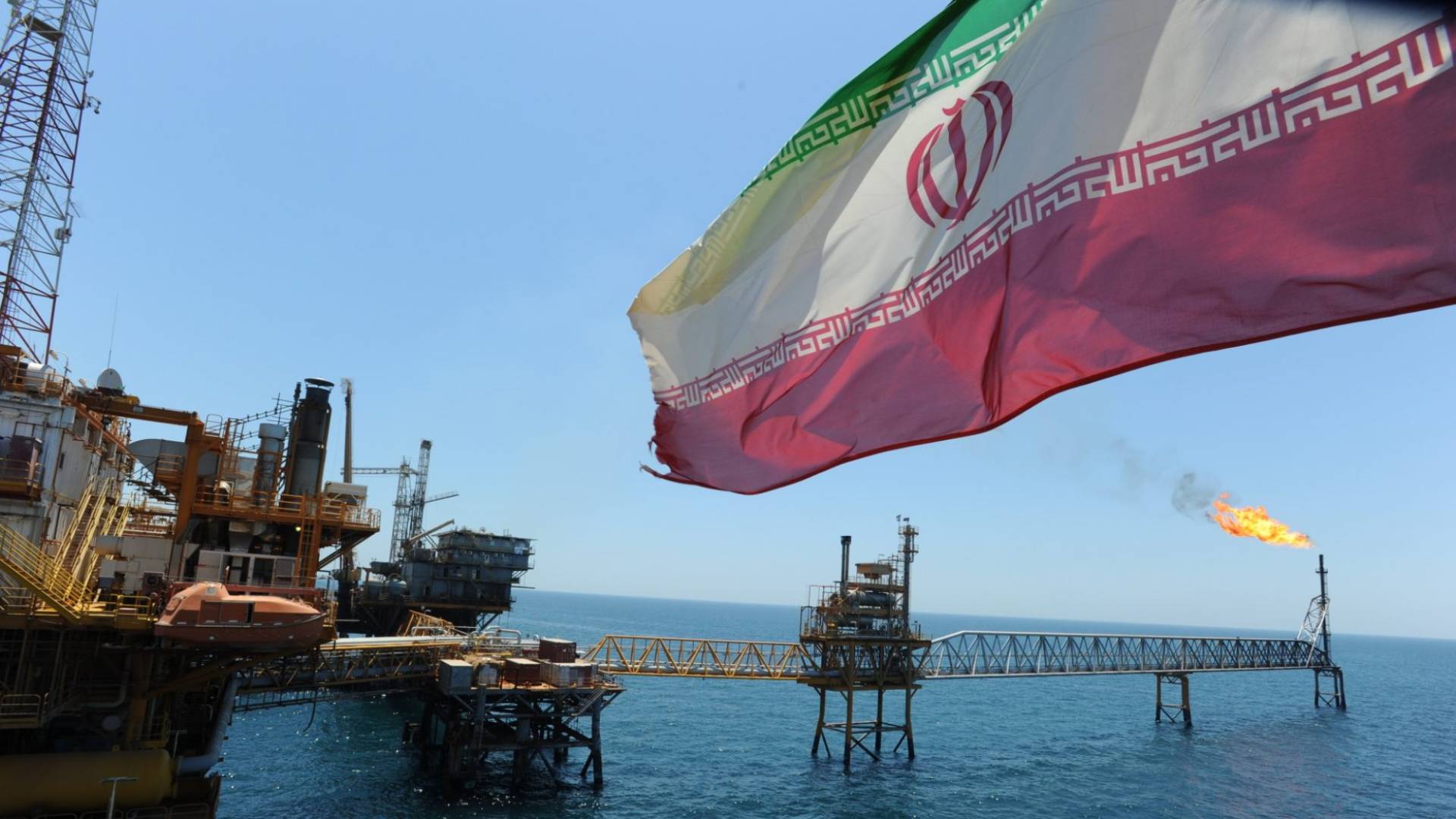
Iran lowers oil production to fight off US blockade: Bloomberg
Note: AI technology was used to generate this article’s audio.
- Iran is curbing oil production by up to 30% to prevent storage tanks from overflowing.
- Experts estimate Iran has only one month of storage left before all available storage capacity is exhausted.
As the United States tightens its naval blockade around the Strait of Hormuz, Iran is facing challenges to handle a massive buildup of unsold oil.
According to reports from Bloomberg, Iran has officially started cutting its oil production because its storage tanks are almost full.
A senior Iranian official, confirmed to Bloomberg that the country is proactively reducing output. Explaining that Tehran is doing this to stay ahead of its storage limits rather than waiting for the tanks to overflow.
Resilience through experience
Despite the pressure from US President Donald Trump’s administration, Iranian leaders insist they can survive the standoff. They are relying on a "resistance economy" designed to withstand US pressure.
Hamid Hosseini, a spokesman for an Iranian oil exporters’ association, told Bloomberg, “We have enough expertise and experience. We’re not worried.”
Iranian engineers say they have learned how to pause oil wells without causing permanent damage, a skill they developed during the first Trump administration's "Maximum Pressure" campaign in 2018.
New kind of blockade
While Iran has used a "shadow fleet" of secret tankers to sell oil to China in the past, Bloomberg reports that this has become nearly impossible. The US Navy is now physically blocking the waters, leaving tens of millions of barrels of oil stranded at sea.
Currently, around 18 tankers carrying up to 35 million barrels of crude oil are sitting in the Persian Gulf with nowhere to go.
US Treasury Secretary Scott Bessent stated on X that Iran’s main export hub, Kharg Island, is "soon nearing capacity," a situation he says costs Iran $170 million every day.
The Treasury Department, through Economic Fury, has targeted Iran’s international shadow banking infrastructure, access to crypto, shadow fleet, weapons procurement networks, funding for terrorist proxies in the region, and independent Chinese “teapot” refineries that support…
— Treasury Secretary Scott Bessent (@SecScottBessent) April 29, 2026
Risks of stalemate
The strategy of cutting production is not without danger. If oil wells are not managed perfectly during a shutdown, the pressure inside the reservoir can drop, causing long-term damage to Iran's ability to pump oil in the future.
Expert Brett Erickson told Bloomberg that Washington may be underestimating Tehran’s ability to adapt. “Regimes do not fold, they adapt,” he said.
However, the economic pain is visible; Iran’s currency hit a record low this week, and the prices of basic goods are soaring.
Running out of time
There is no clear agreement on how long Iran can last. While President Trump predicted last week that Iran's oil system would "explode" within days, that hasn't happened.
However, analysts from JPMorgan Chase and Kpler told Bloomberg that Iran likely has about one month only of storage space left if they keep producing at current levels.
To find a way out, Iran is considering desperate options, such as:
Land Exports: Sending small amounts of oil by truck to countries like Pakistan, Uzbekistan, Afghanistan, and Turkey.
Railways: Moving oil products by train to China, though this is very expensive.
For now, the conflict has reached a stalemate. Iran is betting that high global oil prices -which hit a four-year high this week- will eventually force the US to back down before Iran's storage tanks completely overflow.