

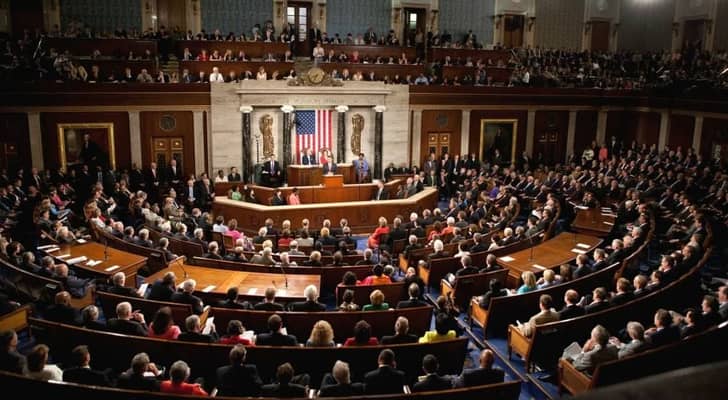
US Senate fails to limit Trump's military power in Iran for fifth time
Note: AI technology was used to generate this article’s audio.
- Senate rejects fifth attempt to curb Trump’s war powers in Iran amid rising regional tensions.
In a familiar display of partisan deadlock, the Senate on Wednesday rejected a measure aimed at curbing President Donald Trump’s authority to conduct military operations against Iran.
The 46–51 vote marks the fifth time this year that the chamber has blocked attempts to require explicit congressional approval for continued hostilities in the region.
The resolution, spearheaded by Senator Tammy Baldwin (D-WI), sought to force the administration to "remove United States Armed Forces from hostilities within or against Iran" unless authorized by a formal declaration of war or a specific Authorization for Use of Military Force (AUMF).
A divided chamber
The vote largely followed party lines, though two notable defections remained consistent with previous attempts:
- Senator John Fetterman (D-PA) joined Republicans in voting against the restriction, maintaining his stance that the strikes have been effective in neutralizing Iranian nuclear threats.
- Senator Rand Paul (R-KY) broke ranks with the GOP to support the measure, citing his long-standing opposition to executive overreach in foreign conflicts.
Three senators, Mark Warner (D-VA), Chuck Grassley (R-IA), and David McCormick (R-PA), were absent for the vote.
Escalating tensions and costs
The legislative defeat comes as "Operation Epic Fury," the administration's military campaign in Iran, enters its eighth week. Despite a recently extended ceasefire, the situation on the ground remains volatile.
Hours before the vote, Iran claimed responsibility for attacking two commercial vessels in the Strait of Hormuz, declaring it "an eye for an eye" in response to the ongoing US naval blockade. The conflict has already taken a significant toll:
- Human cost: Thousands of civilians have been killed across the Middle East, including a controversial strike on an Iranian elementary school that left over 160 children dead.
- Economic impact: Global shipping giant Maersk has suspended cargo reservations for seven Gulf countries, and private shipping insurance rates have spiked twelvefold.
- Military casualties: At least 13 US service members have died since the start of hostilities on February 28.
The road ahead
Republican leadership, led by Senate Armed Services Committee Chair Roger Wicker (R-MS), dismissed the resolution as "unwise," arguing that it would project weakness while the US maintains its blockade to pressure the Iranian government.
However, Senate Democrats signaled they are far from finished. Following the vote, several lawmakers indicated they have nearly a dozen similar privileged resolutions prepared for the coming weeks.
"We are going to use every lever we have to stop business as usual," said Senator Cory Booker (D-NJ) in a statement following the floor vote. "The American people deserve a debate on whether we are engaged in regime change or a slide into another endless war."
The White House has maintained that the President is acting within his constitutional authority to protect national security interests and has not ruled out the eventual deployment of ground troops.







