

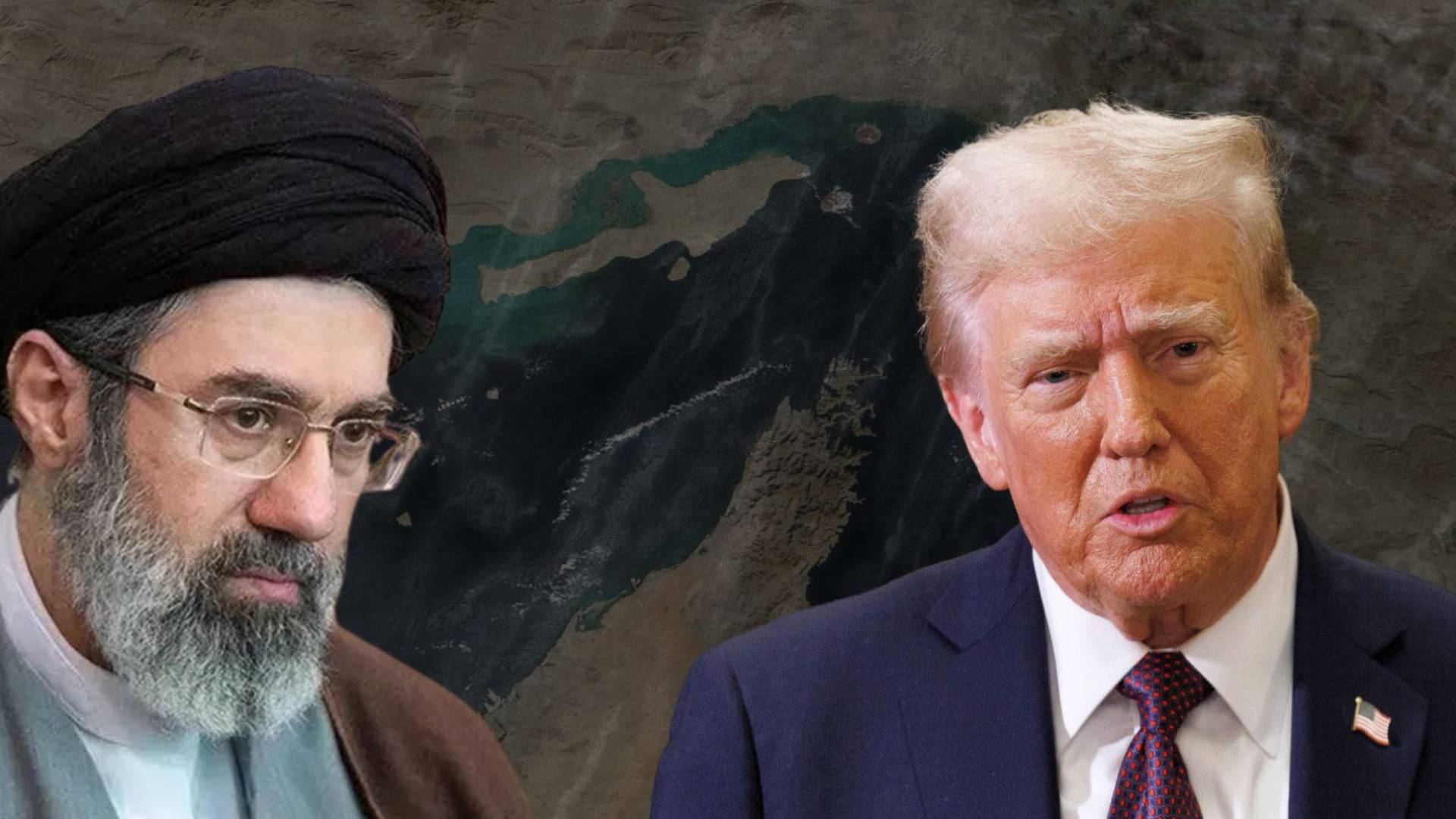
Day 45 | US blockade of Iranian ports begin after Islamabad talks collapse
The 2026 Iran War began on February 28, when the United States and ‘Israel’ launched a large-scale attack on Iran, unleashing nearly 900 airstrikes within 12 hours on the Islamic Republic’s missile systems, air defenses, nuclear facilities, military bases, and leadership targets.
On April 8, the United States, Iran, and ‘Israel’ agreed to a temporary two-week ceasefire, brokered by Pakistan, with Iran committing to reopen the Strait of Hormuz and all sides pausing military operations while negotiations continue toward a broader agreement.
The assault followed years of shadow conflict, including direct missile exchanges in 2024 and a limited 12-day war in 2025 that damaged Iran’s nuclear and ballistic capabilities.
Supreme Leader Ayatollah Ali Khamenei and senior officials were killed in the opening strikes.
Iran responded within hours, launching waves of ballistic missiles and drones at ‘Israel’, US bases, and targets across the Gulf.
The fragile truce is currently hanging in the balance, with Tehran threatening to resume hostilities as ‘Israel’ launched a major bombardment of Lebanon.
Washington and Tehran both claimed victory after agreeing to the ceasefire and negotiations.
The deal's fractures emerged quickly as ‘Israel’ carried out its heaviest strikes on its neighbour -- including in densely packed central Beirut -- since the Iran-backed group Hezbollah joined the war in early March.
‘Israel’ said its battle against Hezbollah was not part of the US-Iran truce agreed late Tuesday, an argument echoed by US Vice President JD Vance, as he is leading the talks with Tehran in Islamabad, Pakistan.
Iran's parliament speaker Mohammad Bagher Ghalibaf appeared to threaten the ceasefire, posting on X that the "workable basis on which to negotiate" had already been violated, making further talks "unreasonable".
Adding to the fragility of the truce, agreed hours before a deadline set by US President Donald Trump, a senior US official said Iran's 10-point plan was not the same set of conditions the White House had agreed to in order to pause the war.
Thread ended
This live thread has ended. Follow our online coverage of day 46 of the war, as the US military blockade on Iranian ports takes effect after Islamabad talks collapse.
Seven Iranian drones intercepted by Bahrain: army toll
Bahrain’s army released Monday an updated toll of what it says are Iranian drones and missiles intercepted by its forces, showing it intercepted seven drones in the past 24 hours.
“Since the start of the sinful Iranian attacks, it has succeeded in intercepting and destroying 194 missiles and 523 drones that targeted the Kingdom of Bahrain,” a statement by the Bahrain Defence Force (BDF) said on X.
تعلن القيادة العامة لقوة دفاع البحرين أن كافة أسلحتها ووحداتها في أعلى درجات الجاهزية وأهبة الاستعداد الدفاعي، وتؤكد أنه منذ بدء الاعتداءات الإيرانية الآثمة تمكنت من اعتراض وتدمير 194 صاروخا، و523 طائرة مسيرة، استهدفت مملكة البحرين.https://t.co/nyoU7GDuc7 pic.twitter.com/iWz4RM9YAp
— قوة دفاع البحرين (@BDF_Bahrain) April 13, 2026
A toll released yesterday by the BDF showed the toll at 516 drones.
تعلن القيادة العامة لقوة دفاع البحرين أن كافة أسلحتها ووحداتها في أعلى درجات الجاهزية وأهبة الاستعداد الدفاعي، وتؤكد أنه منذ بدء الاعتداءات الإيرانية الآثمة تمكنت من اعتراض وتدمير 194 صاروخا، و516 طائرة مسيرة، استهدفت مملكة البحرين.https://t.co/UB1GvShKQ3 pic.twitter.com/U4sh5H4yfM
— قوة دفاع البحرين (@BDF_Bahrain) April 12, 2026
Iran has not issued a statement on the matter, although it denied that it still carried out attacks on Gulf countries earlier when the two-week ceasefire with the United States started.
Germany's Merz urges Netanyahu to end Lebanon fighting
German Chancellor Friedrich Merz urged ‘Israeli’ Prime Minister Benjamin Netanyahu on Monday to end fighting in southern Lebanon and engage in direct peace talks with the Lebanese government, a spokesman said.
Merz also expressed his "grave concern" about developments in the Palestinian territories in a telephone conversation with Netanyahu and demanded that there "must be no de facto partial annexation of the West Bank", the German government spokesman said.
The spokesman said Merz offered Germany's continuing support for efforts "to reach a diplomatic understanding between the United States and Iran" in the war launched by ‘Israel’ and the US on February 28.
Merz initially welcomed the US-‘Israeli’ attacks, but has shifted to alarm as the potential global economic fallout became more serious and Iranian retaliatory strikes against Gulf states threatened to turn the conflict into a regional war.
On Monday, Merz told Netanyahu that "Germany is prepared to contribute to ensuring freedom of navigation in the Strait of Hormuz" -- but only following the "cessation of hostilities" and "provided the necessary conditions are met", according to the spokesman's summary of the conversation.
Shipping through the Strait of Hormuz -- a crucial waterway for about 20 percent of the world's oil supplies before the war -- has been largely halted by Iranian threats to strike tankers.
US President Donald Trump has declared a partial naval blockade of the strait after negotiations with Iran over the weekend broke down.
Hezbollah urges Lebanon to cancel Tuesday meeting with ‘Israel’
Hezbollah on Monday called for the cancellation of the talks scheduled for Tuesday between Lebanon and ‘Israel’, with its Secretary-General Naim Qassem describing such discussions as “futile.”
In a televised speech, Qassem said, “We reject negotiations with the usurping Israeli entity. These negotiations are futile,” calling for “the cancellation of this negotiating meeting.”
The ambassadors of Lebanon and ‘Israel’ to the United States are set to meet on Tuesday under US sponsorship.
Qassem stressed the need for a “Lebanese agreement and consensus” before entering direct negotiations with ‘Israel’, warning that “no one has the right to take Lebanon down this path without internal consensus among its components, and this has not happened.”
Lebanese authorities say the talks primarily aim to reach a ceasefire in the war ongoing since March 2.
‘Israeli’ Prime Minister Benjamin Netanyahu has set “two conditions”: “the disarmament of Hezbollah” and reaching a “real peace agreement.”
The war broke out after Hezbollah launched rockets toward ‘Israel’, in response to the assassination of Iran’s Supreme Leader Ali Khamenei.
Since then, ‘Israeli’ strikes have killed 2,089 people, according to the Health Ministry.
Qassem also said, “Our decision is resistance: we will not calm down, we will not stop, and we will not surrender. Let the battlefield speak.”
He added, “We will not surrender” and “we will remain in the field even to our last breath,” as Hezbollah fighters continue clashes with the ‘Israeli’ army advancing in border areas in southern Lebanon.
US Embassy in Amman resumes limited consular services for American citizens
The United States Embassy in Amman, Jordan said Monday it is resuming limited American Citizen on-site consular services by appointment.
Earlier in March, the US Department of State ordered non-emergency U.S. government employees and their family members to leave Jordan, amid the heightened regional tensions from the ‘Israeli’-US war on Iran.
View this post on Instagram
IEA chief warns of tougher month for energy markets due to Iran war
April could shape up to be a tougher month than March for energy markets and the economy due to the Middle East war, the head of the International Energy Agency said Monday.
While the month of March saw the delivery of cargo from the region "loaded well before the crisis started," Fatih Birol said, "during the month of April, nothing has been loaded."
"The longer the disruption is, the more severe the problem becomes," he told reporters after a meeting at the International Monetary Fund.
VIDEO - Trump says won't apologize to “very weak” Pope Leo
US President Donald Trump says he won't apologize to Pope Leo.
"I think he's very weak on crime and other things," he tells reporters at the White House.
VIDEO - Trump says Iran called and wants to make deal “very badly”
US President Donald Trump says that Iran has called and wants to make a peace deal, after marathon talks in Pakistan ended at the weekend without any agreement.
"I can tell you that we've been called by the other side. They'd like to make a deal. Very badly, very badly," Trump tells reporters outside the Oval Office.
Hezbollah leader says rejects Lebanon's direct negotiations with ‘Israel’
Hezbollah leader Naim Qassem on Monday urged Lebanon to cancel a planned meeting with ‘Israel’ in Washington the following day, reiterating his group's rejection of direct negotiations with ‘Israel’.
"We reject negotiations with the usurping Israeli entity... We call for a historic and heroic stance by cancelling this negotiating meeting," Qassem, whose Iran-backed group has been at war with Israel since March 2, said in a televised address.
The Lebanese and ‘Israeli’ ambassadors to the United States are scheduled to meet in Washington on Tuesday to discuss holding direct negotiations between the two countries.
Pope Leo says has “no fear” of Trump administration
Pope Leo XIV says he has "no intention to debate" with Donald Trump, after the US president criticised him over his comments on the US-Iran war.
"I have no fear of neither the Trump administration nor of speaking out loudly about the message of the gospel," the pope tells reporters aboard the papal plane as they headed to Algeria for the pontiff's first visit to Africa.
Trump says won't apologize to “very weak” Pope Leo
US President Donald Trump refused to apologize Monday for criticizing Pope Leo XIV, after the pontiff called for an end to violence in the Iran war.
"There's nothing to apologize for. He's wrong," Trump told reporters, a day after a social media post and comments slamming the US-born pope.
"Pope Leo said things that are wrong. He was very much against what I'm doing with regard to Iran, and you cannot have a nuclear Iran," said Trump, adding that Leo was "very weak on crime and other things."
Trump says Iranian officials called, want deal “badly”
US President Donald Trump said Monday that Iranian representatives had called to make a peace deal after talks in Pakistan ended at the weekend without agreement.
"I can tell you that we've been called by the other side. They'd like to make a deal. Very badly, very badly," Trump told reporters outside the Oval Office, without identifying which officials had called.
Trump says 34 ships crossed Hormuz Sunday
US President Donald Trump said 34 ships had passed through the Strait of Hormuz on Sunday, adding that it was the highest number since Iran choked off the waterway during the Middle East war.
"34 Ships went through the Strait of Hormuz yesterday, which is by far the highest number since this foolish closure began," Trump said on Truth Social on Monday. The figure could not be immediately corroborated.
OPINION: Is the US afraid of Yemen? The Silent lever in the Islamabad talks
As the dust settles on the Jinnah Convention Centre in Islamabad, the world is left dissecting a diplomatic failure. The high-stakes negotiations between the United States and Iran, aimed at ending the "2026 Iran War," ended without a deal.
While headlines focus on the Strait of Hormuz and nuclear enrichment, a more shadow-filled question lingers in the corridors of power: Is the West—specifically the United States—secretly paralyzed by the Yemeni wild card?
The optics are, at best, confusing. Since late March, the Houthis in Yemen have escalated their involvement, launching ballistic missiles at 'Israel' for the first time in this current conflict. Yet, despite the US-'Israeli' strikes pounding Iranian targets from the coast to the capital, the response toward Yemen has remained oddly surgical, almost hesitant.
The Myth of "No One Attacking Yemen"
To suggest Yemen is untouched is a stretch—the US has maintained unilateral sanctions and high-tech maritime interceptions. However, compared to the "heavy price" being extracted from Tehran, the Houthi infrastructure remains remarkably intact. This begs the question: Is the US afraid?
The fear isn’t of the Houthi military might in a traditional sense, but of the Bab al-Mandeb "Doomsday Button."
A Dual-Chokehold Strategy
For decades, the Strait of Hormuz was seen as Iran’s only major pressure tool—the valve through which 20% of the world's oil flows. But 2026 has revealed a more sophisticated Iranian "Axis" strategy. By utilizing the Houthis as a proxy sovereign power over the Bab al-Mandeb, Tehran has effectively created a dual-chokehold on global trade.
- Hormuz: The energy jugular.
- Bab al-Mandeb: The commercial spine (12% of global trade).
The failure of the Islamabad talks reportedly hinged on Iran’s "10-point proposal," which demanded Iranian oversight of Hormuz. But the subtext was clear: even if a deal is reached on Hormuz, the Bab al-Mandeb remains a "separate" Yemeni issue. This allows Iran to play the role of the diplomat in Pakistan while its allies in Sana'a hold the Red Sea hostage.
Why the US is Hesitating
The US finds itself in a strategic trap. A full-scale kinetic campaign against Yemen to "reopen" the Red Sea would likely:
- Trigger a total closure: The Houthis have already warned that "surprises" are coming. A total blockade of Bab al-Mandeb would force all global shipping around the Cape of Good Hope, sending inflation into a tailspin that no Western election-year government can afford.
- Solidify the "Unified Fronts": As Houthi leader Abdul-Malik al-Houthi noted last week, the coordination between Lebanon, Iraq, and Yemen is no longer a theory—it is an operational reality.
The Islamabad Shadow
The US delegation, led by Vice President JD Vance, left Islamabad because they could not "gain Iran's trust." But perhaps it is the other way around. The US cannot trust that a deal with Tehran actually secures the Red Sea.
The Houthis have successfully positioned themselves as an actor that can attack 'Israel' with relative impunity because the "cost" of a full Western intervention in Yemen is a global economic depression.
Is the US afraid of Yemen? Perhaps "afraid" is the wrong word. The US is calculatedly cautious. It knows that while it can win a battle in the mountains of Sana'a, it could lose the global economy in the waters of the Bab al-Mandeb. Until the West finds a way to decouple the Yemeni threat from the Iranian nuclear file, the "Gate of Grief" will remain the most powerful lever in the Middle East.
Trump deletes offensive AI-generated image posted amid dispute with Pope Leo on Iran
US President Donald Trump removed an AI-generated image he posted on Truth Social on Monday.
The image, which prompted a lot of backlash, depicts Trump as Jesus Christ and was posted on Orthodox Easter (April 12)
The post comes amid heightened political tension linked to the Iran conflict and recent criticism directed at Pope Leo XIV.
The dispute with the pope came over his recent comments on the ongoing US military campaign against Iran and Trump’s immigration policy.
.png)
Eight ‘Israeli’ soldiers wounded in Hezbollah drone attack
Eight ‘Israeli’ soldiers were wounded in a Hezbollah drone attack today, the military said on Monday.
Two were moderately wounded, and six suffered light injuries.
The explosive-laden drone struck next to the troops during combat in southern Lebanese territory, the statement adds.
Ship traffic in Strait of Hormuz after US-Iran ceasefire
Watch ship traffic through the Strait of Hormuz between April 8 and 12, following the start of the two-week ceasefire between the United States and Iran.
Trump warns Iran boats breaching US blockade will be “eliminated”
President Donald Trump said US forces would destroy any Iranian "fast attack ships" that approach the American naval blockade of Iranian ports that came into effect on Monday.
"Warning: If any of these ships come anywhere close to our BLOCKADE, they will be immediately ELIMINATED," Trump said on his Truth Social network, adding that the rest of Iran's navy had been "completely obliterated."
The US military would be "using the same system of kill that we use against the drug dealers on boats at Sea," the president said, referring to air strikes on alleged narcotics boats off the coast of Venezuela.
Iran’s navy “laying at the bottom of the sea”: Trump
US President Donald Trump reiterated Monday that the Iranian navy has been destroyed, after his deadline for a naval blockade of the Islamic Republic has passed.
“Iran’s Navy is laying at the bottom of the sea, completely obliterated - 158 ships,” Trump said on Truth Social.
“What we have not hit are their small number of, what they call, “fast attack ships,” because we did not consider them much of a threat.”
“Warning: If any of these ships come anywhere close to our BLOCKADE, they will be immediately ELIMINATED, using the same system of kill that we use against the drug dealers on boats at Sea. It is quick and brutal,” he added.
Trump announced earlier a blockade of the strategic Strait of Hormuz after weekend peace talks with Tehran ended without an agreement.
The US military announced Sunday it will begin blockading all Iranian Gulf ports on Monday at 1400 GMT, but will allow ships not coming or going to Iran to pass through the strait.
Pakistan says US-Iran ceasefire “holding”
Pakistan's Prime Minister Shehbaz Sharif said on Monday a ceasefire between the United States and Iran was "holding" and that efforts were underway to reach an agreement after weekend talks failed to do so.
"The ceasefire is still holding and, as I speak, full efforts are underway to resolve the outstanding issues," Sharif told a cabinet meeting in brief televised remarks.


