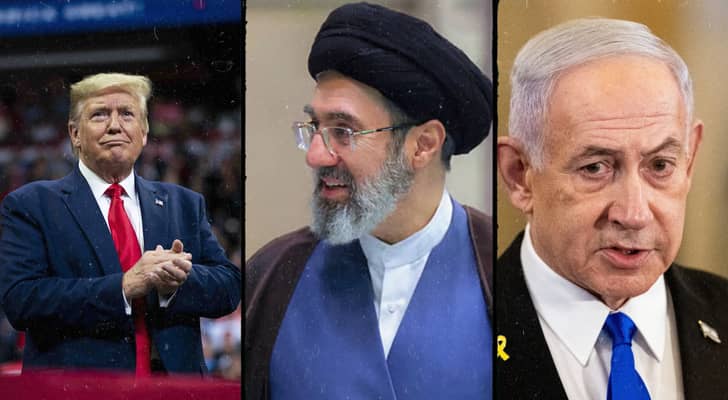
Iran’s supreme leader Mojtaba Khamenei reportedly injured, 'Israeli' media claims
Note: AI technology was used to generate this article’s audio.
- 'Israeli' media reports, citing sources, claim Mojtaba Khamenei suffered severe facial injuries and possibly lost a leg in an early war strike.
- Reports say he continues to oversee state affairs remotely despite limited public appearances.
Iran’s new supreme leader Mojtaba Khamenei is reportedly recovering from serious facial and leg injuries sustained in an airstrike that killed his father at the beginning of the war, according to individuals cited in reports published by Reuters and referenced by 'Israeli' media outlets.
Read more: Mojtaba Khamenei reportedly 'unconscious', receiving treatment, unable to govern Iran
The sources, described as close to his inner circle, said Khamenei’s face was disfigured in the attack on the supreme leader’s compound in central Tehran and that he suffered significant injuries to one or both legs.
Remote leadership amid restricted visibility
Despite the reported injuries, the 56-year-old is said to remain mentally sharp and actively involved in governance.
According to the sources, he participates in high-level meetings via audio conferencing and continues to take part in key decisions related to the war and negotiations with the United States.
His condition and whereabouts remain unverified publicly, with no recent images or recordings released since the airstrike and his appointment as supreme leader.
Conflicting intelligence assessments
A source familiar with US intelligence assessments told Reuters that Khamenei may have lost a leg, though this has not been independently verified.
US Defense Secretary Pete Hegseth previously described him as “wounded and likely disfigured,” while Iranian authorities have not provided detailed confirmation of his medical condition.
Read more: Mojtaba Khamenei off 'Israel' target list, likened to Arafat: Hebrew media
Iran’s UN mission did not respond to requests for comment.
The report comes as diplomatic efforts involving the United States continue in Islamabad, amid broader regional instability.
Analysts cited in the report say limited visibility of the supreme leader raises questions about the extent of his direct authority, with the Revolutionary Guards reportedly playing a growing role in strategic decisions during the war.
Khamenei’s absence from public view has fueled widespread speculation on Iranian social media, including memes questioning who is effectively running the country.
Supporters argue the low profile is a security measure due to ongoing airstrikes, while critics point to a lack of transparency in leadership communication.
Sources cited in the reporting say images of the supreme leader may be released in the coming months, depending on security and health conditions.