Deadly landslide strikes militia-held mining site in DR Congo
Note: AI technology was used to generate this article’s audio.
-
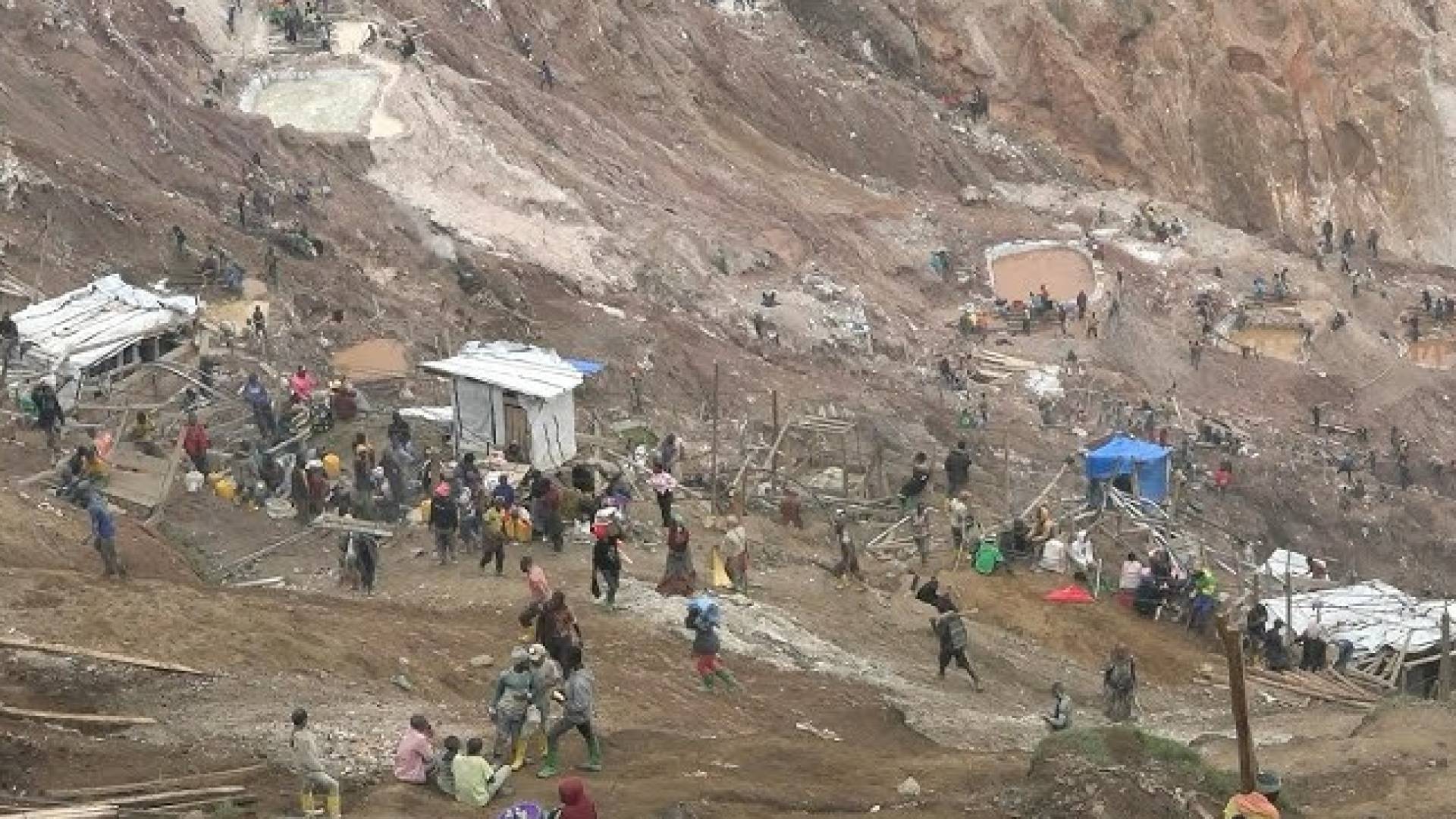
Rescue workers search for victims after a deadly landslide struck the rebel-controlled Rubaya mining site in eastern DR Congo.
A catastrophic landslide at the Rubaya mining site in eastern Democratic Republic of Congo has killed several people and left dozens missing, in an area controlled by the M23 rebel movement, local officials and witnesses said.
The disaster occurred after part of a mountain slope collapsed on Wednesday, followed by another landslide on Thursday morning, triggered by heavy rainfall that swept through the mining zone, according to eyewitnesses and local authorities.
Eraston Bahati Musanga, the M23-appointed governor of North Kivu province, confirmed that casualties were reported after the hillside gave way. He said rescue teams had recovered several bodies, while many others were still believed to be trapped under the debris.
Frank Bolingo, a worker at the site, described the scene as a “free fall of earth” that swept away miners engaged in traditional, manual extraction. “The ground swallowed some of them,” he said, adding that the fate of others remains unknown inside collapsed mining tunnels.
Rubaya, located about 70 kilometers west of Goma, is a strategically important global mining hub, producing an estimated 15% to 30% of the world’s coltan, a key mineral used in the manufacture of modern electronic devices.
Since M23 seized control of the site in April 2024, the group has established a parallel administration, including a so-called “ministry of mines” that issues permits to diggers. According to United Nations expert reports, this system generates hundreds of thousands of dollars in monthly tax revenue for the rebels.
Despite these significant earnings, safety standards at the mines remain virtually nonexistent. Dozens of workers continue to dig with basic tools in highly unstable geological conditions.
The latest incident once again highlights the human cost of so-called “conflict minerals” in eastern DR Congo, where natural disasters and armed conflict intersect, claiming the lives of impoverished workers struggling to earn a living amid competing political and economic interests.