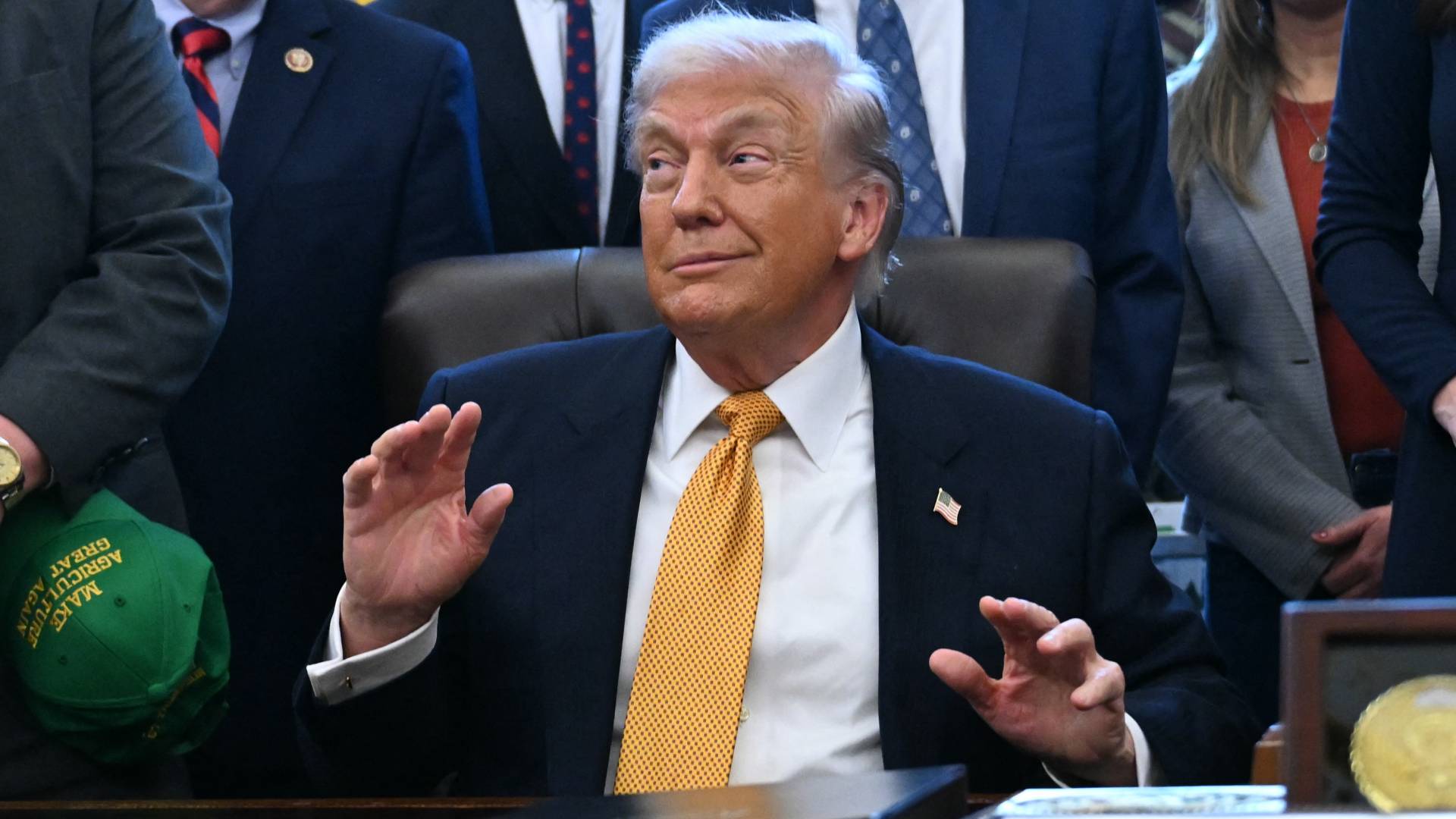
US President Donald Trump speaks before signing a bill in the Oval Office of the White House in Washington, DC. (January 14, 2026)

Gulf states convinced Trump to give Iran “second chance”: AFP
Note: AI technology was used to generate this article’s audio.
- Following intense "frenetic diplomacy" by Saudi Arabia, Qatar, and Oman, Trump delayed his threatened military intervention after receiving assurances that the killing of protesters and planned executions in Iran had been halted, according to sources.
- Replacing the immediate threat of kinetic strikes, the US Treasury sanctioned high-ranking "architects of the crackdown," including security chief Ali Larijani, while Riyadh formally declared neutrality, notifying Tehran that Saudi territory and airspace will not be used for any American military operations.
Intense, last-minute diplomatic efforts by Saudi Arabia, Qatar, and Oman have persuaded US President Donald Trump to delay a threatened military intervention in Iran, according to senior regional officials.
The diplomatic surge follows weeks of bellicose rhetoric from the White House regarding Tehran’s crackdown on nationwide protests that human rights monitors say have left over 3,400 people dead.
A high-ranking Saudi official, speaking on condition of anonymity, told AFP on Thursday that the three Gulf nations engaged in "frenetic diplomacy" to convince Trump that dialogue remained viable and give Iran a “second chance”.
The official noted that the leaders cautioned the US president that an attack would lead to catastrophic regional instability.
Shifting From Missiles to Sanctions
The breakthrough became apparent late Wednesday when President Trump told reporters he had been informed by a "trusted source" that the killing of protesters had ceased and that planned executions had been halted.
"They've said the killing has stopped and the executions won't take place -- there were supposed to be a lot of executions today and that the executions won't take place -- and we're going to find out," Trump said.
"We've been told on good authority, and I hope it's true."
Instead of a kinetic strike, the US Treasury Department announced a fresh wave of economic sanctions Thursday.
The measures target high-ranking security officials, including Supreme National Security Council Secretary Ali Larijani, along with several banking networks accused of financing the state's internal security apparatus.
Regional Neutrality and Iranian Response
The diplomatic push was reinforced by a firm Saudi stance.
On Wednesday, Riyadh formally notified Tehran that it would not permit the use of its land or airspace for any US military operation against Iran.
This commitment to neutrality was echoed by Iranian Foreign Minister Abbas Araghchi, who emphasized during a call with his Saudi counterpart, Faisal bin Farhan, the necessity of protecting Middle Eastern security from "external interference."
In Tehran, observers reported a tentative return to normalcy.
The Iranian judiciary also moved to lower tensions by denying that Erfan Soltani, a 26-year-old activist whose fate had become a focal point for international outcry, had been sentenced to death.
According to the Mizan news agency, Soltani faces charges of "organizing anti-security gatherings," which carry prison terms rather than capital punishment.
A Fragile Calm
The United Nations Security Council is scheduled to meet Thursday night at the request of the United States to discuss the ongoing human rights situation and the viability of the current de-escalation.