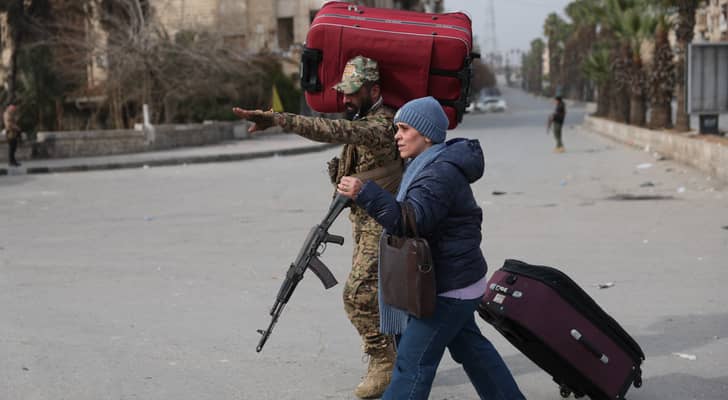
Aleppo mosques shelter 400 families fleeing SDF attacks
Note: AI technology was used to generate this article’s audio.
- Syrian Ministry of Religious Affairs shelters more than 400 families in Aleppo mosques after SDF attacks.
- Army secures neighborhoods and clears Sheikh Maqsoud of SDF fighters.
The Syrian Ministry of Religious Affairs announced on Saturday that more than 400 families fleeing SDF attacks are being sheltered in Aleppo mosques, as authorities respond to a wave of displacement in the city.
Mosques turned into shelters
In a statement reported by the Syrian Arab News Agency (SANA), the ministry said it opened and prepared over 20 mosques in Aleppo’s Ashrafieh and Sheikh Maqsoud districts to provide basic needs and alleviate suffering.
Read more: Around 20 SDF members defect to Syrian authorities in Aleppo
The ministry added that its Aleppo directorate mobilized staff immediately after the displacement began, equipping the mosques with essential supplies for the arriving families.
“This step stems from our religious, national, and humanitarian duty,” the ministry said. “Houses of God will remain a safe refuge for all in times of hardship and crisis,” and called for reinforcing community solidarity and mutual support.
Army secures neighborhoods
The Syrian state channel Al-Ikhbariya reported that the Syrian Arab Army secured the evacuation of residents from Sheikh Maqsoud, which SDF had reportedly used as human shields.
Read more: Clashes renew between Syrian army, SDF in Aleppo: state media
Earlier Saturday, the army announced the completion of a sweep of Sheikh Maqsoud to remove remaining SDF elements, following prior operations in Ashrafieh and Bani Zeid districts.
Context of the escalation
The violence in Aleppo began Tuesday, when SDF launched attacks from its controlled areas in Ashrafieh, Sheikh Maqsoud, and Bani Zeid against residential districts, civilian facilities, and army positions. Official figures report nine dead, 55 injured, and 165,000 displaced.
The Syrian army responded with a limited military operation Thursday, after SDF refused to implement a March 2024 agreement with the government on civil and military integration in northeast Syria, reopening crossings, and ensuring territorial unity.
The escalation followed SDF leadership meetings in Damascus, led by Farhad Abdi Shahin, also known as Mazlum Abdi, which the government said produced no tangible results.