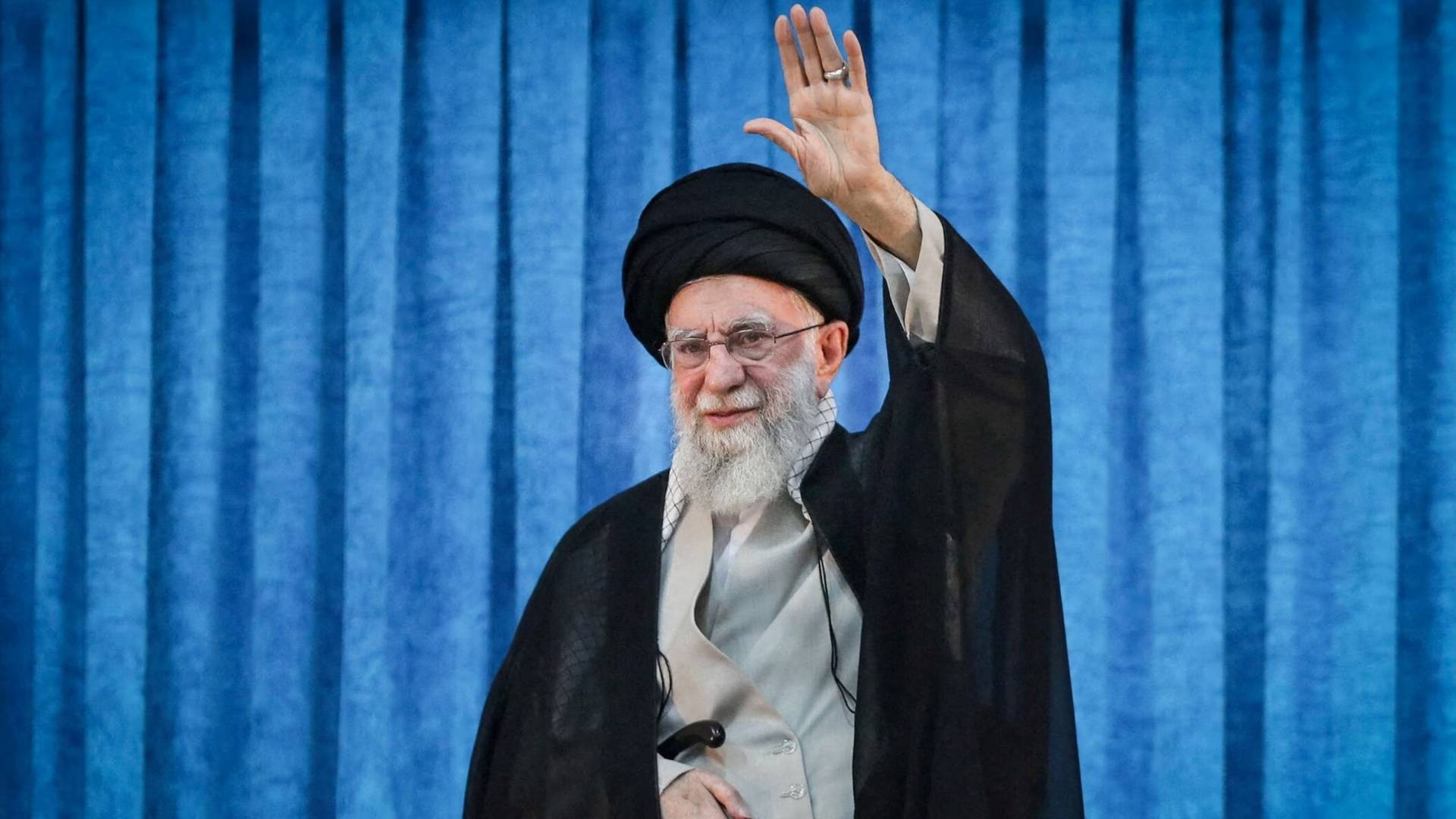
Iran's Supreme Leader Ayatollah Ali Khamenei. (File)

“Women are flowers”: Khamenei’s tweet goes viral on X
Note: AI technology was used to generate this article’s audio.
Iran's Supreme Leader Ayatollah Ali Khamenei ignited online discussions with a tweet on Wednesday, portraying women as delicate flowers requiring care and protection.
The post, which emphasized women's role as "managers of the home" rather than servants, stated: "A woman is like a flower. A flower must be cared for and protected, and she will enrich you with her color, fragrance, and qualities."
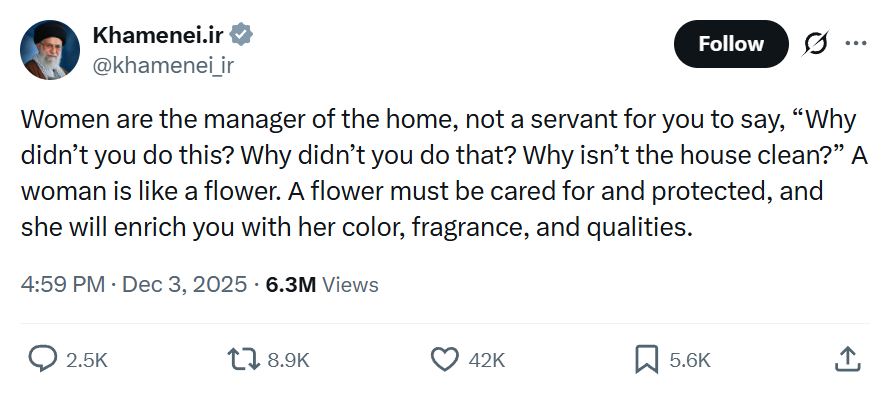
This metaphor quickly went viral, amassing over 6 million views and thousands of engagements on X, formerly Twitter.
The tweet formed part of a series where Khamenei outlined Islamic perspectives on gender equality, highlighting justice in social and familial behavior as women's primary right.
Women are the manager of the home, not a servant for you to say, “Why didn’t you do this? Why didn’t you do that? Why isn’t the house clean?” A woman is like a flower. A flower must be cared for and protected, and she will enrich you with her color, fragrance, and qualities.
— Khamenei.ir (@khamenei_ir) December 3, 2025
He criticized Western practices, such as unequal pay, calling them "totally unjust," while advocating for women's independence and capabilities within Islamic frameworks.
Khamenei argued that Islam grants women equal opportunities in politics, business, and spiritual growth, rejecting violence or discrimination against them.
This statement emerged during a meeting with thousands of Iranian women and girls at Tehran's Imam Khomeini Hussainiyah on the same day, where Khamenei elaborated on women's exalted status in Islam.
He praised Iranian women's unprecedented achievements in science, sports, and politics under the Islamic Republic, attributing them to supportive policies.
Khamenei defended the hijab as a means to preserve dignity, countering claims that it impedes progress by citing Iran's female advancements as proof otherwise.
He contrasted this with Western capitalist culture, accusing it of promoting promiscuity under the guise of freedom, leading to women's objectification and family breakdown.
Some critics highlighted Iran's enforcement of mandatory hijab laws, which has been a requirement in place since shortly after the 1979 Islamic Revolution.
However, the level of enforcement has varied.
Domestically, the speech revealed regime challenges, as Khamenei avoided calls for stricter hijab enforcement despite pressure from hardliners, reflecting fears of renewed unrest.