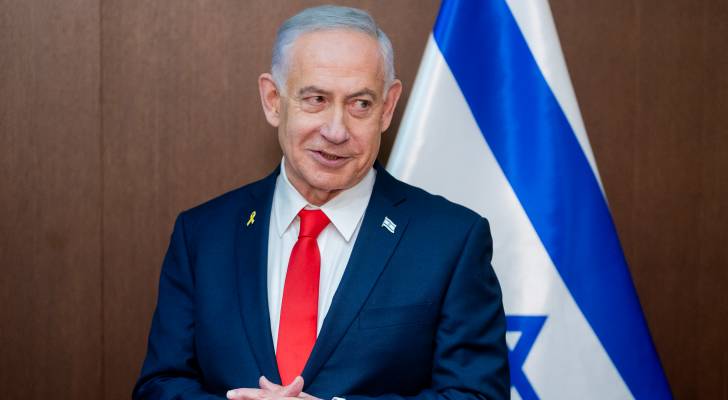
‘Israeli’ Prime Minister Benjamin Netanyahu speaks during a meeting with the US vice president at his office in Jerusalem. (October 22, 2025)

52% of ‘Israelis’ think Netanyahu shouldn’t run for elections: Channel 12 poll
Note: AI technology was used to generate this article’s audio.
52% of ‘Israeli’ think that Prime Minister Benjamin Netanyahu should not run in the next election, according to a poll conducted by Hebrew Channel 12.
The survey showed that 41% think Netanyahu should run, and 7% who are not sure.
As for who should lead the bloc of parties opposing Netanyahu, 44% of respondents said former Prime Minister Naftali Bennett, 16% said Yesh Atid chairman Yair Lapid, 11% said Democrats chief Yair Golan, 11% said Yashar! chief Gadi Eisenkot, 10% said Yisrael Beytenu chief Avigdor Liberman and just 2% said National Unity chairman Benny Gantz.
Earlier this month, Netanyahu said that he will run for office in the November 2026 elections and expects to win.
Appearing on a programme on the right-wing Channel 14, Netanyahu was asked whether he intended to seek another term. "Yes," he replied.
When pressed on whether he expected to win, the premier responded: "Yes."
Longest-Serving Prime Minister
Netanyahu leads the Likud party, the largest of the ‘Israeli’ right-wing parties, and has served the longest cumulative term as prime minister in ‘Israel's’ history, holding the office for more than 18 years since 1996, across separate terms.
In the most recent election, his party won 32 seats in the Knesset, while his coalition allies, Haredi parties and the Religious Zionist alliance, secured a record 32 seats.
Legal and Political Challenges
Netanyahu continues to face three corruption cases that have been ongoing since May 2020. During his current term, which began in late 2022, he introduced wide-ranging judicial reforms that opponents argued were aimed at weakening the judiciary.
Those proposals sparked massive protests that subsided only after October 7, 2023.
Netanyahu faced significant domestic criticism over his management of the war and his handling of the issue of releasing the captives held in Gaza.
He also faces an arrest warrant from the International Criminal Court on suspicion of ordering war crimes and crimes against humanity in Gaza.