Hamas fighters escort 'Israeli' captive Or Levy (Credit: Getty Images)

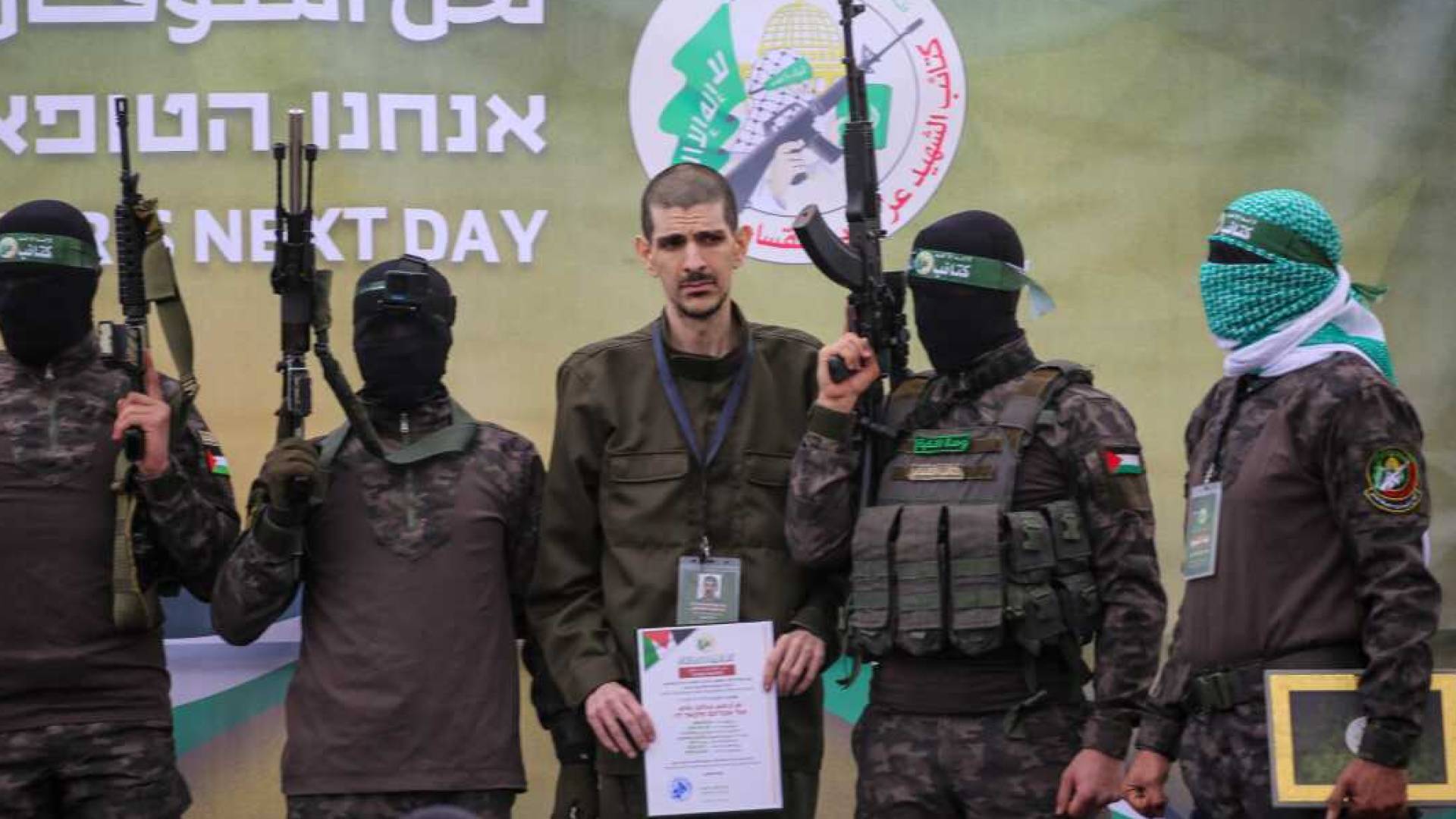
Silent handover: Hamas to release 'Israeli' captives without ceremony
- World awaits signing of Sharm el-Sheikh Agreement to end Gaza war.
- Deal marks first phase of Trump’s broader Middle East plan.
- Implementation set to start Monday with ceasefire, prisoner exchange, and partial withdrawal.
The world is witnessing a historic moment today, Thursday, October 9, 2025, as leaders prepare to sign the Sharm el-Sheikh Agreement, a deal aimed at ending the devastating war on Gaza that has raged for two years.
The agreement marks the first stage of a broader plan proposed by US President Donald Trump and comes after days of intense negotiations mediated by the United States, Egypt, Qatar, and Turkey. Implementation is set to begin next Monday, paving the way for a full ceasefire, a large-scale prisoner exchange, and the partial withdrawal of Israeli Occupation Forces (IOF) from Gaza.
- Stalemate on the battlefield -
The agreement follows two years of war that failed to achieve 'Israel’s' stated objectives of destroying Hamas or freeing captives by force. Instead, the conflict became a grinding military and political stalemate, accompanied by unprecedented international pressure.
The humanitarian situation in Gaza played a central role in this shift. An official famine was declared amid widespread destruction, the collapse of the health system, and the displacement of more than two million people, a crisis that triggered global outrage.
'Israel' also faced growing legal challenges, including South Africa’s genocide case at the International Court of Justice (ICJ) and moves by the International Criminal Court (ICC) to pursue arrest warrants for 'Israeli' officials. At home, Netanyahu’s government came under intense pressure from the families of captives, as far-right allies resisted any compromise.
Trump’s return to the White House also changed Washington’s tone. Moving away from unconditional support, he sought to position himself as a dealmaker chasing a landmark diplomatic breakthrough in the Middle East.
- Phase one: Ceasefire, prisoner exchange, and aid flow -
Leaked details of the first phase of the deal outline several key steps:
- A comprehensive ceasefire across the Gaza Strip.
- Prisoner exchange, with Hamas releasing around 20 'Israeli' captives in exchange for roughly 2,000 Palestinian prisoners.
- A gradual withdrawal of 'Israeli' forces within 24 hours of signing.
- A major humanitarian aid surge to all areas of the Strip.
- Return of displaced people from southern to northern Gaza.
- One sensitive component of the deal is 'Israel’s' demand for a “silent handover” of captives, away from media coverage, to prevent Hamas from portraying the exchange as a symbolic victory.
- Reactions: Global praise, internal divisions -
The deal has already generated a wave of political responses worldwide. The UN Secretary-General, the European Union, and multiple governments welcomed the agreement as a crucial step toward ending the war.
In 'Israel', reactions remain divided. Families of captives expressed relief and support, while far-right figures, including Finance Minister Bezalel Smotrich, voiced strong opposition.
Hamas and other Palestinian factions welcomed the deal, thanking mediators and calling on guarantor states to ensure 'Israel’s' compliance. Egypt, Qatar, and Turkey, the key mediators, hailed the agreement as a “significant diplomatic breakthrough.”
If successfully implemented, the Sharm el-Sheikh Agreement could mark a turning point in one of the bloodiest chapters in Gaza’s history, offering a fragile but critical opening for de-escalation after two years of war.