
Iran, US flags

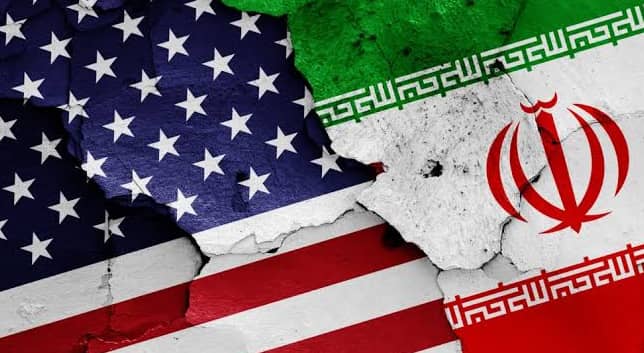
Day 268 | Iran-US military standoff intensifies across the Gulf
Tensions across the Gulf remained high on Saturday as Iran and the United States exchanged competing claims over military engagements, while attacks and security alerts were reported across several regional countries. Iran's Islamic Revolutionary Guard Corps (IRGC) claimed it had struck two US Patriot air defense radar systems at military bases in a Gulf country and shot down additional American reconnaissance drones. Tehran also claimed its forces had damaged a US F-16 fighter jet over the Persian Gulf, but US Central Command (CENTCOM) denied the allegation, saying no American aircraft had been targeted and all US fighter jets in the region were safe and accounted for.
The possibility of renewed US-'Israeli' military action against Iran remained a central concern. Hebrew Channel 13 reported that the 'Israeli' military and US Central Command had approved joint operational plans for potential strikes, with a final decision resting with President Donald Trump. However, Trump said he was not rushing into a decision and continued to express interest in a permanent agreement. Separate reporting by Walla highlighted disagreements between Washington and Tel Aviv over potential targets, particularly whether strikes should extend beyond military installations to Iran's oil and gas infrastructure. Meanwhile, Iranian Foreign Minister Abbas Araghchi reiterated Tehran's conditions for a diplomatic settlement, including seven demands that must be met before reopening the Strait of Hormuz and a refusal to transfer its stockpile of highly enriched uranium outside the country.
Maritime security in the Strait of Hormuz also deteriorated, with the United Kingdom Maritime Trade Operations (UKMTO) reporting that a tanker was struck by an unidentified projectile near Oman's Khasab port. Iranian media reported further explosions off the coast of Sirik, while the IRGC Navy claimed that a tanker caught fire after hitting naval mines. Fars News Agency also alleged that at least 12 vessels had struck mines in the strait over three days, although the claim was not independently verified. US President Donald Trump, meanwhile, said Washington was "knocking the hell out of" Iran, while describing the US military posture as patient and restrained.
Elsewhere in the region, Saudi Arabia's air defenses intercepted three ballistic missiles launched toward Riyadh and a separate Houthi drone heading toward the capital, according to the Saudi-led coalition. Saudi authorities also issued and subsequently lifted emergency alerts in Riyadh and Jazan, while another potential-danger warning was activated in Mecca Province. In Bahrain, two potential-threat alerts were issued within hours of each other after the Interior Ministry reported an Iranian attack on a civilian industrial facility that sparked a fire and caused material damage, with no injuries reported. Meanwhile, Iraqi government forces entered Jurf al-Sakher, a stronghold of Iran-backed Kataeb Hezbollah, under a reported compromise aimed at avoiding confrontation as Baghdad faces growing US pressure to rein in armed factions.
Oil tanker attacked just minutes after British swimmer enters Hormuz
- British endurance swimmer Lewis Pugh completed a 15-kilometre swimming challenge in the Strait of Hormuz.
- The challenge took place over three days last week, starting from Oman's Musandam Peninsula.
- An oil tanker was attacked just 30 minutes after he began swimming, only a few kilometres away.
A British endurance swimmer witnessed an oil tanker come under attack just half an hour after he began a swimming challenge in the Strait of Hormuz, with the vessel struck only a few kilometres from his position.
Lewis Pugh, a long-distance swimmer and Patron of the Oceans with the United Nations Environment Programme (UNEP), covered a total of 15 kilometres across three days last week, setting off from Oman's Musandam Peninsula to draw attention to the environmental consequences of the ongoing war.
The attack occurred on Monday, just 30 minutes into his swim. Other vessels were subsequently targeted and caught fire along his route, highlighting the dangers facing commercial shipping in the strategic waterway.
Writing on his website, Pugh warned that repeated attacks on oil tankers, gas carriers and other commercial vessels could leave lasting environmental damage.
"Oil and gas tankers and other commercial vessels are being attacked, day after day, and the environmental consequences of this war will remain for years," he wrote.
Pugh also stressed that the strait was more than a vital international shipping route, describing it as one of the most beautiful natural environments he had visited.
"The Strait of Hormuz is not just a vital shipping route. It is one of the most beautiful natural places I have ever visited," he said, pointing to its dolphins, turtles and dugongs.
He ended with an appeal: "Stop the fighting, open the Strait and clean up the pollution."
The challenge comes amid continued restrictions on maritime traffic through the Strait of Hormuz since the outbreak of the Middle East war in late February, raising concerns over the security of global shipping and the environmental risks posed by attacks on vessels.
Read more: Jordanian sailor missing at sea after ADNOC oil tanker attacked
IRGC commander: New weapons, battlefield surprises await the enemy
- IRGC Aerospace Force commander Maj. Gen. Seyyed Majid Mousavi says Iran has added new weapons and advanced military assets to its combat capabilities.
- He warned that the force has new capabilities it intends to reveal in any renewed confrontation.
- The remarks came during an inspection visit to an Iranian missile facility.
Iran’s Islamic Revolutionary Guard Corps (IRGC) Aerospace Force has expanded its military capabilities since its previous confrontations with the United States and ‘Israel’, with new weapons and assets awaiting deployment on the battlefield, the force’s commander, Brig. Gen. Seyyed Majid Mousavi said on Saturday.
Speaking during an inspection visit to an Iranian missile facility, Mousavi said the force was prepared for any renewed military confrontation and had strengthened its capabilities during the period between the two wars.
“Surprises and highly effective assets, designed to intimidate and destroy, have been added to our combat structure,” he said, according to Iran’s Mehr News Agency.
Mousavi also reaffirmed the force’s readiness to carry out orders from Iran’s commander-in-chief, Ayatollah Seyyed Mojtaba Khamenei, saying its personnel were prepared to respond under any circumstances.
“We are confident that we dictate the terms of the battlefield, and there will certainly be no hesitation in exercising our power or countering threats,” he said.
The remarks came amid continued tensions between Tehran and Washington following two rounds of direct military confrontation, which Iranian officials refer to as the 12-day and 40-day wars. The first took place in June 2025, while the second began with US and ‘Israeli’ strikes on Iran on Feb. 28, 2026, triggering a wider regional conflict. A ceasefire in April was followed by renewed hostilities, with diplomatic efforts subsequently failing to secure a lasting settlement.
Mousavi's comments also coincided with the unveiling of a new underground missile facility, where the IRGC displayed a dual-launcher system reportedly capable of firing two liquid-fuel missiles simultaneously. The unveiling was presented as a demonstration of Iran's efforts to maintain and expand its missile capabilities despite US claims that its military campaign had significantly damaged the country's missile infrastructure. The facility's location and the system's claimed capabilities have not been independently verified.
The statements come as Washington and Tehran remain at odds over how to end the conflict. US President Donald Trump has maintained economic and military pressure on Iran, while regional mediation efforts, including a recent Qatari delegation's visit to Tehran, have sought to revive diplomacy.
Read more: IRGC Chief: "Even slightest enemy aggression will be met with devastating blows"
Marine Traffic data fuels speculation Iranian tanker may attempt to breach US blockade
An Iranian oil tanker named Khat Shekan, meaning “line-breaker,” is sailing through the Strait of Hormuz toward the Gulf of Oman, according to MarineTraffic data, raising questions about whether the vessel could be attempting to challenge the US naval blockade.
AIS data captured at around 22:45 UTC on Saturday, Nov. 21, showed the tanker sailing south of Qeshm Island, between Hengam and Larak islands in Iranian waters, at approximately 12.5 knots. Its reported draught of 22.5 meters is consistent with that of a very large crude carrier (VLCC), although the AIS information alone does not establish whether the vessel is carrying a full load of crude oil.
The vessel's crew-entered estimated arrival time was 1:03 a.m. UTC on November 22. However, its reported speed and position suggested that the next destination could be near Larak Island, still within or just beyond the Strait of Hormuz, rather than the Gulf of Oman or the Arabian Sea, where the United States says it is enforcing its blockade.
The tanker’s name has drawn particular attention amid heightened tensions over Washington's restrictions on Iranian shipping. However, its AIS movements do not independently confirm that it is attempting to breach the blockade, and its reported arrival time may not reflect its actual destination.
Bahrain says it reserves right to respond to continued Iranian attacks
- Bahrain said an Iranian aerial attack targeted a civilian industrial facility, triggering a fire and causing material damage.
- The kingdom said Iran's Islamic Revolutionary Guard Corps (IRGC) had publicly claimed responsibility for the attacks.
Bahrain’s Foreign Ministry on Sunday strongly condemned what it described as continued Iranian aerial attacks on its territory, including a strike targeting a civilian industrial facility that sparked a fire and caused material damage.
In an official statement, the ministry said the attacks, which Iran’s Islamic Revolutionary Guard Corps (IRGC) had publicly claimed responsibility for, posed a direct threat to civilian lives and constituted a flagrant violation of Bahrain’s sovereignty and territorial integrity.
The ministry described the attacks as a dangerous escalation threatening regional security and stability, and a serious violation of the United Nations Charter, particularly Article 2(4), international law and UN Security Council Resolution 2817 of 2026.
Bahrain categorically rejected what it called the IRGC’s justifications for the attacks, saying the evidence showed that the target was exclusively a civilian industrial facility. It urged Iran to end what it described as a policy of violating other countries’ sovereignty and using disputes with other parties to justify attacks.
The ministry stressed that Bahrain reserves its inherent right to take all necessary measures to protect its sovereignty and the security of its citizens and residents, including exercising its right to individual and collective self-defense at a time, place and manner it deems appropriate, in accordance with Article 51 of the UN Charter and the Gulf Cooperation Council’s Joint Defense Agreement.
It also praised the Bahrain Defence Force for its capabilities and high level of combat readiness in responding to the attacks.
Bahrain renewed its call for the UN Security Council to fulfill its responsibilities and take decisive measures to ensure Iran fully implements Resolution 2817.
These measures should include an immediate halt to attacks on civilians and infrastructure, guaranteeing freedom of navigation through the Strait of Hormuz and Bab al-Mandab, ending support for proxy groups, and holding Iran accountable, including requiring it to provide full compensation for damages, in accordance with UN Human Rights Council Resolution 1/61.
Read more: Bahrain says intercepted number of Iranian attacks
Houthis deny targeting Mecca
- Yahya Saree said the group's targets were Saudi oil facilities and military bases.
- He accused Saudi Arabia of spreading false claims about threats to the Mecca region.
Yemen's Houthi military spokesperson Yahya Saree has rejected Saudi claims that the group poses a threat to Mecca, insisting that its cross-border operations target Saudi oil facilities and military bases rather than Islamic holy sites.
"There is no danger to Mecca except from the criminal Al Saud regime," Saree said in a statement, accusing Saudi Arabia of spreading false claims about threats to the holy city.
He said the Yemeni people "are the ones who revere Mecca and all Islamic holy sites," dismissing Saudi warnings about the Mecca region as "a grave falsehood."
"Our operations target its oil facilities and military bases," Saree added.
His remarks follow repeated Saudi-led coalition reports of intercepting Houthi-launched drones and missiles over different parts of the kingdom, including the Mecca region. The coalition has accused the group of directing attacks towards areas surrounding the holy city, allegations the Houthis have repeatedly denied.
On Nov. 15, the coalition said it intercepted two drones over the Mecca region and two others over Medina. Saree previously dismissed those reports as "a lie and a fabrication," maintaining that Houthi operations were directed at Saudi energy and military infrastructure.
The latest exchange comes amid a renewed escalation in cross-border hostilities between Saudi Arabia and the Houthis, including reported missile and drone attacks on Saudi territory and Saudi-led coalition military operations in Yemen.
لا يوجد أي خطر على مكة المكرمة إلا من نظام آل سعود المجرم أما الشعب اليمني فهو من يقدس مكة المكرمة وكل المقدسات الإسلامية وما يروج له العدو السعودي من وجود خطر في منطقة مكة المكرمة لهو بهتان عظيم فعملياتنا تستهدف منشآته النفطية وقواعده العسكرية.
— العميد/ يحيى سريع (@Yah_Saree) November 21, 2026
Houthi missile aimed at Western Saudi Arabia shot down, coalition says
Saudi Arabia's air defenses intercepted and destroyed a ballistic missile launched by Yemen's Houthis toward the Kingdom's western region, the spokesman for the Saudi-led coalition said on Sunday.
The announcement comes amid a series of reported Houthi missile and drone attacks targeting Saudi Arabia, including incidents involving the southern region and other parts of the Kingdom.
The latest interception follows a sharp escalation in cross-border hostilities. On Saturday, the coalition reported intercepting three ballistic missiles launched toward Riyadh, as well as drones targeting the capital region and southern Saudi Arabia. Saudi Civil Defense also issued early-warning alerts in several areas, including Riyadh, Najran and Jazan, before announcing that the danger had passed.


