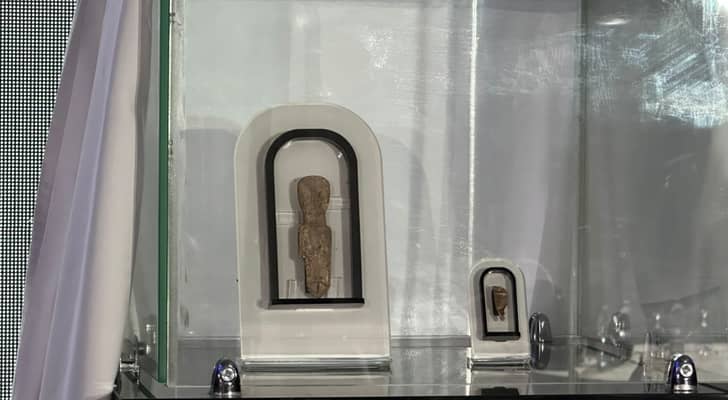
Jordan repatriates rare Neolithic human statue from Denmark
Note: AI technology was used to generate this article’s audio.
- Excavated at Shaqarat Mazyad near Petra in 1999 and conserved in Denmark since 2004, the figurines predate Jordan's Ain Ghazal statues by roughly 1,000 years
- Denmark’s Higher Education and Science Minister Christina Egelund, university presidents, and around 40 Danish policymakers attended the InterContinental Jordan handover
Jordan on Saturday officially recovered a rare Neolithic human figurine from Denmark during a formal handover ceremony in the capital, Amman, underscoring bilateral cultural cooperation and ongoing efforts to safeguard the Kingdom's archaeological heritage.
The artifact traces its modern discovery to 1999, when archaeologists from the Danish Institute unearthed a group of figurines at the Shaqarat Mazyad site in the Beidha area, north of the Petra district.
In 2004, the pieces were transferred to Denmark for specialized restoration and scientific study.
Predating Ain Ghazal statues
Scientific analyses revealed that the collection includes two human figurines dating back to the Neolithic period, approximately 10,000 years ago.
Researchers noted that this makes the artifacts roughly 1,000 years older than Jordan's renowned Ain Ghazal statues, giving them exceptional historical and archaeological significance among the earliest known human representations in the region.
Official handover in Amman
The repatriation ceremony took place during a cultural symposium at the InterContinental Jordan Hotel on the sidelines of the Danish Institute's annual meeting.
The event was attended by Denmark's Minister for Higher Education and Science, Christina Egelund, accompanied by an official delegation comprising prominent university presidents and around 40 Danish decision-makers.
Officials highlighted that the return of the artifact reflects strong cultural and academic ties between Amman and Copenhagen, reinforcing international partnerships dedicated to preserving human heritage and returning historical treasures to their countries of origin.