Bill Gates says AI could “cause a billion deaths”
Note: AI technology was used to generate this article’s audio.
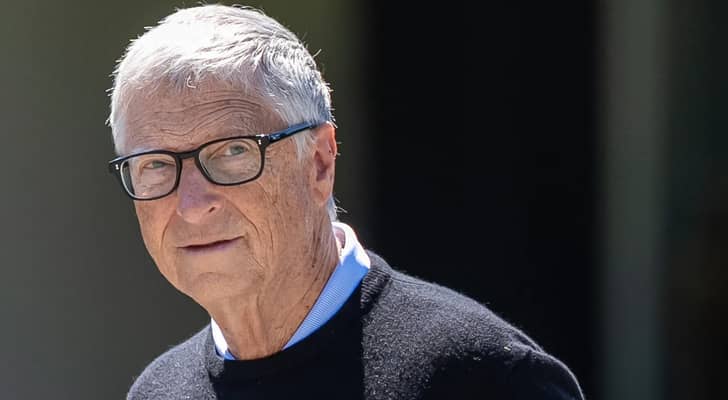
Microsoft co-founder Bill Gates has called on federal lawmakers to establish mandatory safeguards for artificial intelligence, joining a growing chorus of figures warning that corporate self-regulation will not be enough to prevent large-scale harms.
Speaking in an interview with NBC News’ Meet the Press, excerpts of which were released Friday ahead of the full program airing Sunday, Gates said government oversight is needed to determine safeguards and monitoring requirements for AI companies. He said regulatory requirements would add some administrative overhead but would not dramatically slow technological development.
Gates highlighted immediate risks, warning that advanced AI tools in the hands of malicious actors could pose severe national security and public safety threats.
“AI is certainly powerful enough to drive events that, you know, cause a billion deaths. You know, so even though it’s pretty hard to get to 100%, there’s never been a weapon as powerful as the combination of people with ill intent using the latest AI tools,” he stated.
The debate over federal intervention remains stalled in Congress. House Speaker Mike Johnson declined to bring lawmakers back to Washington to pass legislation regulating the pace of AI development, saying he would defer to AI companies. Johnson has also argued that an AI development moratorium could undermine US competitiveness with China and create national security risks.
With federal action limited, individual states are establishing their own AI policy frameworks:
- California: Governor Gavin Newsom issued an executive order convening experts to develop recommendations for strengthening the state's AI safety laws. The proposals include independent oversight of frontier AI companies and work toward an emergency “kill switch” for frontier models.
- Maryland: Governor Wes Moore unveiled a three-pronged AI framework focused on protecting residents, centering workers and protecting children. His administration is also developing legislative recommendations for regulating frontier AI companies, including safety testing, independent audits, whistleblower protections, public reporting and 72-hour incident reporting.
- New York: Governor Kathy Hochul announced the creation of the Office of Digital Innovation, Governance, Integrity & Trust, or DIGIT, to serve as a central body for digital safety and technological governance. The office's initial focus will include large frontier AI developers and transparency around their safety measures.
The tech sector remains divided over how to govern the pace of AI development. Meta CEO Mark Zuckerberg has argued that competition and legal liability give individual AI companies sufficient incentives to manage safety risks without an industry-wide coordinated slowdown.
Anthropic CEO Dario Amodei has called for slowing the pace of frontier AI development and proposed independent safety evaluators, coordination among frontier AI companies and international cooperation, including with China.
OpenAI CEO Sam Altman also participated in a UN Security Council discussion on AI this week. OpenAI has separately called for international technical standards for advanced AI, including common approaches to safety and incident reporting.
Microsoft President Brad Smith has warned AI companies against allowing competition to override safety considerations. Speaking about the industry's development race, Smith compared the situation to commercial aircraft manufacturers competing to release planes despite concerns about their safety, arguing that companies should not release products they believe are unsafe simply because they fear a competitor getting ahead.