After reportedly rejecting Iran’s offer, Trump posts map saying “Trump Strait”
Note: AI technology was used to generate this article’s audio.
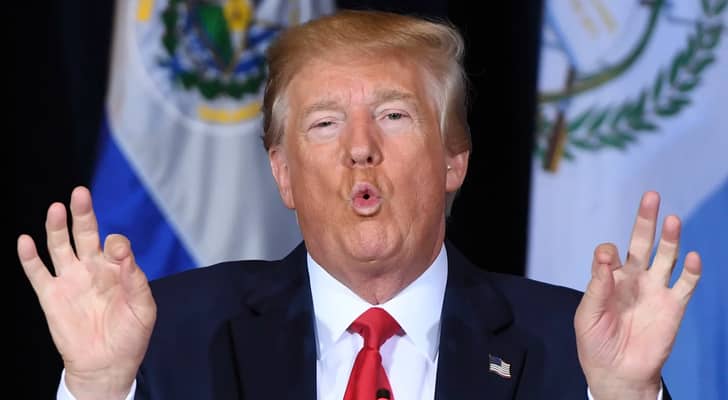
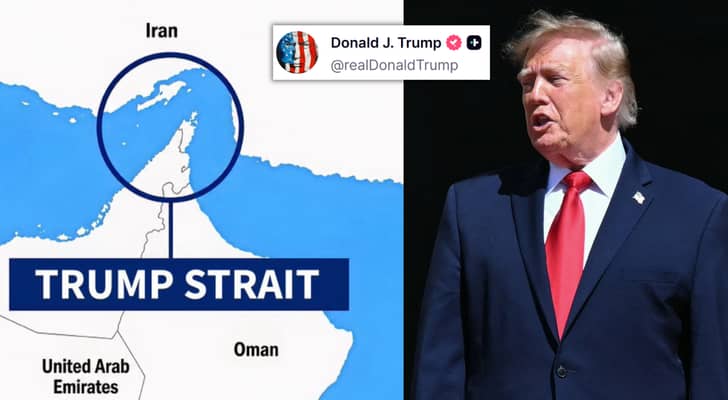
US President Donald Trump posted a map on Truth Social labeling the Strait of Hormuz the “Trump Strait,” shortly after reports that he rejected Iran’s proposal for a seven-day ceasefire.
The image, shared late Friday, highlights the narrow waterway between Iran and the Arabian Peninsula with the new label.
It came about half an hour after a Wall Street Journal report that Trump had turned down Tehran’s offer and expects to renew US strikes on Iran after the November midterm elections.
Iranian Foreign Minister Abbas Araghchi had outlined the proposal, saying normal maritime passage could resume within a week if the United States lifted its naval blockade of Iranian ports, waived sanctions on Iranian oil exports, and observed a ceasefire that would also cover Lebanon.
“If the necessary conditions are met, the strait can be reopened, a normal maritime passage restored within seven days. The choice now rests with the United States,” Araghchi said.
This is the latest in a series of Trump statements asserting American dominance over the chokepoint.
On Sept. 2 he posted: “Now that we have it under U.S.A. control, should we change the name Hormuz Strait to TRUMP STRAIT??? Like America itself, it would be ‘hotter’ than ever before!”
He later described the idea as “just thrown out there,” but repeated the notion at a Republican midterm convention, saying, “I think we should call the Hormuz Strait the Trump Strait… I’m sure the Iranian leadership will be thrilled with that.”
In August, Trump posted a map branding the waterway “new U.S. territory” and told reporters, “I like the idea of declaring it a territory. We have total control over the Strait.”
He has repeatedly claimed the US Navy fully controls the passage via blockade, though shipping traffic remains well below prewar levels.
The strait handled about a fifth of the world’s commercial oil shipments before the US and ‘Israel’ launched the war on Iran on Feb. 28.
Iran began restricting traffic early in the conflict, driving up global energy prices; disruptions continue to weigh on markets ahead of the US midterms.