Jason Knight becomes first Irish player to publicly oppose ‘Israel’ match
Note: AI technology was used to generate this article’s audio.
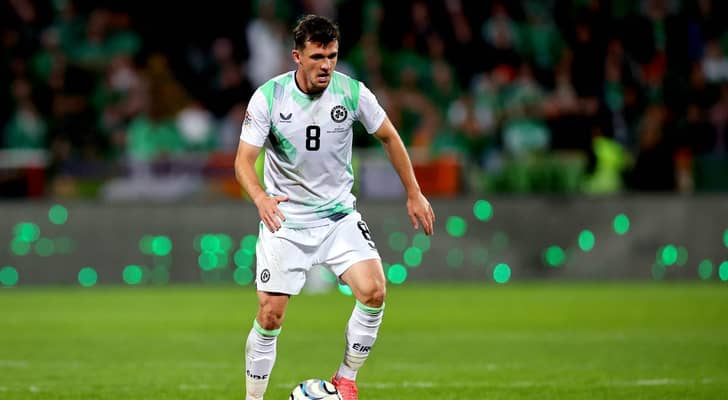
Republic of Ireland midfielder Jason Knight has become the first national team player to publicly state that the upcoming UEFA Nations League match against ‘Israel’ should not go ahead.
Speaking after Ireland’s 1-0 defeat to Kosovo in Pristina on Thursday, the Bristol City midfielder said the fixture, scheduled for Sunday in Debrecen, Hungary, should not take place amid the war on Gaza.
“Look, it’s difficult,” Knight said.
“I don’t think the game obviously should be going ahead but it is going ahead. We’ll have a deeper talk about it and what that means, we’ll get our thoughts as a group and go from there.”
The 25-year-old, who has earned dozens of caps since his debut in 2020, noted that the squad planned further discussions on Friday.
“I am quite experienced. None of us have gone through this scenario before but I’d like to think I’m experienced, thick-skinned and I can get through most things and that is what I will try and do. I’ll try and focus on the football as much as I can,” he added.
Captain Dara O’Shea had indicated earlier that the players would meet to consider their collective response, with possible symbolic gestures under consideration.
Ireland manager Heimir Hallgrimsson had previously acknowledged that many in the squad felt uncomfortable about the ties, stating last week: “We’re not playing with genocide, we’re playing against genocide.”
Those remarks prompted a strong rebuke from the ‘Israel’ Football Association, which accused him of “hypocrisy and stupidity.”
The FAI has insisted the matches will proceed, citing the risk of UEFA sanctions and financial consequences if Ireland refused to fulfil the fixtures.
The first meeting takes place at Nagyerdei Stadium in Debrecen on Sunday, with the return fixture — Ireland’s designated home game — moved from Dublin to Bačka Topola in Serbia and set to be played behind closed doors on 4 October.
No tickets are being made available to Irish supporters for either match, and RTÉ plans stripped-back coverage without studio analysis or its own commentary team.
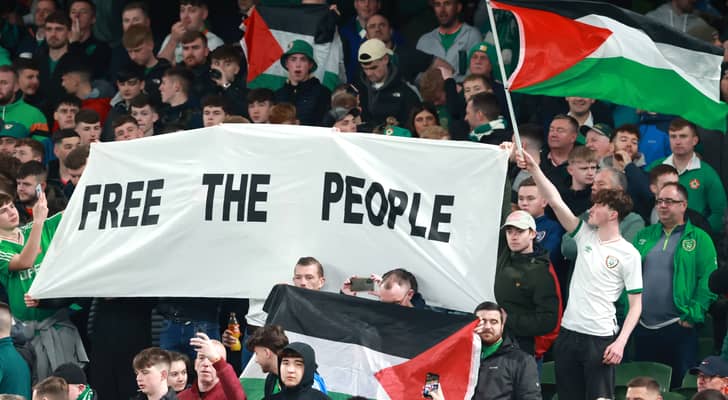
Pressure has mounted through the “Stop the Game” campaign and an open letter signed by more than 160 Irish sportspeople urging the FAI to reconsider.
Knight acknowledged the wider debate, saying: “There is obviously a lot of talk and rightly so about the scenario we’re in. It’s a bigger spotlight obviously and not focused on the football itself. It’s very, very unusual and none of us have come into this scenario before so we’re learning on the fly as well.”
The midfielder said he had reflected on the issue beforehand while focusing on club football in the Championship.
“It’s obviously big talk in Ireland. I have been focusing on my football in England… But I knew this was coming so I had a think about it. We had chats about it with the players, and more senior players on what the step will be. Now we’re here, we can have a really in-depth talk of what that means and what the consequences are.”
With the squad preparing to formalise its position before travelling to Hungary, Knight’s comments mark the clearest individual player stance yet on a fixture that has overshadowed Ireland’s Nations League campaign from the outset.