Trump says US, China oppose AI guardrails ahead of Xi summit
Note: AI technology was used to generate this article’s audio.
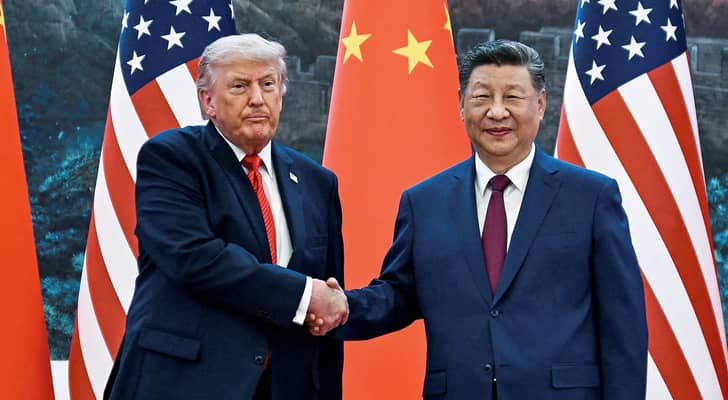
Donald Trump stated early Thursday that the United States and China share a common stance against implementing international regulatory guardrails on artificial intelligence, asserting ahead of his high-stakes summit with Chinese President Xi Jinping that existing legal frameworks are sufficient to govern the technology.
In a social media post published Thursday morning, Trump outlined his expectations for the bilateral discussions, signaling a resistance to imposing new restrictions on the rapidly advancing sector.
"Super Intelligence (SI) will be a big topic of discussion, but I want to leave it exactly where it is," Trump wrote, introducing his new terminology for the technology. "That is China's position also. Our guardrail is the DOJ!" he added, referring to the U.S. Department of Justice.
Resistance to Global AI Regulation
Trump's comments reinforce his broader skepticism toward international agreements aimed at placing safety limits or development caps on artificial intelligence. Addressing the United Nations General Assembly earlier this week, the president dismissed calls for global AI regulation, framing the technological surge as a high-stakes competitive race and emphasizing that "whoever wins AI, wins".
By identifying the Department of Justice as the primary safeguard, Trump suggested that existing domestic law enforcement and legal mechanisms are adequate to keep AI development in check, rejecting calls from industry leaders, safety researchers, and international figures advocating for specialized regulatory oversight.
High-Stakes Summit Agenda
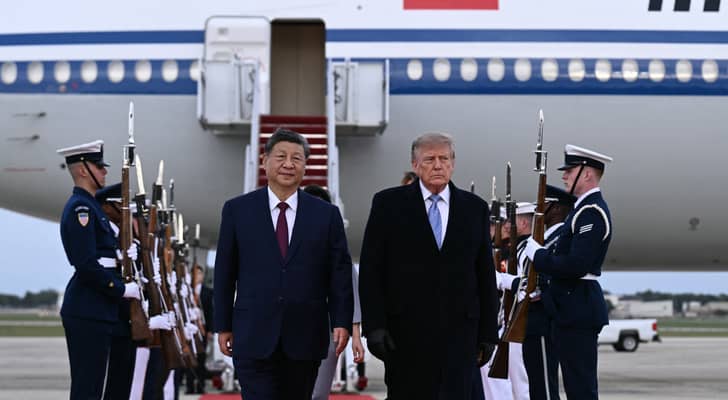
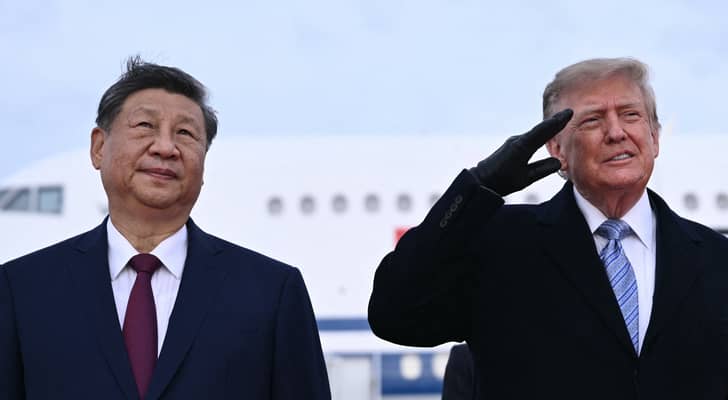
The bilateral talks between Trump and Xi at the White House follow an elaborate red-carpet arrival ceremony at Joint Base Andrews on Wednesday evening. The summit marks Xi's first visit to the US capital since 2015 and comes amidst an ongoing technological and economic rivalry between the world's two largest economies.
While officials have floated potential discussions on basic AI communication protocols for national security incidents, Trump's latest statements signal that broader agreements to curb or regulate the development speed of superintelligent systems remain firmly off the table.
Beyond artificial intelligence, the formal agenda for the summit includes discussions on extending the current bilateral trade and tariff truce, semiconductor export controls, rare earth minerals, and broader geopolitical issues spanning Taiwan and Iran.