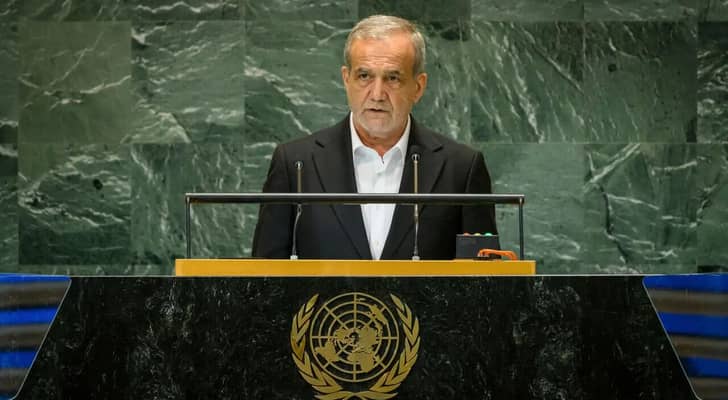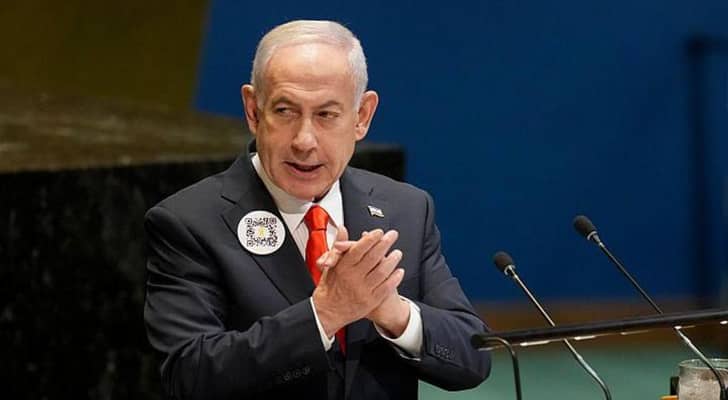
Both face ICC warrants: Why Netanyahu Can address the UN, but Putin can't?
Note: AI technology was used to generate this article’s audio.
- The US is not an ICC member, so federal authorities have no obligation to enforce the warrant, while local officials lack the power to arrest foreign leaders.
- The 1947 UN Headquarters Agreement obligates the US to grant foreign delegates transit to UN proceedings.
- Human rights organizations and activists demand member states enforce the warrant, urging diplomatic boycotts.
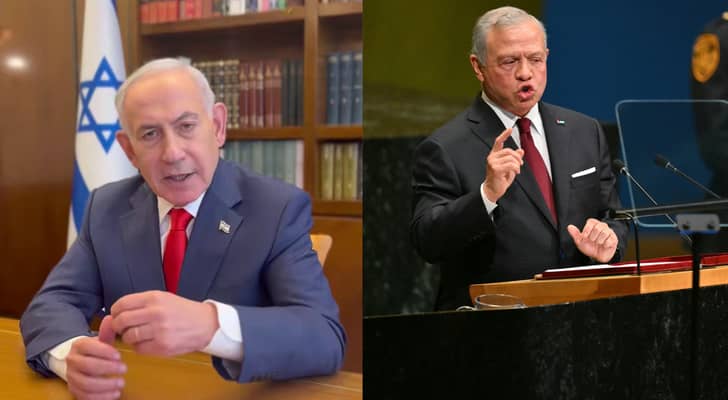
‘Israeli’ Prime Minister Benjamin Netanyahu is set to address the United Nations General Assembly in New York on Thursday, despite an active International Criminal Court (ICC) arrest warrant against him.
At the same time, Russian President Vladimir Putin, who is also subject to an ICC arrest warrant, will not attend the General Assembly in person. Russia is instead represented by Foreign Minister Sergei Lavrov, who is scheduled to address the assembly.
The contrast raises a central question: why can Netanyahu appear in person and deliver a speech at the UN while Putin is absent, despite both being subject to ICC arrest warrants?
The answer lies primarily in the different circumstances surrounding their attendance, rather than in the ICC warrants themselves.
The ICC issued an arrest warrant for Netanyahu on November 21, 2024, accusing him of alleged war crimes and crimes against humanity in connection with the situation in Palestine. Netanyahu and the ‘Israeli’ government reject the court’s jurisdiction and the allegations.
The warrant does not give the ICC its own authority to physically prevent Netanyahu from entering the United States or appearing at the UN. The United States is not a party to the Rome Statute, the treaty that established the ICC, and Washington has long rejected the court’s jurisdiction over the United States and its nationals.
As a result, the existence of an ICC warrant does not automatically prevent a person from entering a non-member country.
Netanyahu’s scheduled appearance therefore reflects the position of the US government and the arrangements governing access to the UN headquarters in New York, rather than a decision by the ICC to suspend or withdraw its warrant.
The ICC issued an arrest warrant for Putin on March 17, 2023, in connection with alleged unlawful deportation and transfer of Ukrainian children. Russia rejects the ICC’s jurisdiction and the allegations.
However, there is no indication that the United Nations itself barred Putin from attending this year’s General Assembly because of the warrant.
Instead, Russia is sending Foreign Minister Sergei Lavrov to represent the country at the high-level debate, while Putin is not scheduled to appear personally.
That distinction is important: Netanyahu’s personal appearance and Putin’s absence should not be presented as a UN decision to allow one leader and prohibit the other. The available information shows that Netanyahu is scheduled to attend, while Russia has chosen another senior official to represent it.
Three key reasons Netanyahu can appear
1. The US is not an ICC member state
The United States has never ratified the Rome Statute and is therefore outside the ICC’s system of treaty-based cooperation.
The ICC has no independent police force capable of entering the United States and carrying out an arrest warrant. Enforcement generally depends on cooperation by states with obligations under the Rome Statute.
This means the ICC warrant against Netanyahu does not, by itself, give US authorities an obligation to arrest him.
Washington has also taken an adversarial position toward the ICC. Reuters reported this week that the Trump administration was preparing further sanctions against the court, including measures aimed at pressuring it over its cases involving ‘Israeli’ leaders.
2. The 1947 UN Headquarters Agreement
Netanyahu's appearance also takes place within the legal framework governing access to the UN headquarters in New York.
The 1947 Headquarters Agreement between the United States and the United Nations states that federal, state and local authorities should not impose impediments on the transit of representatives and other persons covered by the agreement to and from the headquarters district.
Section 11 specifically addresses transit to and from the UN headquarters district, while later sections address the relationship between those provisions and US immigration and security powers.
The agreement has historically been the subject of disputes between the United States and the United Nations over visa and access issues, meaning its application is more complex than simply granting every visiting official unrestricted access to the entire United States.
3. The ICC is independent of the UN
Another important distinction is that the ICC and the United Nations are separate institutions.
The ICC was established under the Rome Statute and operates independently of the UN. The court can issue arrest warrants, but it does not have its own police force, border guards or federal law-enforcement officers capable of executing warrants anywhere in the world.
Consequently, an ICC arrest warrant does not automatically prevent a leader from appearing at a UN meeting in a country that does not recognize the court's enforcement authority.
New York City Mayor Zohran Mamdani has publicly criticized Netanyahu’s visit and said he would arrest him if he had the authority to do so. Netanyahu has responded by accusing Mamdani of supporting Hamas and undermining ‘Israel’.
However, the authority to control international entry and the implementation of US foreign policy rests primarily with the federal government. A municipal government cannot independently establish US foreign policy or impose its own international arrest regime.
This means Mamdani’s statements do not, by themselves, create a legal mechanism for New York City authorities to execute the ICC warrant against Netanyahu.
The situation also contrasts with the treatment of Palestinian President Mahmoud Abbas.
The United States denied Abbas a visa for the second consecutive year, preventing him from attending the General Assembly in person. Instead, the General Assembly is expected to consider allowing him to deliver a video statement, as he did last year.
The US decision was linked to Washington’s visa restrictions on Palestinian officials, including measures connected to Palestinian efforts to pursue international legal action.
The contrast illustrates that access to the UN in New York is also shaped by the host country's visa and diplomatic policies, separate from the existence of an ICC arrest warrant.
Human rights organizations, civil society groups and legal advocates have called for accountability over the allegations contained in the ICC warrant against Netanyahu.
Groups including Amnesty International and Human Rights Watch have argued that states that are party to the Rome Statute have obligations to cooperate with the ICC, while advocacy groups have called for diplomatic pressure and other measures in response to the warrant.
Other organizations, including the Palestinian Youth Movement and Jewish Voice for Peace, have advocated demonstrations, diplomatic boycotts and other forms of political pressure over Netanyahu’s planned appearance.
These calls remain political and advocacy positions rather than evidence that the UN has ordered or is legally required to prevent Netanyahu from speaking.
The difference between Netanyahu and Putin at this year’s General Assembly is therefore not that one has an ICC warrant and the other does not. Both are subject to ICC arrest warrants.
The difference is that Netanyahu is scheduled to attend the UN in person, with the US allowing his presence, while Russia is sending Lavrov instead of Putin. Current reporting does not indicate that the UN issued a prohibition preventing Putin from attending because of his ICC warrant.
The comparison highlights the limits of ICC enforcement and the role of individual states in determining whether a person wanted by the court can enter their territory, while also showing that a UN appearance itself does not erase or invalidate an ICC arrest warrant.