Why does Brazil always speak first at the UN General Assembly?
Note: AI technology was used to generate this article’s audio.
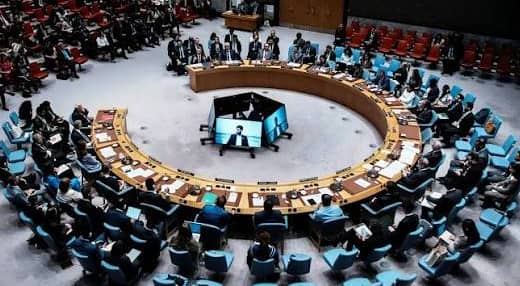
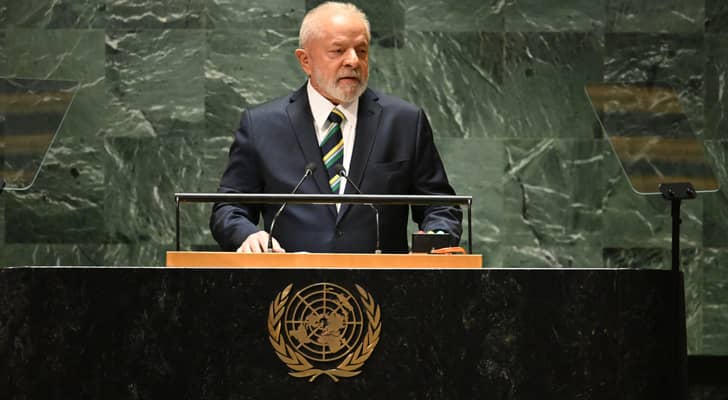
As world leaders gather in New York for the 81st session of the United Nations General Assembly, Brazilian President Luiz Inácio Lula da Silva is set to deliver the first address by a member state in the annual General Debate.
He will be followed by US President Donald Trump, representing the host nation.
This sequence is no accident of protocol or alphabetical order, it is a longstanding custom that has defined the opening of the high-level debate for more than seven decades.
The tradition solidified at the 10th session in 1955 and has held with only rare interruptions.
In the early years of the United Nations, after its founding in 1945, many countries were reluctant to take the first speaking slot.
Brazil stepped forward.
“In very early times, when no one wanted to speak first, Brazil always offered to speak first. And so they have earned the right to speak first at the General Assembly,” former UN protocol chief Desmond Parker told NPR in 2010.
Brazilian diplomacy played a prominent role from the outset.
Diplomat Oswaldo Aranha presided over the First Special Session of the General Assembly in 1947—the meeting that led to the partition plan for Palestine and ‘Israel’—and also served as president of the second regular session.
Some accounts link the speaking privilege partly to recognition of that early leadership.
Others point to the Cold War context: selecting a non-aligned Latin American power avoided giving the opening platform to either the United States or the Soviet Union.
A further interpretation frames the custom as a form of recognition after Brazil was not granted a permanent seat on the Security Council at the organization’s founding.
“This was a kind of consolation prize,” some scholars have observed, reflecting the importance of Brazil in the postwar multilateral order even without great-power status.
The United Nations itself describes the arrangement as one of the “customs” that emerged over time in the General Debate, not a formal rule written into the Charter or rules of procedure.
Each year the UN Secretariat consults the Brazilian mission to confirm that the country wishes to retain the slot.
The answer has consistently been affirmative.
After Brazil and the United States speak, the remaining order is shaped by the level of representation (heads of state first, followed by heads of government, foreign ministers and others), geographic balance and the timing of requests to speak.
Exceptions have been few.
In 1983 and 1984, following the US intervention in Grenada, the United States spoke first.
In 2016 and 2018, Chad and Ecuador respectively took the second slot when the American president was delayed.