Palestinian diaspora role: From financial support to genuine partnership
Note: AI technology was used to generate this article’s audio.
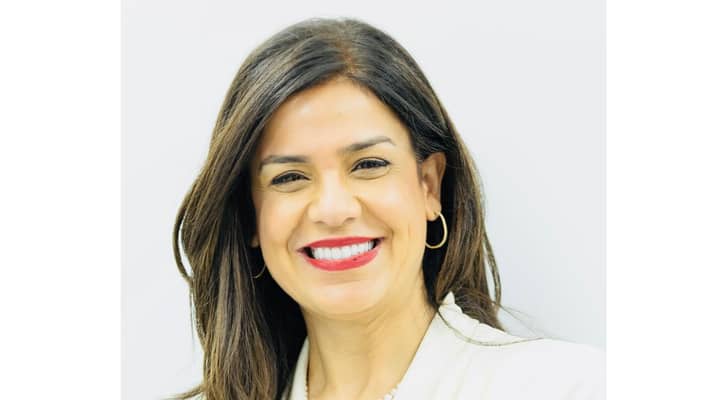
Rula Shunnar
Nearly eight million Palestinians live outside their homeland. Collectively, they hold wealth estimated in the hundreds of billions of dollars, built over decades of professional and entrepreneurial success across the Arab world, Europe, and the Americas. They include some of the region’s most accomplished physicians, engineers, financiers, and technology leaders. Yet for all this economic weight, foreign direct investment in Palestine amounted to just $3.8 billion, according to a PCBS quarterly report released in 2026 — a fraction of what this community could deploy if the right frameworks existed. The question is no longer whether the Palestinian diaspora has the capacity to transform the national economy. It is whether Palestinians — at home and abroad — are prepared to build the institutions that will allow it to do so.
This gap between capacity and deployment is not a reflection of indifference. Palestinians abroad have sustained the national cause for generations: they have lobbied parliaments, challenged biased media narratives, funded humanitarian relief, and kept Palestine on the international agenda when others sought to erase it. Their communities have served as an essential lifeline, providing a social safety net for hundreds of thousands of families, particularly in times of crisis. That role remains vital. But charity, however generous, does not build economies. Remittances feed families; they do not create factories. Relief responds to emergencies; it does not generate the productive capacity on which long-term resilience depends.
What is needed now is a fundamental shift — from a relationship defined primarily by solidarity and crisis response to one grounded in structured, institutional economic partnership. This means moving beyond the expansion of the safety net with each new emergency and instead building alongside it a framework for productive investment that creates jobs, generates sustainable value, and reduces the Palestinian economy’s structural dependence on Israel. Five interconnected tracks offer a practical roadmap for this transformation.
First: Investing in Gaza’s recovery and reconstruction. Few communities in the world possess the combination of financial resources, professional expertise, and personal commitment that Palestinians abroad bring to this effort. Palestinian engineers have designed cities across the Gulf. Palestinian financiers manage billions in assets in London, New York, and Dubai. Palestinian contractors have built infrastructure across three continents. Gaza’s reconstruction is an opportunity to bring this extraordinary depth of talent home — not as hired consultants, but as invested partners with a personal stake in the outcome. Through transparent funding mechanisms, strong governance, and independent oversight, diaspora capital can work alongside international and regional efforts to ensure that Gaza’s recovery is led by the people who know it best and care about it most.
Second: Direct investment in productive sectors. Palestinian businesspeople abroad hold more than capital. They bring managerial experience, technical expertise, and access to international markets — assets that are often more valuable than money alone. Directing even a portion of these resources toward Palestinian industries, renewable energy, technology ventures, and digital services would create employment, build productive capacity, and generate returns that benefit both the investor and the national economy. The goal is a relationship in which diaspora Palestinians participate as investors, shareholders, and business partners — not merely as donors responding to the latest emergency.
Third: Knowledge and expertise transfer. The diaspora’s most underutilized asset may not be financial at all. Palestinian professionals working at the highest levels of medicine, engineering, management, technology, and education represent a reservoir of expertise that money cannot buy. Structured fellowship programmes, remote advisory platforms, mentorship networks, and institutional twinning arrangements could convert this knowledge into lasting capacity within Palestinian institutions. Over time, the cumulative impact of such transfers can rival — and in many cases exceed — the value of direct financial investment.
Fourth: Building trade and export networks. Palestinian communities in Europe, the Americas, and the Gulf occupy a unique position: they understand both the product and the market. Exporter associations, distribution partnerships, and support in meeting international quality and certification standards could open doors that are currently closed to Palestinian companies. In this role, the diaspora becomes not simply a consumer of Palestinian goods or a conduit for remittances, but an active partner in building the global competitiveness of Palestinian products.
Fifth: Mobilizing investment through the Palestine Exchange. The Palestine Exchange offers a practical entry point for diaspora investors who want exposure to the Palestinian economy without launching a business on the ground. Through a regulated and transparent market, capital can flow into listed companies, investment funds, bonds, and municipal debt instruments. It also provides a pathway for family-owned businesses — the backbone of the Palestinian private sector — to access growth capital while transitioning toward institutional governance and eventual public listing.
The case for this channel is grounded in performance. Companies listed on the Exchange collectively account for roughly one-third of Palestinian GDP and employ thousands of workers. In 2025, the Al-Quds Index rose by 24 per cent and the Al-Quds Islamic Index by 20 per cent. More significant for long-term investors, the Total Return Index — which captures both price movements and reinvested dividends — has delivered annual returns of 6 to 9 per cent over the past decade, a period that included wars, blockades, and severe economic disruption. These figures do not eliminate risk, but they demonstrate something that no prospectus can: Palestinian companies have proven their ability to survive, operate, and generate returns under conditions that would have destroyed less resilient enterprises.
The Exchange also offers a mechanism for reversing the direction of economic connection. Encouraging successful diaspora-owned companies to list in Palestine would give them an institutional presence in the national economy while allowing Palestinians at home to share in the growth of businesses their compatriots have built abroad. It would create a two-way bridge — linking the markets where Palestinian entrepreneurs have succeeded to the economy to which they remain connected.
None of these tracks will reach their full potential if diaspora engagement continues to depend on individual goodwill and personal relationships. Institutionalization does not mean creating another layer of bureaucracy. It means building transparent, accountable frameworks that organize participation, protect investors, and replace improvisation with sound governance.
Such a framework requires a new understanding between Palestinians at home and abroad, grounded in three principles: recognizing the diaspora as an integral stakeholder in Palestine’s economic future rather than an external benefactor; establishing transparency, accountability, and the rule of law as non-negotiable conditions for partnership; and agreeing on clear priorities — beginning with Gaza’s reconstruction, economic resilience in Jerusalem and other vulnerable areas, and the development of sustainable productive capacity.
The obstacles are real. Israeli restrictions on the movement of people and capital, weaknesses in the domestic investment environment, concerns about stability and investor protection, and political divisions within diaspora communities all stand in the way. But these challenges do not diminish the opportunity — they underscore why credible governance, transparency, and strong investor protections are not optional extras but essential prerequisites for progress.
A practical starting point would be an independent, professionally governed investment fund dedicated to Gaza’s reconstruction and productive development, supported by digital platforms that connect diaspora capital and expertise with opportunities on the ground. The broader objective is to move beyond crisis-driven philanthropy and build a lasting partnership in which Palestinians abroad contribute not only financial resources but also knowledge, networks, and entrepreneurial experience. With the right institutions and transparent channels, these combined assets can become a powerful engine of economic resilience and long-term development.
The goal is not simply to bring Palestinian money home. It is to connect Palestinian success wherever it exists with the future of Palestine itself.