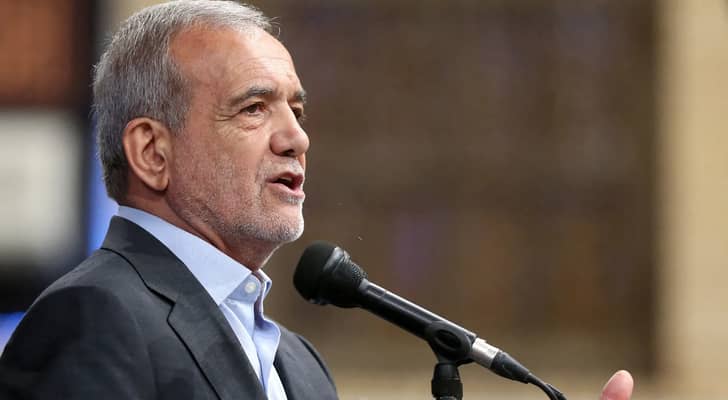
Pezeshkian says US sanctions aim at Iran’s internal collapse
Note: AI technology was used to generate this article’s audio.
- Iranian President Masoud Pezeshkian says US sanctions are intended to trigger social and economic instability inside Iran.
- He also accused some Iranians living abroad of cooperating with Tehran’s enemies to fuel unrest inside the country.
Iranian President Masoud Pezeshkian said US sanctions are aimed at causing social collapse in Iran, accusing some Iranians abroad of working with the country’s adversaries to fuel divisions inside the country.
Speaking at an event at Iran’s Labour Ministry in Tehran, Pezeshkian said the economic pressure imposed by Washington was designed to exploit domestic difficulties and create instability.
“The US aims to cause social collapse through the problems and restrictions they have imposed,” Pezeshkian said, according to a readout published on the Iranian presidency’s website.
He also accused some Iranians living abroad of aligning themselves with what he called Iran’s enemies and attempting to encourage unrest inside the country.
“Some Iranians abroad, aligning themselves with the enemy, seek to incite the public within the country,” he said.
Pezeshkian’s comments come as Iran faces intensified economic pressure from Washington, including measures targeting the country’s oil revenues, foreign trade and access to international financial channels.
The US Treasury Department announced “Operation Economic Outcast” on August 24, saying the campaign was intended to cut off Tehran’s revenue from foreign trade.
US sanctions, alongside restrictions affecting Iran’s oil exports and access to foreign currency, have increased pressure on an economy already facing significant financial challenges.
The measures have also been accompanied by a US naval blockade, further constraining Iran’s ability to export oil and conduct international trade.
Tehran has repeatedly condemned the US measures as economic warfare, while Washington has maintained that its sanctions are intended to pressure the Iranian government over its policies and activities.
Pezeshkian’s remarks underline the Iranian government’s growing focus on the domestic impact of the economic campaign, as officials seek to portray the pressure as part of a broader effort to destabilize the country.