Six Saudi ships reroute to avoid Red Sea over Houthi threats
Note: AI technology was used to generate this article’s audio.
- Tankers reroute around Africa.
- Route change adds 25 days of travel.
- Insurance risks rise after maritime attacks.
Six Saudi-flagged supertankers have diverted from their planned routes in the Gulf of Aden in recent days, opting to sail toward southern Africa rather than passing through the southern Red Sea following threats against Saudi shipping by Yemen's Houthi movement.
Automatic Identification System (AIS) ship-tracking data from LSEG and MarineTraffic showed the tankers, which were empty of cargo after returning from destinations in Asia, traveling in formation toward southern Africa to avoid the Bab el-Mandeb chokepoint.
Tracking data indicated that one of the vessels, the Dilam, listed Gibraltar as its destination.
Saudi-based vessel operator Bahri and Saudi government officials did not immediately respond to requests from Reuters for comment.
Security assessments
The supertankers involved are capable of carrying up to two million barrels of crude oil each. According to two trade sources citing security assessments, the vessels elected to reroute via the Cape of Good Hope due to the deteriorating security environment in the region.
According to Reuters calculations, navigating around the southern tip of Africa will add at least 25 additional days of sailing time if the tankers eventually transit through the Suez Canal to return to Saudi Arabian ports in the Red Sea.
Escalating maritime embargo
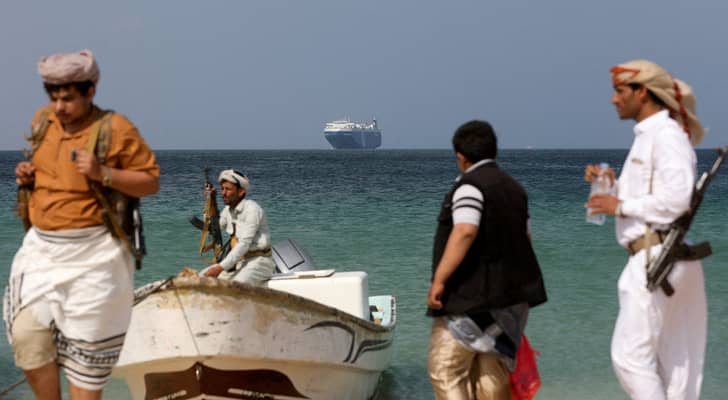
The strategic diversion comes after the Iran-aligned Houthis declared a formal maritime embargo against Saudi Arabia on July 20, expanding the scope of conflict against the United States and its allies in the broader Iran war.
Houthi attacks targeting Saudi-linked shipping in recent days led London's marine insurance market last week to expand its designated "high risk" zone in the Red Sea, incorporating waters surrounding additional Saudi Arabian ports.