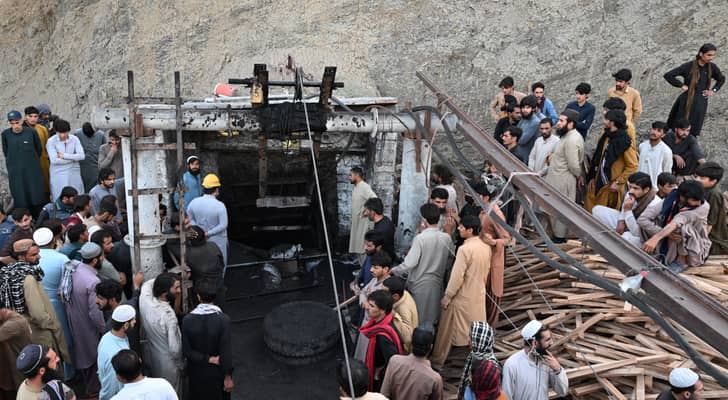
Coal miners and relatives gather at the entrance of a coal mine after it collapsed in the Surange area, some 50 kilometres east of Quetta, on July 30, 2026. (Photo by Banaras KHAN / AFP)

Coal mine explosion in Pakistan leaves at least 32 dead
Note: AI technology was used to generate this article’s audio.
- Blast traps workers in two coal mines.
- Rescue teams recover bodies as search continues.
- Poor mine safety blamed for frequent accidents.
At least 32 miners have been killed after a catastrophic explosion tore through a coal mine in Pakistan's southwestern Balochistan province, local officials confirmed.
The blast occurred Thursday in Sorange, a remote coal mining district located about 30 kilometers northeast of the provincial capital, Quetta.
Authorities believe the explosion was triggered by a dangerous buildup of methane gas underground.
The force of the explosion severely damaged two neighboring mines operating in close proximity.
Official reports indicated that 36 miners were working inside at the time of the incident, with workers trapped up to 4,000 feet underground.
An official from the Provincial Disaster Management Authority stated early Friday that emergency responders had recovered 29 bodies initially before locating and retrieving additional victims inside the collapsed shaft.
Search and rescue crews, along with mining engineers, worked for over 12 hours attempting to forge alternative access routes through thick smoke and residual methane gas.
Officials acknowledged that hopes of finding any remaining survivors underground are virtually nonexistent.
Systemic safety failures
Coal mining accidents are a frequent occurrence across Pakistan, particularly in Balochistan, the country’s largest yet least-developed province.
Mines across the region regularly lack basic safety infrastructure, including gas monitoring systems, adequate ventilation, and emergency escape routes.
Labor groups and mineworkers have repeatedly condemned mine owners for prioritizing profits over safety, failing to enforce mandatory protective regulations, and refusing to supply basic protective gear.
Despite low wages and extreme working hazards, thousands of laborers continue to rely on the dangerous industry for their basic livelihood amid widespread poverty and unemployment across the region.