


Day 155 | Trump voices optimism on Gaza peace while Iran war drags on
US President Donald Trump said Washington and ‘Israel’ are aligned on plans to begin implementing a new Gaza agreement, describing it as a step toward ending the war. Hamas has said it is prepared to disarm if ‘Israel’ fully complies with the terms of a ceasefire agreement, a move that could mark a significant diplomatic breakthrough if finalized.
Trump also met with his Cabinet at Camp David as his administration looks for a path to de-escalate the war with Iran. Domestic pressure is mounting on the White House to bring the fighting to an end, although Trump indicated that US military operations could continue. No new strikes inside Iran were reported overnight from Thursday into Friday.
Elsewhere in the region, Kuwait said it intercepted an Iranian attack targeting an air base early Friday. Earlier this week, Egypt reported its first drone strike on its territory after two vessels were damaged at Damietta Port. No group has claimed responsibility for the attack, and Egyptian authorities are continuing their investigation.
Iran FM says Tehran ready to “respond decisively” to any US attack
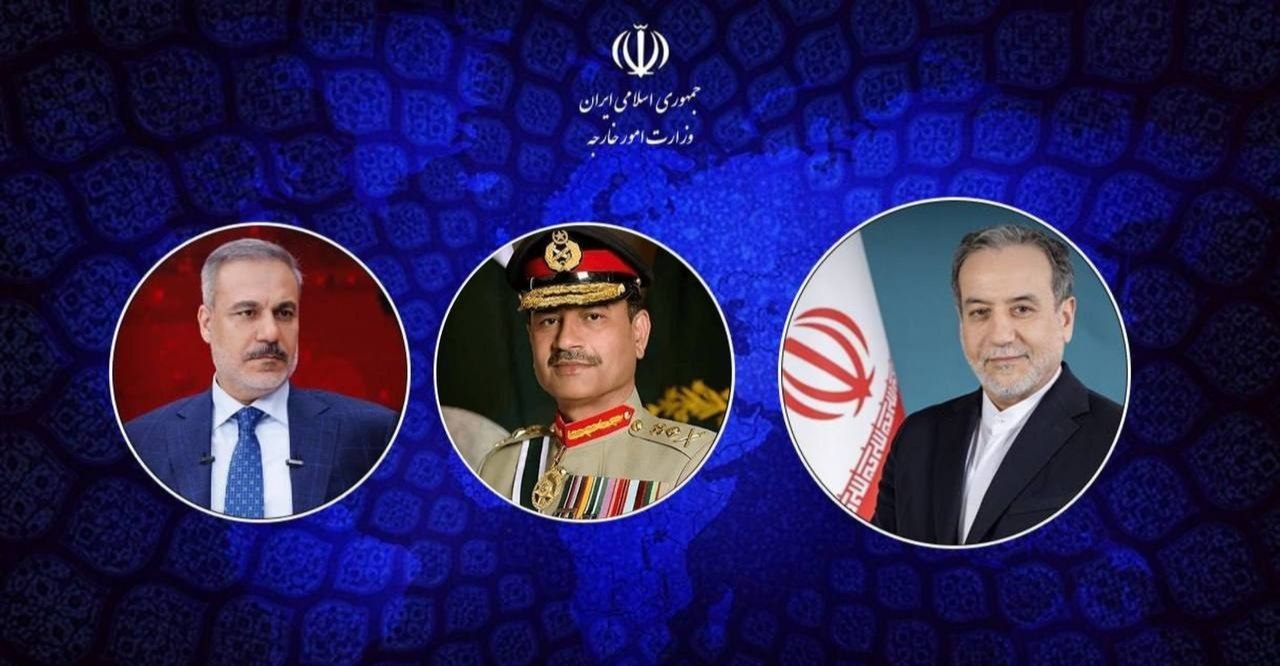
Iranian Foreign Minister Abbas Araghchi said Saturday that Tehran will “respond decisively” to planned US attack on territory, as Trump reportedly nears to ordering massive strikes on the Islamic Republic’s energy infrastructure.
“Araghchi also warned against what he described as any adventurous action by the U.S. military,” a statement by the Iranian Foreign Ministry said.
Araghchi’s comments came during phone calls with the Pakistani army chief Asim Munir and Turkey’s Foreign Minister Hakan Fidan, state broadcaster IRNA added.
“...stressing that the Islamic Republic of Iran is fully prepared to safeguard its national sovereignty, territorial integrity, and security, and to respond decisively to any attack,” the statement added.
‘Israel’ believes Iran will fire missiles at it even if doesn’t join planned US strikes: report
‘Israel’ assesses that Iran will fire ballistic missiles at it even if Tel Aviv does not participate in the major strike that US President Donald Trump is reportedly planning, according to Hebrew Channel 12.
The report adds that ‘Israel’ is on “highest alert” ahead of the potential US attack on Iran, which is expected to include strikes on energy facilities.
The ‘Israeli’ Home Front Command has so far not changed its guidelines.
Trump “closer than ever” to massive attack on Iran: Hebrew media
US President Donald Trump is “closer than ever” to ordering a massive attack on Iran to force Tehran to “surrender”, according to Hebrew channel 12 citing an ‘Israeli’ source.
The report adds that ‘Israel’ is currently on “very high alert,” and says that it is not clear whether Tel Aviv will participate in the first stage of the attack.
Russia providing Iran with “valuable” intelligence to strike US targets: report
Russia is providing Iran with valuable electronic intelligence that is helping Tehran track US forces and counter American weapons systems amid the ongoing conflict, according to US and European officials cited in a recent NBC News report.
The intelligence includes signals intelligence drawn from electronic emissions of communications networks, radars, and military systems, along with satellite surveillance data.
Officials said this support is likely enabling Iran to better locate American positions for aerial attacks or to jam US-made aircraft and precision-guided munitions.
The combination is also improving Iran’s ability to defend key assets against American airstrikes and refine its own drone and missile operations against ships, aircraft, and other targets.
A US official and a European official familiar with the matter told NBC News that Moscow has supplied this electronic intelligence as the war, now roughly six months old, continues.
The assistance builds on earlier reports of Russia sharing satellite imagery that could aid targeting of US forces in the Middle East.
Experts noted that Russian data helps Iran update target databases, conduct post-strike damage assessments, and detect incoming threats more effectively.
Jim Lamson, a former CIA analyst and senior research associate at the James Martin Center for Nonproliferation Studies, told NBC News there are growing indications that Iran is “incorporating technical and operational insights and assistance from Russia in its long-range strike operations.”
The intelligence-sharing may partly explain why Iran has shown greater resilience than US officials initially expected, retaining portions of its missile and drone arsenal despite sustained American bombardment.
Iran has launched thousands of missiles and drones at US bases, regional infrastructure, and shipping near the Strait of Hormuz since the conflict escalated earlier this year.
At least 18 US soldiers have been killed, with Iranian strikes causing an estimated $10 billion to $30 billion in damage to American military facilities and equipment, according to reports.
Russian support appears focused on intelligence rather than direct involvement in directing individual strikes.
The Trump administration has downplayed the impact.
Trump stated on July 24 that he takes Russian President Vladimir Putin at his word that Moscow is not selling arms to Iran or participating in the conflict.
He previously dismissed related claims, saying any such activity had no impact.
Top US general warns of shortage of navy ships to defend from Iranian missiles
The top US general in Europe has privately alerted the Pentagon that a shortage of Navy destroyers is stretching his forces thin, raising the prospect that he may have to prioritize defending the “American homeland” over protecting ‘Israel’ from Iranian ballistic missiles, said a report by the Washington Post citing anonymous officials.
Gen. Alexus Grynkewich, head of U.S. European Command, sent a written notification to senior Pentagon officials this week stating that without another Navy destroyer, he will be forced to choose defense of the United States “homeland” over that of ‘Israel’, according to unidentified officials cited by The Washington Post.
The warning underscores the strain that months of near-daily operations have placed on US naval assets amid the ongoing conflict involving Iran.
Current resources include two destroyers in the eastern Mediterranean and one in the Red Sea, which have been intercepting Iranian ballistic missiles aimed at ‘Israel’.
These Aegis-equipped ships form a key layer of missile defense, but sustained operations, maintenance demands, and broader global commitments have limited their availability.
Officials said Grynkewich’s message follows formal military procedures used when operational demands exceed available forces.
The alert also highlights related concerns about dwindling stocks of Patriot interceptors and production shortfalls, which compound the challenges facing US forces supporting regional partners.
Grynkewich, who also serves as NATO’s Supreme Allied Commander Europe, has previously discussed resource pressures in the European theater.
Unidentified defense officials described the general’s assessment as reflecting earlier concerns among senior commanders about risks that require national-level consideration, especially when combatant commanders compete for scarce ships and munitions.
Destroyers have played a critical role in intercepting threats, yet the prolonged operational tempo in the Mediterranean, Red Sea, and waters near Iran has left the fleet overstretched.
Without reinforcement, continued dual commitments become untenable, the warning reportedly says.
US, 'Israel' consider land blockade on Iran: Telegraph
- Plan aims to deepen Tehran's economic isolation.
- Proposal would require cooperation from neighboring states.
- Analysts question feasibility and strategic intent.
The United States and 'Israel' are exploring the implementation of a land blockade against Iran aimed at pushing Tehran into deeper economic isolation, according to a report published by The Telegraph on Friday.
The strategy comes as US President Donald Trump believes that previous naval blockade operations in the Strait of Hormuz have reached their limit. Trump reportedly discussed the land blockade proposal with 'Israeli' Prime Minister Benjamin Netanyahu, along with several other "kinetic and non-kinetic" strategic options, during their meeting in Washington on Tuesday.
Senior 'Israeli' official outlines rationale
Highlighting the scope of the proposed containment, a senior 'Israeli' official told The Telegraph: “What if you just blocked the land? Suppose Iran can’t bring anything in and cannot take anything out. Anything will happen.”
Speaking on the Trump-Netanyahu discussions and referencing previous joint US and 'Israeli' military strikes against Iran, the official emphasized: “We are protecting not only our lives but yours as well, and we’re fighting the battle of civilization against barbarism.”
Addressing ongoing security challenges, the official added: “We took out that lump of cancer because if we hadn’t, we’d be dead, and we didn’t have a choice. But it doesn’t mean that we don’t have to keep on taking out the attempts to do this thing to you know to come back. We’re doing that, and we’re able to do that. But it’s still a challenge.”
Iran seeks rearmament
The leak of the plan coincides with Iranian efforts to rearm itself following earlier strikes under US and 'Israeli' Operations Epic Fury and Roaring Lion, which includes a recent Iranian order for Chinese shoulder-launched missile systems.
Neighboring states, enforcement hurdles, and potential military ruse
A comprehensive land blockade would depend heavily on diplomatic leverage to persuade Iran’s immediate neighbors -Iraq, Turkey, Pakistan, Afghanistan, Turkmenistan, Armenia, and Azerbaijan- to enforce strict restrictions on goods flowing into and out of Tehran.
However, any participating nation would risk swift retaliation from Iran.
Commenting on the feasibility of the plan, retired US three-star general Sean MacFarland acknowledged the significant impact of economic isolation while pointing out the severe challenges involved.
"If you take away Iran’s ability to trade... then you are isolating them economically. That’s the way to bring them to their knees," MacFarland stated. "The economic approach is the concise one, but it must have kinetic elements. Iran borders a whole bunch of countries over land, and Iraq is very aligned with Iran. That would make it very difficult to stop any support from getting in.” Stated retired US three-star general Sean MacFarland
Additionally, The Telegraph noted that the public floating of a land blockade strategy may actually serve as a ruse designed to divert Tehran's attention away from "real" military plans currently being developed, particularly during a period when Iran is experiencing active supply shortages.
Kuwait says it intercepted hostile drones entering airspace
- Iranian attack targets infrastructure and Boubyan Island.
- Falling debris causes material damage.
- No casualties reported.
The Kuwait Armed Forces detected, engaged, and destroyed multiple hostile drones that entered Kuwaiti airspace starting at dawn, according to Statement No. 82 issued by Ministry of Defense spokesperson Staff Colonel Saud Abdulaziz Al-Atwan.
The Defense Ministry stated that the Iranian aggression targeted several vital assets across the country, striking a government facility in northern Kuwait as well as civilian vehicles belonging to a company operating on Boubyan Island.
بيان رقم (82)
— KUWAIT ARMY - الجيش الكويتي (@KuwaitArmyGHQ) August 1, 2026
صرح المتحدث الرسمي لوزارة الدفاع، العقيد الركن سعود عبدالعزيز العطوان،
بأن القوات المسلحة رصدت، منذ فجر اليوم، طائرات مسيرة معادية داخل المجال الجوي الكويتي، وقد تم التعامل معها وتدميرها.
وأضاف أن العدوان الإيراني الآثم استهدف عددا من المنشآت الحيوية، حيث… pic.twitter.com/kwUTsX12Cs
Shrapnel causes material damage with zero casualties
Staff Colonel Al-Atwan confirmed that the engagement resulted in material damage caused by falling shrapnel from destroyed drones, emphasizing that no human casualties were recorded during the attacks.
Reaffirming the military's operational readiness, the Kuwait Armed Forces stressed that they remain prepared to execute their duties to protect national sovereignty, security, and stability in coordination with relevant authorities to ensure the safety of all citizens and residents.
Khatam-al Anbia Headquarters Chief warns US allies risk war
- Iranian commander says countries shielding US will "burn."
- Accuses US of escalating regional conflict.
- Urges Muslim states to reconsider ties with Washington.
Major General Ali Abdollahi, Commander of Iran's Central Khatam-al Anbia Headquarters, issued a warning to regional nations on Saturday, declaring that any country allowing itself to be used as a protective shield for the United States will "burn in the fires of war."
In a statement delivered at the headquarters, Abdollahi accused Washington of rapidly accelerating a path toward a widespread regional war as part of a strategy aimed at expanding illegitimate control over the Middle East.
'US exploiting regional resources to protect military'
General Abdollahi stated that recent conflict proved the US would stop at no destruction to achieve its objectives against Iran.
He warned regional Muslim nations that Washington is leveraging their capital, strategic resources, and vital infrastructure as a defensive buffer for its military while strengthening the security and war efforts of what he called the "Zionist regime."
He further asserted that the military balance in the region has fundamentally shifted, claiming that US inability to achieve its aggressive goals against Iran has forced American and Israeli forces to operate from behind the shelter of regional Muslim states, effectively imposing the costs of war onto local governments.
Concluding his statement, Abdollahi called on regional governments to exercise foresight regarding US actions and urgently reconsider their ongoing cooperation with Washington, reiterating that remaining aligned with US military operations carries severe consequences.
US weighs strikes on Iran as early as this weekend: CNN
- CENTCOM finalizes military options.
- Plans reportedly target missile and nuclear sites.
- Preparations for possible action intensify.
The United States is preparing to launch a new wave of military strikes against Iran as early as this weekend, according to US officials cited by CNN.
The report indicates that US preparations for military operations targeting Iran have accelerated significantly in recent days amid escalating regional tensions.
Two-week campaign targeting missile and nuclear infrastructure
US Central Command (CENTCOM) has finalized strategic options and mobilized forces to facilitate a broader expansion of military operations against Iranian targets.
According to the officials, the options under consideration for expanding the conflict encompass a two-week intensive bombing campaign specifically directed at Iran's missile sites.
Furthermore, the US military has prepared target options against Iranian nuclear infrastructure, including the heavily fortified Pickaxe Mountain facility, as military readiness reaches heightened levels.
Kuwaiti Air Defenses Engage Iranian Drones: Military
The Kuwait Army announced that its air defense systems are currently confronting hostile drone attacks linked to ongoing Iranian aggression, reassuring the public that heard explosions are the result of successful interceptions and urging adherence to safety guidelines.
Iran's Ghalibaf claims victory in war, calls for unity
Iranian Parliament Speaker Mohammad Bagher Ghalibaf claimed that Iran has emerged victorious in its recent war with the United States.
Ghalibaf emphasized that the nation's immediate priority must now focus on consolidating and documenting this victory.
Speaking during a session of the Parliament's Coordination Council, Ghalibaf stressed that fortifying Iran's national power remains essential for securing long-term stability.
He asserted that the primary condition for achieving and maintaining this strength lies in solidifying unity among the country's officials and leadership.
US faces critical shortage of missile defence interceptors: Report
Months of fighting in the Middle East have significantly reduced the Pentagon's stockpile of missile defense interceptors, raising concerns about the US military's ability to sustain its current pace of operations, according to a Fox News report citing data from the Center for Strategic and International Studies (CSIS).
The report said US Patriot interceptor inventories fell from about 2,300 before the fighting to fewer than 827, while Terminal High Altitude Area Defense (THAAD) interceptors declined from 452 to fewer than 278.
According to CSIS, rebuilding these stockpiles could take at least three years, fueling concerns about the military's ability to protect US forces and overseas bases if another major crisis emerges, including in the Pacific.
To address the shortfall, Fox News reported that the Pentagon allocated $18.2 billion of its proposed $67 billion emergency funding request for fiscal year 2026 to replenish Patriot interceptors, Navy Tomahawk cruise missiles, and THAAD systems.
The report added that lower-cost munitions priced at $600,000 or less account for half of the weapons requested in the military's preliminary fiscal year 2027 budget proposal.
UKMTO says tanker struck by projectile off Oman
A tanker has been struck by an unknown projectile about 11 nautical miles northeast of Limah, Oman, the United Kingdom Maritime Trade Operations (UKMTO) said.
The strike damaged the vessel's engine room, leaving it not under command, according to UKMTO.
The agency said regional Coast Guard forces have been notified, and authorities are investigating the incident.
Bessent says US pursuing Iranian assets worldwide
US Treasury Secretary Scott Bessent said the United States is continuing to track Iranian assets around the world and that any funds recovered would be directed to the Iranian people.
Speaking to reporters, Bessent said, "We are looking for Iranian assets all over the world, and that money will go to the Iranian people."
Denver airport closes departures area over possible security threat
Denver International Airport said it has temporarily closed its Level 6 West departures area due to a possible security threat.
In a post on X, the airport said the closure includes the West Security Checkpoint and the departures area. Passengers have been instructed to use Level 6 East for all departure processing and security screening until further notice.
Airport officials did not provide additional details about the nature of the reported security threat and thanked travelers for their patience as the situation is being managed.
Due to a possible security threat, Level 6 West is closed until further notice, including the West Security Checkpoint and departures area. Passengers should use Level 6 East for all departure processing and security screening. Thank you for your patience.
— Denver Int'l Airport (@DENAirport) July 31, 2026
WATCH: Iranian pilgrims head to Karbala for Arbaeen
Iran warns of response to US, 'Israeli' infrastructure threats
A senior Iranian official said Tehran has prepared a comprehensive response to any potential US or ‘Israeli’ attacks on its infrastructure, according to Iran's semi-official Tasnim News Agency.
The official described US media reports about possible strikes on Iran's energy infrastructure as "madness" and said Iran was fully prepared to retaliate.
According to Tasnim, the official said Iran's response "includes the vital infrastructure of the Zionist regime and the energy infrastructure of the US in the region."
Iran’s Zolqadr says US voters will ‘pay the price’ of Strait of Hormuz blockade
The secretary of Iran's Supreme National Security Council warned that the continued US naval blockade would further tighten restrictions on the Strait of Hormuz, according to Iran's state-run Fars News Agency.
Mohammad Baqir Zolqadr said the US blockade and what he described as "arson" would "tighten the lock on the Strait of Hormuz and close other straits and bottlenecks."
"The US regime's continued naval blockade and arson will both tighten the lock on the Strait of Hormuz and close other straits and bottlenecks; and the global economy, the energy market, and American voters will pay the price," Zolqadr said.
Pentagon refuses to comment on reports of planned US-'Israeli' attack on Iranian energy sites
Chief Pentagon spokesperson Sean Parnell said the Defense Department will not comment on potential targets in Iran before President Donald Trump decides whether to authorize military action.
“The Department of War is locked and loaded, ready to execute the President’s directives at a moment’s notice,” Parnell said in a statement to CBS News.
His remarks came after CBS News reported that the US and ‘Israel’ are allegedly planning a bombing campaign targeting Iran's energy infrastructure, with potential strikes throughout the weekend. According to the report, military planners have considered completing the operation before global financial markets open on Monday.
CBS News added that Trump has not yet given final approval for the reported attacks.
US, 'Israel' prepare possible strikes on Iran's energy sector: CBS News
The United States and ‘Israel’ are preparing for possible strikes on Iran's energy infrastructure that could begin as early as this weekend, according to a CBS News report citing multiple sources. President Donald Trump has not yet issued a final order authorizing the operation.
The report said potential targets include power plants and oil refineries. US officials also discussed disrupting electricity supplies in Tehran, although no final decision had been made as of Friday.
CBS News reported that military planners considered carrying out the strikes before global financial markets open on Monday because of concerns over the potential economic impact, but no timeline has been finalized.
US sources told CBS News that ‘Israeli’ officials had been informed of the planning and were coordinating with Washington. However, an ‘Israeli’ official disputed that account, saying “Israel is unaware of a decision to restart full military operations, nor has been requested of Israel to join any military actions against Iran.”
The reported plans were discussed during Trump's Cabinet meeting at Camp David on Friday. Speaking to reporters afterward, Trump said the United States would strike Iran “very hard” and, when asked about diplomacy, added, “I think we just want to win.”
White House Press Secretary Karoline Leavitt said Trump remains committed to preventing Iran from obtaining a nuclear weapon, while Pentagon spokesperson Sean Parnell declined to comment on potential targets, saying the military stands ready to execute any orders issued by the president.


