
Attack on Iran. (File photo)

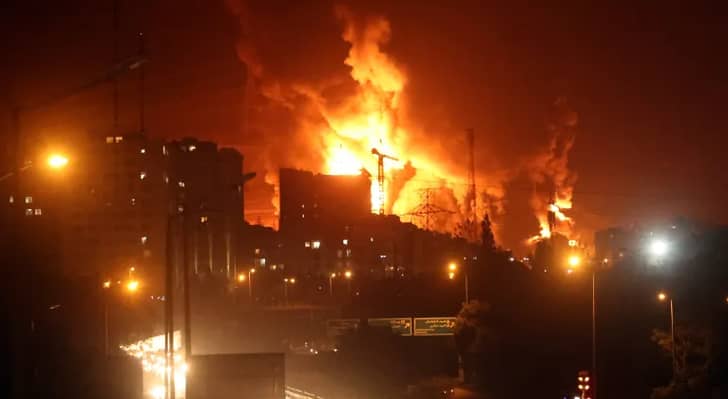
Day 120 | US and Iran trade strikes putting new strain on Mideast ceasefire
The United States and Iran traded military strikes after Washington on Friday accused Tehran of attacking a cargo ship, jeopardizing a fragile ceasefire as diplomats struggle to contain the Middle East war.
US Central Command said the American strikes, against Iranian missile and drone storage sites and coastal radar positions, were a response to "unwarranted aggression against commercial shipping by Iranian forces" that "clearly violated the ceasefire."
It described the operation as "a powerful response to yesterday's attack on a commercial ship that was transiting the Strait of Hormuz."
Iranian state television, citing a reporter in Sirik, said an explosion was heard late Friday at Taherouyeh pier in the southern port city.
It quoted an informed military source as saying the blast was caused by a projectile impact in the area.
US President Donald Trump had earlier denounced what he described as an Iranian drone strike on the vessel, saying: "Obviously, this is a foolish violation of our ceasefire agreement."
Vice President JD Vance issued a direct warning, posting on X that "violence will be met with violence" if Iran carries out any further attacks.
Minutes later, on Saturday morning Iran time, state television reported that the Revolutionary Guards said they targeted US sites in the Gulf region in retaliation for the American strikes.
"If the aggression is repeated, our response will be broader than this," the Guards said, according to a post by state TV on Telegram.
The exchanges raised fresh questions about efforts to keep the Strait of Hormuz open while Washington and Tehran negotiate a final settlement to a war that began February 28 with US and ‘Israeli’ strikes on Iran.
Iran has warned vessels not to enter or leave the Gulf through the strait without permission, but ships have continued to move, some using a route not authorized by Tehran.
Around half of the 42 vessels that made the passage Thursday used a non-approved southern route along Oman's coast, according to tracking platform Kpler.
Thread ended
This live thread has ended. Follow our online coverage of day 121 of the war.
Read more: Day 121 | Iran says US violated peace deal as both sides attack
Trump congratulates Aoun over 'Israel' framework agreement
- Trump pledged US support for Lebanon's sovereignty, economy, and armed forces.
- Aoun urged Washington to ensure Israeli compliance and withdrawal from southern Lebanon.
- Trump invited Aoun to Washington for a future summit.
US President Donald Trump held a phone call with Lebanese President Joseph Aoun, congratulating the head of state on the successful signing of the historic framework agreement between Lebanon and 'Israel'.
The call, detailed by the Lebanese presidency on Saturday, marks an intensifying diplomatic effort by Washington to solidify the newly minted treaty, which aims to dismantle Hezbollah's armed infrastructure and restore central government authority along the volatile northern border.
During the conversation, Trump reaffirmed Washington's unyielding support for the Lebanese people, promising that the United States will provide all necessary resources to implement the agreement's provisions and permanently restore regional security.
تلقى رئيس الجمهورية العماد جوزاف عون اتصالا هاتفيا ليل اليوم من الرئيس الاميركي دونالد ترامب هنأه فيه على توقيع اتفاق الاطار بين لبنان وإسرائيل برعاية الولايات المتحدة الاميركية، مؤكدا وقوف بلاده إلى جانب لبنان والشعب اللبناني والعمل على توفير كل ما من شأنه لتطبيق مندرجات الاتفاق…
— Lebanese Presidency (@LBpresidency) June 27, 2026
Rebuilding state authority
According to the presidency's official communique, Trump emphasized that the primary objective of American policy in the Levant is to ensure the complete independence, sovereignty, and territorial integrity of the Lebanese state.
Central to this strategy is the total extension of state authority through the exclusive deployment of the Lebanese Armed Forces (LAF) across all territory, effectively sidelining unauthorized non-state actors.
"The United States will spare no effort to support Lebanon's sovereignty and independence," Trump affirmed, adding that Washington would actively contribute to reviving the collapsed Lebanese economy and strengthening its legitimate security forces to help the country "reclaim its pioneering role in its surroundings and the world."
Trump also expressed explicit support for the independent decisions of both President Aoun and the Lebanese government as they transition into the post-agreement implementation phase.
Aoun demands US pressure on 'Israel' to withdraw
In response, President Aoun expressed deep gratitude to Trump for his administrative support of Lebanon's constitutional institutions and military apparatus.
Aoun gave his absolute assurance that the Lebanese state is fully prepared to bear its legal responsibilities in executing the security provisions laid out in the Washington framework.
However, the Lebanese leader directly underscored the critical role the United States must play as an enforcement guarantor.
Aoun explicitly requested that the White House utilize its diplomatic and military leverage to prevent any future violations of the treaty, specifically urging Trump to pressure 'Israel' to withdraw its remaining ground divisions from occupied sectors in the south.
This withdrawal, Aoun noted, is an absolute prerequisite to facilitate the deployment of the state army right up to the internationally recognized blue border.
The high-stakes call concluded on a strong diplomatic note, with President Trump extending an official invitation to President Aoun for an upcoming, high-level bilateral meeting at the White House to formalize their joint security roadmap.
Ben Gvir slams US-brokered 'Israel'–Lebanon deal, calls it ‘major mistake’
'Israeli' National Security Minister Itamar Ben Gvir on Saturday criticized a US-brokered agreement between 'Israel' and Lebanon, calling it a “major mistake” and urging Prime Minister Benjamin Netanyahu to submit the deal for a cabinet vote.
In a statement, Ben Gvir said that while 'Israeli' forces would “remain in most of the territory” of the buffer zone for now, he rejected the framework’s assumption that Lebanon would disarm Hezbollah.
“The government of Lebanon won’t disarm Hezbollah,” said Ben Gvir, who leads the far-right Otzma Yehudit party. “Only IDF soldiers will destroy Hezbollah, no one else will do it for us.”
Netanyahu says deal with Lebanon 'historic' for 'Israel'
'Israel's' Prime Minister Benjamin Netanyahu on Saturday hailed the US-brokered agreement with Lebanon, calling it a historic achievement that dealt a blow to arch-foes Iran and Hezbollah.
"Yesterday ... we achieved a historic deal for the state of Israel after direct negotiations between Israel and Lebanon," Netanyahu said in a televised briefing. "This is a blow to Iran and Hezbollah."
After Hezbollah supporters protest, Lebanese army vows to keep peace
The Lebanese military vowed on Saturday to maintain public order, after Hezbollah supporters staged street protests against the government's signing of an agreement with 'Israel'.
"The army command will not allow any breach of security or threat to civil peace through actions with unpredictable consequences, road blockages, or attacks on public or private property," the army said.
Lebanon state media reports 'Israeli' strikes in south
Lebanese state media reported 'Israeli' airstrikes on southern Lebanon, including Nabatieh al-Fawqa, a day after a US-brokered framework agreement was signed.
Iran leaves handwritten fair play note after Egypt draw
- A 93rd-minute winner was ruled out by VAR for offside.
- Iran can still reach the Round of 32 as a best third-placed team.
- Andrew Giuliani praised the successful hosting of Iran during the World Cup.
The Iranian national football team believed they had rewritten their sporting history.
But following a crushing video assistant referee (VAR) decision that denied them a 93rd-minute victory against Egypt, Team Melli chose to exit the stadium by continuing a classy tournament tradition, leaving an emotional message of dignity, honor, and gratitude inside their locker room.
The 1-1 draw in Seattle marked the end of Iran's Group G campaign, leaving the squad with an anxious 24-hour wait to see if they will advance to the knockout stages of the FIFA World Cup 2026 for the first time in their history.
The Soul of the Game
Immediately following the final whistle, the Iranian squad packed their gear to fly back to their training base in Tijuana, Mexico. Before departing the Pacific Northwest, they penned a poignant letter dedicated to the local fans and their supporters back home.
The letter, which quickly gained traction on social media, read:
“Perhaps points can be won in many ways. Perhaps a team can advance from a group, but only through fairness and honor can one stand tall before history. FairPlay is not a line in football’s rules; it is the soul of the game. Thank you, Seattle, for your hospitality, and thank you to all Iranians, who gave their hearts, voices, and their whole being for Iran.”
This marks the second time the team has left such a message during the tournament. The squad left a similar note of gratitude in Los Angeles after playing two matches at the California venue, thanking fans for "180 minutes" of unwavering passion.
Iran have left another handwritten note in their dressing room after the Egypt game in Seattle pic.twitter.com/pDag35oYXt
— James Ducker (@TelegraphDucker) June 27, 2026
93rd-minute VAR
The match itself was a high-stakes thriller. Needing an outright victory to guarantee automatic progression, Iran fell behind in the fifth minute to an early strike from Egypt's Mahmoud Saber.
Moments later, disaster struck again when Iran's star captain, Mehdi Taremi, missed an 11th-minute penalty. However, the squad showed immense resilience, equalizing just three minutes later via a brilliant effort from Ramin Rezaeian.
The real drama unfolded in stoppage time. In the 93rd minute, defender Shoja Khalilzadeh pounced on a loose ball during a chaotic scramble in the Egyptian penalty box, firing it into the back of the net.
Khalilzadeh was even cautioned with a yellow card for his excessive, shirt-tearing celebrations as the stadium erupted.
However, the euphoria turned to devastation when a meticulous VAR review revealed that the tip of his boot was in an offside position by a mere fraction of an inch.
Geopolitical harmony on pitch
Beyond the tactical heartbreak, the match served as a profound example of sports diplomacy. Speaking to Sky Sports’ Yalda Hakim, Andrew Giuliani, the Executive Director of the White House FIFA World Cup Task Force, expressed his immense satisfaction with the tournament's atmosphere despite ongoing international tensions.
"We’re very honored to be able to facilitate an even playing field for this team at the FIFA World Cup," Giuliani stated, highlighting the seamless coordination required to host the Iranian delegation.
24-Hour Wait for History
Iran has participated in seven World Cups throughout its footballing history but has never successfully advanced beyond the group phase.
With three points to their name, Iran currently sits third in Group G behind Belgium and Egypt. Under the newly expanded 48-team World Cup format, the eight best third-placed teams across all groups will secure a ticket to the Round of 32.
Players and staff will spend Saturday glued to televisions, eagerly watching the final slate of group-stage matches to see if their dream of reaching the knockout stage remains alive.
Iran finished third in Group G with 3 points, but they have not been eliminated from the FIFA World Cup 2026. Under the tournament's expanded 48-team format, the eight best third-placed finishers across all 12 groups advance to the Round of 32; Iran currently sits in 6th place on that overall third-place qualification table, leaving them firmly inside the qualifying zone as they await the final group stage results.
'Israel' defence minister says forces told to prepare for 'extended stay' in Lebanon
'Israel's' defence minister said on Saturday that 'Israeli' forces had been ordered to prepare for an extended stay in the so-called security zone in southern Lebanon, after 'Israel' and Lebanon agreed on a framework to end hostilities.
"The prime minister and I have instructed the IDF to prepare for an extended stay in the security zone," 'Israel' Katz said in a video statement, referring to an area up to 10 kilometres (six miles) inside the Lebanese territory.
"The important principle established in the agreement is that there will be no redeployment by Israel in southern Lebanon, no withdrawal, as long as the terrorist organisation Hezbollah is not disarmed throughout Lebanon," he said.
'Israeli' drone strikes southern Lebanon after US framework deal
- 'Israeli' official said the strike targeted an imminent threat.
- The incident highlights the fragility of the ceasefire.
The 'Israeli' military executed a targeted drone strike in southern Lebanon on Saturday, highlighting the extreme fragility of the US-brokered framework agreement signed just 24 hours prior in Washington.
The kinetic operation serves as an immediate test of the new diplomatic baseline.
An 'Israeli' military official confirmed the drone strike to CNN, defending the action by stating the deployment was explicitly designed to eliminate an active, unfolding threat against 'Israeli' defense forces operating on the ground.
Fragile ceasefire
Under the complex security architecture negotiated by US mediators, 'Israel' had agreed to a phased withdrawal of its ground divisions from sectors located both north and south of the strategic Litani River.
These frontline positions were scheduled to be progressively handed over to the administrative control of the Lebanese state army.
While leadership in both 'Tel Aviv' and Beirut initially lauded the signing ceremony as an initial victory for their respective nations, Saturday's swift return to violence underscores the massive challenges facing a permanent ceasefire.
Monitored closely by international observers, the ongoing combat operations between the 'Israeli' military and Iranian-backed factions continue to complicate broader, sensitive diplomatic tracks running between Washington, Beirut, and Tehran.
A wave of intense 'Israeli' military operations targeted several towns across southern Lebanon on Saturday morning, threatening the newly signed Washington framework agreement.
The town of Nabatiyeh al-Fawqa bore the brunt of the escalation, sustaining five separate drone strikes, a conventional fighter jet airstrike, and a percussion bomb detonation.
Concurrently, controlled military demolitions were carried out in At Tiri, while 'Israeli' forces launched three percussion bombs at Braachit, another at Kfar Tibnit, and fired heavy artillery shells into the outskirts of Yohmor El Chkeif.
WSJ: Iranian drone hits another oil tanker near Hormuz
According to The Wall Street Journal, citing a US official, an Iranian attack drone successfully struck an oil tanker carrying two million barrels of crude oil near the Strait of Hormuz.
Meanwhile American forces simultaneously intercepted and downed two other drones targeting commercial vessels in the area.
US Navy raises Hormuz threat level to "significantly high"
- The Navy expanded a shipping corridor near Oman for two-way traffic.
- US official said recent strikes do not signal a return to large-scale regional war.
The United States Navy has significantly elevated its security posture in the Middle East, raising the maritime threat assessment level for the Strait of Hormuz to "significantly high," according to reports by CNN.
The decision by the Navy’s Joint Maritime Information Center follows a sharp escalation in kinetic friction, marked by an alleged Iranian drone strike on a commercial vessel and subsequent retaliatory airstrikes by US Central Command (CENTCOM) against infrastructure inside Iran.
Widening Omani transit lane
In direct response to the heightened danger and ongoing threats to global energy corridors, the US Navy announced a major structural adjustment to the regional shipping lanes.
Military officials confirmed they are expanding and widening a temporary maritime corridor running parallel to the coastline of the Sultanate of Oman.
The expansion is strategically designed to handle a heavier volume of commercial traffic, allowing vessels to transit in both directions simultaneously.
By optimizing this route within the Strait of Hormuz, the US military and its allies aim to ensure the unhindered flow of international trade while steering commercial cargo carriers away from contested areas and unauthorized foreign interdictions.
Strikes do not signal open war
Despite the aggressive military maneuvers and the widening of the Omani shipping corridor, Washington is actively trying to prevent a total diplomatic collapse.
Speaking to CNN, a senior US official clarified that the Pentagon's recent targeted strikes on Iranian missile warehouses, drone repositories, and coastal radar installations were strictly retaliatory and deterrent in nature.
The official emphasized that the current precision strikes do not mean the United States is returning to large-scale combat operations in the region.
The White House maintains that its deployment remains focused on upholding freedom of navigation and enforcing the structural rules of the standing maritime truce.
Hezbollah chief calls US-'Israel'-Lebanon deal 'grave blunder', deems it null and void
Hezbollah leader Naim Qassem condemned the US-'Israel'-Lebanon framework agreement on Saturday, saying it a major mistake by Beirut and that his group deemed it null and void.
"The framework agreement in Washington is humiliating, shameful, and a surrender of sovereignty. This agreement is null and void, and the provisions of the Iranian-American memorandum of understanding must be implemented," Qassem said in a statement, accusing Lebanese authorities of "legitimising" Israeli Occupation through this "grave blunder".
Hezbollah says linking withdrawal to disarmament crosses “red lines”
Hezbollah Secretary-General Naim Qassem said the Lebanese authorities are legitimizing a prolonged 'Israeli' occupation that could eventually lead to the annexation of occupied Lebanese territory by 'Israel'.
Qassem also described proposals linking an 'Israeli' withdrawal from southern Lebanon to the disarmament of Hezbollah as “very dangerous,” saying such a condition “crosses all red lines.”
Jordan condemns Iranian drone attack on Bahrain
Jordan has condemned the Iranian drone attack on Bahrain, describing it as a blatant violation of the kingdom's sovereignty, a threat to its security and stability, and a serious breach of international law and the UN Charter.
In a statement, Jordan's Ministry of Foreign Affairs and Expatriates reaffirmed the Kingdom's full solidarity with Bahrain and its support for all measures taken to safeguard its sovereignty, security, territorial integrity, and the safety of its citizens and residents.
Lapid says Lebanon and Iran agreements contradict each other
‘Israeli’ opposition leader Yair Lapid said agreements involving Lebanon and Iran are strategically inconsistent and point in opposing directions.
He said it is not possible to implement arrangements requiring Lebanon to limit Hezbollah’s power while maintaining frameworks that allow Iran to continue supporting the group financially.
Lapid added that the ‘Israeli’ government should have addressed this contradiction and worked to restrict Iranian funding channels.
Sea route near Oman expanding to facilitate traffic, US Navy says
A maritime coordination body overseen by the US Navy says a shipping route through the Strait of Hormuz near Oman’s coastline is being widened to accommodate both inbound and outbound vessel traffic.
The Joint Maritime Information Center announced the adjustment as part of efforts linked to US-led measures to restore and secure navigation through the strategic waterway.
The move comes amid heightened tensions in the Gulf, where the United States has been pushing to ensure continued maritime access through the strait.
Iran has insisted that vessels must comply with its directives in the area and has warned it may begin imposing transit fees on shipping passing through the strait, which is a critical global energy corridor.
Iran says cargo clearance from UAE port resumes
Iran says cargo clearance operations have resumed following US military strikes, according to the IRNA news agency, after disruptions linked to escalating tensions in the Strait of Hormuz.
An Iranian trade official said containers previously delayed due to what he described as “wartime conditions” are now being cleared from the United Arab Emirates’ Jebel Ali Port for transfer to Iran.
The official added that trade volumes are expected to gradually return to pre-conflict levels as logistics operations stabilize.
Tanker struck by projectile in Strait of Hormuz, UKMTO says
The United Kingdom Maritime Trade Operations (UKMTO) has reported an incident in the Strait of Hormuz involving a commercial tanker that was struck by a projectile.
The agency said the vessel’s captain reported damage following the strike, but confirmed that all crew members on board are safe.
UKMTO did not provide further details on the source of the attack or the extent of the damage, as investigations into the incident continue in one of the world’s most sensitive maritime corridors.
Drone strike targets Iranian Kurdish opposition camp in northern Iraq
A drone packed with explosives struck a camp belonging to Iranian Kurdish opposition groups north of Erbil in Iraq, according to security sources cited by Reuters.
The sources said there were no reports of casualties, noting that the camp had recently been evacuated before the attack.
Bahrain says Iran launched drone attack on its territory
Bahrain’s Foreign Ministry has strongly condemned what it described as an Iranian drone attack carried out in the early hours of the morning, calling it a “serious violation” of sovereignty and international law.
The ministry said several drones targeted Bahraini territory but did not specify the exact location or intended target.
It added that the incident endangered civilians and undermined ongoing regional efforts aimed at de-escalation, warning against further escalation in the Gulf.


