Court throws recording of Sydney nurses accused of anti-‘Israel’ threats
Note: AI technology was used to generate this article’s audio.
In a ruling delivered on Tuesday, Australian Judge Michael McHugh determined that a widely circulated video recording of two former Sydney nurses making alleged antisemitic comments cannot be admitted as evidence in their upcoming criminal trials.
Ahmad Rashad Nadir, 28, and Sarah Abu Lebdeh, 27, both former nurses at Bankstown Hospital, have pleaded not guilty to charges of using a carriage service to menace or harass.
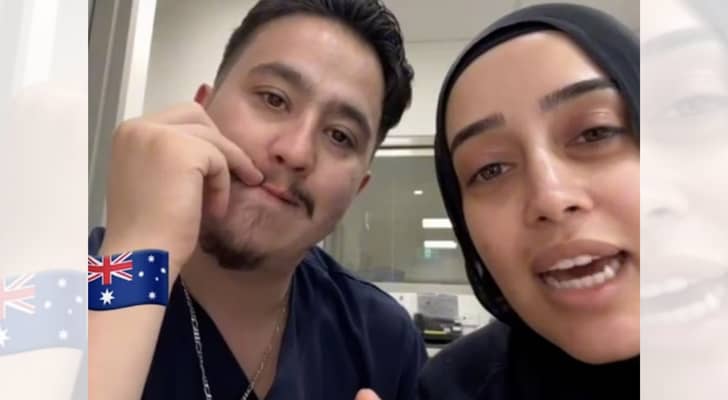
The allegations stem from a February 2025 online video chat with an ‘Israeli’ influencer, during which they reportedly stated they would refuse to treat ‘Israeli’ patients and made threats of violence against them.
Remember those two nurses who said they'd kill Israeli patients rather than treat them?
— Hen Mazzig (@HenMazzig) June 23, 2026
Well, a judge has decided that the viral video of them threatening Israelis is inadmissible in court.
This is a heavy blow to the case, which charges the two with threatening violence to a… pic.twitter.com/Mer6y6ZeYz
The video, recorded via a platform such as Chatroulette and later shared widely online, showed the pair allegedly in NSW Health uniforms.
It sparked widespread public outrage, leading to their suspension by health authorities and a two-year ban from practicing as nurses. Prosecutors had intended to rely heavily on the footage to support the case.
NSW District Court judge McHugh ruled that the evidence was obtained improperly or in contravention of Australian law, specifically referencing NSW's Surveillance Devices Act, which prohibits the recording of private conversations without consent—even when conducted from overseas.
Under the Evidence Act, such material is inadmissible unless its probative value substantially outweighs the undesirability of admitting improperly obtained evidence.
In his partially released written judgment, the judge concluded firmly that all video evidence and related recordings must be excluded from the trials of both defendants.
He also considered factors such as the broad prior publication of the material in media and online, which influenced the balancing exercise under the law.
The trial had been scheduled to commence in late August. With the key video evidence now inadmissible, prosecutors must determine whether to proceed, relying primarily on the testimony of the ‘Israeli’ influencer and any other available evidence. Legal observers have noted the ruling could significantly weaken the case.